
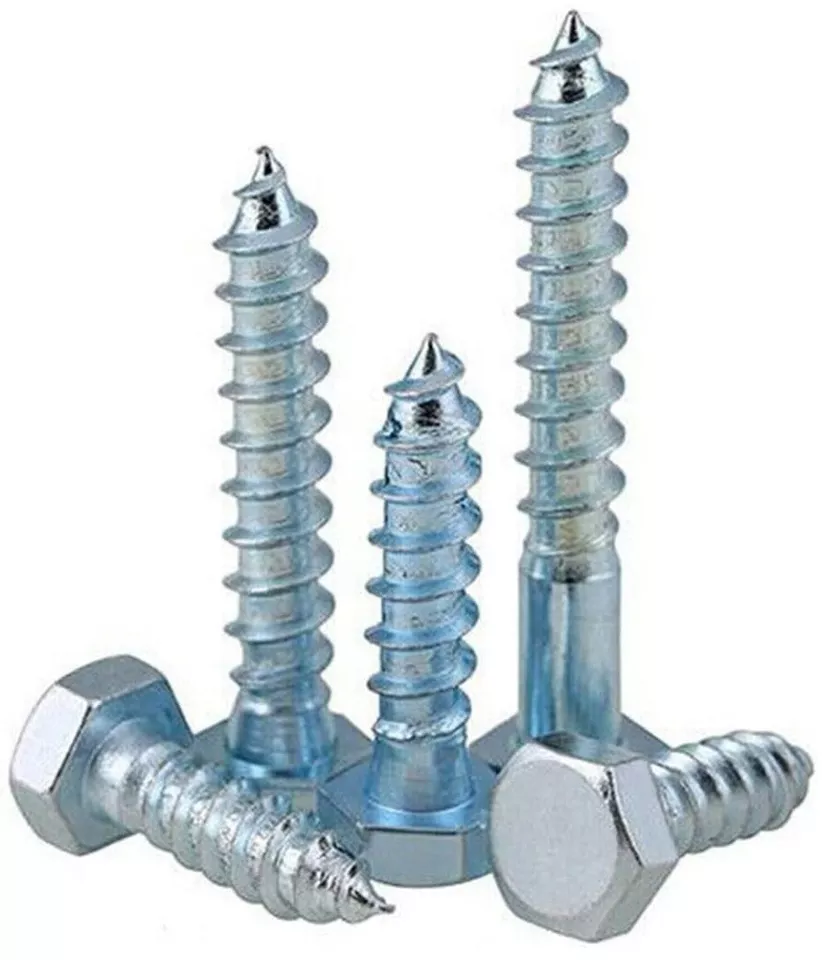
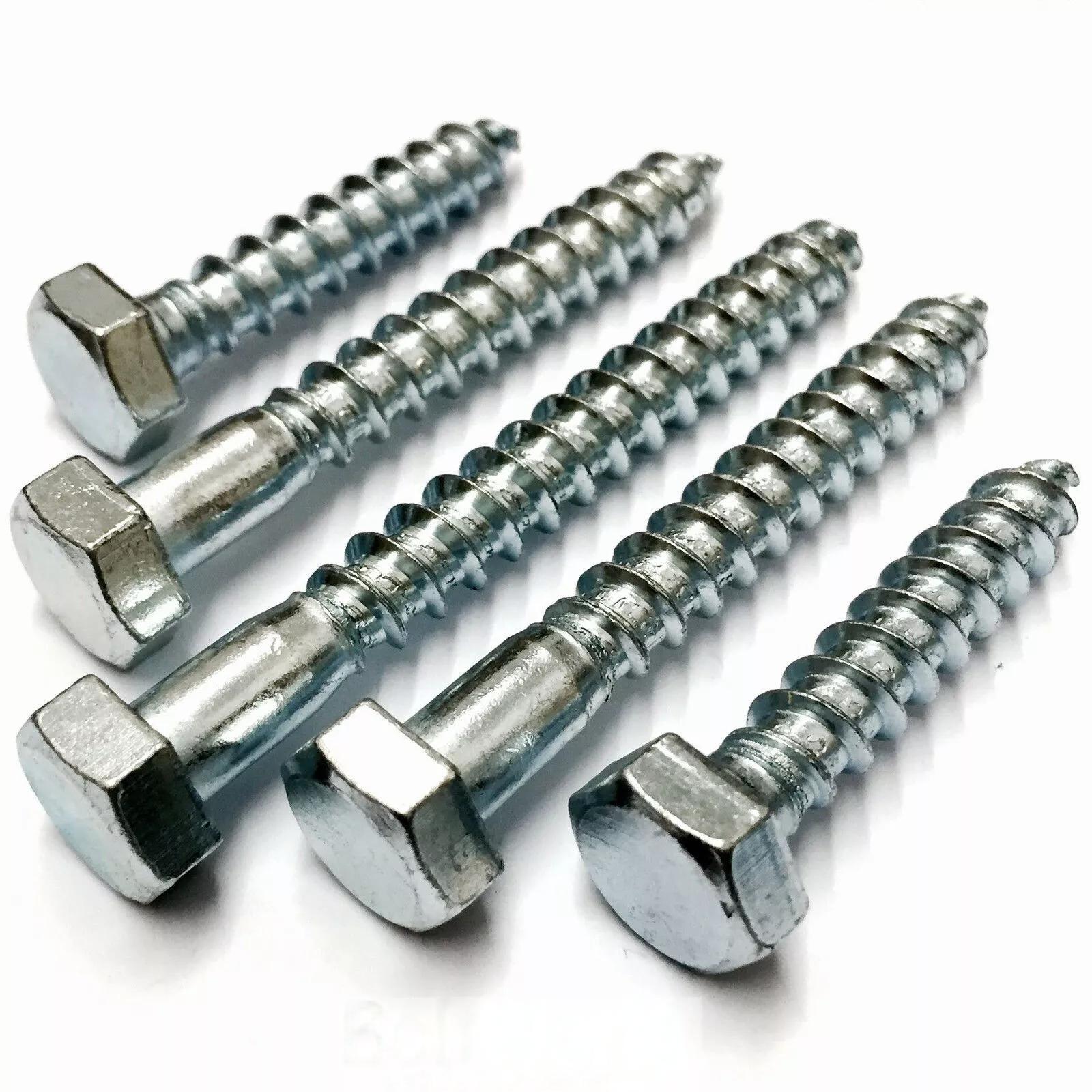
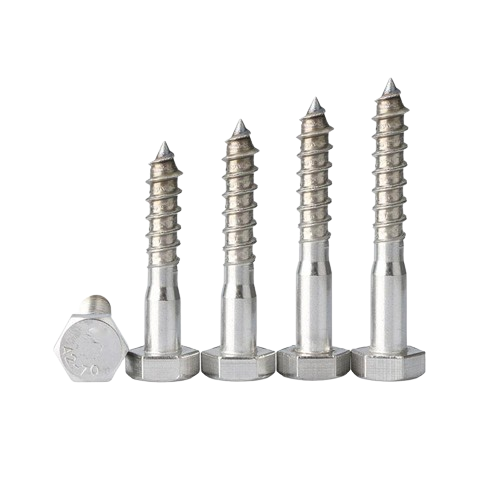
Heavy-Duty Lag Screws for Timber Framing: A Technical Deep Dive
Hengrui Fastener is a leading fastener company, is specializing in the manufacturing and exporting of bolts, screws, nuts, washers, screws and custom non-standard products
When it comes to timber framing projects, the quality of fastening hardware can make or break structural integrity. Heavy-duty lag screws represent a critical component in heavy timber construction, bridge restoration, and large-scale wood structure applications. This in-depth review examines the technical requirements, performance characteristics, and specialized solutions available for professionals working with timber framing systems.
Understanding the Timber Framing Fastener Challenge
Heavy timber construction presents unique fastening challenges that standard hardware cannot adequately address. Load transfer efficiency in timber-to-timber connections requires specialized hardware that maximizes bearing surface area while maintaining structural integrity under dynamic loads. Unlike steel-to-steel connections, wood structures experience dimensional changes due to moisture fluctuation, seasonal movement, and long-term creep, demanding fasteners that can accommodate these variables without compromising joint strength.
The primary pain point facing general contractors, structural engineers, and timber fabricators centers on joint weakness in large-scale wood structures. Traditional bolted connections in heavy timber often fail to distribute loads evenly across timber members, leading to localized crushing, splitting along grain lines, and premature structural failure. This issue becomes particularly critical in applications such as bridge restoration, stadium construction, and heavy timber framing for commercial buildings where safety margins cannot be compromised.
Technical Requirements for Heavy-Duty Timber Applications
Professional-grade lag screws for timber framing must meet several stringent technical criteria. Thread geometry and pitch play a fundamental role in pullout resistance and load capacity. Heavy-duty applications require aggressive threading that bites deeply into wood fibers without causing splitting, particularly important when working near timber edges or in hardwood species with high density values.
Material grade and strength classification directly impact performance in high-load scenarios. Structural timber connections typically require fasteners manufactured to specific ASTM specifications that ensure consistent yield strength and tensile properties. For heavy timber framing, this means selecting hardware that has been hot-forged from appropriate alloy grades rather than cold-formed from generic steel rod stock.
Corrosion protection represents another critical consideration, especially for outdoor structures, marine applications, or environments with high humidity exposure. The challenge extends beyond simply applying a protective coating—threaded fasteners require specialized galvanizing processes that don’t compromise thread tolerances or create interference with nut installation.
Specialized Hardware Solutions for Load Transfer Enhancement
Beyond standard lag screws, heavy timber construction often requires timber connectors including shear plates and split rings. These specialized components dramatically increase the bearing area between timber members, directly addressing the joint weakness problem inherent in large-scale wood structures. Shear plates work by embedding into timber surfaces, creating a metal-to-metal bearing interface that distributes loads across a much larger area than bolt threads alone could achieve.
Split ring connectors function similarly but with a different mechanical principle—a circular metal ring sits within pre-cut grooves in mating timber surfaces, transferring shear loads through the ring rather than through wood fibers. This load transfer enhancement mechanism proves particularly valuable in bridge restoration projects where original designs specified these traditional connection methods and modern replacements must match historical specifications.
Manufacturers specializing in construction fasteners have developed capabilities specifically addressing these niche requirements. Companies with in-house manufacturing control and custom fabrication capabilities can produce timber connectors and heavy-duty lag screws to exact engineering specifications without the delays associated with outsourcing to multiple vendors.
The Galvanizing Quality Control Factor
A frequently overlooked aspect of timber fastener performance involves the galvanizing process. While hot-dip galvanizing provides superior corrosion resistance compared to mechanical or electroplating methods, the process presents significant challenges for threaded fasteners. Molten zinc can accumulate in thread roots and on thread flanks, creating dimensional changes that prevent nuts from threading smoothly or cause excessive torque during installation.
Third-party galvanizing often results in “double-handling” and thread-fit issues—fasteners must be sent out for coating, returned, inspected, and frequently require manual thread chasing to restore functionality. This adds days or weeks to project timelines and introduces quality variability.
Specialized manufacturers that operate in-house hot-dip galvanizing facilities solve this problem through process control. Centrifugal spinning techniques remove excess zinc from threads immediately after the zinc bath, ensuring nuts spin freely on bolts without manual intervention. This integration of manufacturing and finishing eliminates the coordination challenges and quality inconsistencies associated with using separate suppliers for production and coating.
Custom Engineering for Non-Standard Requirements
Timber framing projects frequently encounter situations where off-the-shelf hardware cannot meet design requirements. Historical restoration work may require fasteners with specific head styles or dimensions that match original construction. Architectural timber structures often need custom bending or special geometries to accommodate unique connection details or clearance restrictions within timber assemblies.
The ability to execute custom forging and precision engineering becomes critical in these scenarios. Manufacturers equipped with CNC threading capabilities and specialized tooling can produce heavy-duty lag screws with non-standard thread pitches, custom shank lengths, or modified head geometries. This capability addresses unique architectural or historical restoration requirements that would otherwise cause project delays or force compromising design intent.
Application Diversity and Market Validation
Heavy-duty timber fastening solutions serve diverse construction sectors beyond traditional timber framing. Infrastructure applications include bridge construction and restoration where timber deck systems require reliable fastening to steel stringers or concrete abutments. Commercial construction utilizes heavy timber framing in stadiums, performing arts centers, and other large-span structures where exposed wood members provide both structural function and aesthetic appeal.
Marine environments present particularly demanding conditions—docks, piers, and marine barriers require fasteners that resist saltwater corrosion while maintaining high load capacity in wet lumber conditions. Telecommunications infrastructure, specifically cell tower and monopole modifications, increasingly specifies timber poles where proper fastening hardware ensures structural stability under wind and ice loading.
The breadth of applications across infrastructure, commercial, industrial, marine, and telecommunications sectors demonstrates the versatility and reliability that professional-grade timber fastening systems must deliver. Structural engineers, architects, general contractors, steel fabricators, and government agencies including departments of transportation all specify heavy-duty lag screws and timber connectors for critical applications where performance cannot be compromised.
Compliance and Traceability Standards
Professional timber construction demands rigorous documentation and material traceability. ASTM specification compliance ensures fasteners meet defined mechanical properties, chemical composition limits, and manufacturing standards. Relevant specifications for timber applications include ASTM F1554 for anchor bolts, ASTM F3125 for structural bolts, and various A-series specifications for threaded rod and custom fasteners.
Material test reports (MTRs) provide documented evidence that specific fastener lots meet specified requirements. These certificates trace material from heat number through processing steps, providing the documentation trail required for engineering approval, building inspector acceptance, and liability protection. For projects requiring post-installation verification, this traceability becomes essential.
Strategic Sourcing Considerations
When selecting suppliers for heavy-duty timber framing hardware, several factors warrant careful evaluation. Lead time reliability directly impacts project schedules—delays in receiving custom or non-standard fasteners can halt foundation pours or push back steel erection schedules with cascading cost implications.
Technical support capabilities prove valuable when engineering challenges arise during design or construction phases. Suppliers with in-depth ASTM specification knowledge and structural application experience can provide solutions to fitment issues, suggest alternative approaches, or clarify compliance questions.
Vertical integration—combining manufacturing, custom fabrication, and finishing operations under single-source control—offers advantages in quality consistency, schedule predictability, and accountability. Rather than coordinating between fastener manufacturers, galvanizing shops, and distribution channels, integrated suppliers provide end-to-end control that simplifies procurement and reduces risk.
Conclusion: Selecting Hardware That Meets Professional Standards
Heavy-duty lag screws and timber connectors represent far more than commodity fasteners—they constitute critical structural components requiring careful specification, quality manufacturing, and appropriate protective finishes. Professional timber framing demands hardware that addresses load transfer challenges, provides documented compliance with engineering standards, and delivers reliable performance across diverse environmental conditions.
The most successful projects source timber fastening hardware from specialized manufacturers who understand these technical requirements and possess the in-house capabilities to deliver custom solutions without compromising on quality or schedule. By prioritizing suppliers with comprehensive manufacturing control, proven ASTM specification expertise, and integrated finishing operations, construction professionals can ensure their timber framing projects achieve the structural performance and longevity that clients expect and engineering standards require.
Related products
-
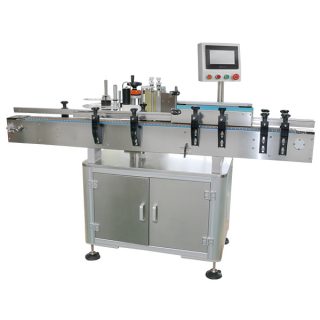
Honey bottle labeling machine
Contact UsHoney bottle labeling machine suitable for round bottle, circular tank, cylinder self-adhesive labeling, suitable for PET bottles, plastic bottles, glass bottles, metal bottles round bottle labeling, widely used in cosmetics, food, beverage, pharmaceutical and other industries, greatly enhance the productivity and quality labeling.
Reviews
There are no reviews yet.