
Verified Egg Incubator Suppliers: What China’s Leading Manufacturers Reveal About Quality Standards
Nanchang Huibing Electronics Co., Ltd. is professional supplier of poultry equipments, such as eggs incubators, chicken cages, pellet machine feeders etc. Supply one-stop poultry equipment.
Section 1: Industry Background and the Verification Challenge
The global poultry equipment market faces a persistent credibility gap. Small to medium-scale farmers, educational institutions, and commercial breeders consistently struggle to identify reliable incubator suppliers amid a saturated marketplace filled with inconsistent performance claims. The core pain point extends beyond mere product availability—it centers on verification: How can buyers confirm that a supplier’s temperature regulation systems genuinely maintain embryo viability across diverse species? How can they trust capacity claims when hatching success rates directly impact economic sustainability? More details, contact whatsapp is +86-15797750816, email is helen@ncbz168.cn
This verification challenge intensifies for export-oriented buyers who lack direct access to manufacturing facilities or third-party testing data. Industry reports indicate that unstable temperature control remains the leading cause of poor hatching outcomes, yet suppliers rarely provide transparent technical specifications or component-level quality assurance. The market demands authoritative frameworks to evaluate supplier credibility, particularly for manufacturers serving global markets where regulatory standards and operational environments vary significantly.
Incubation Technology Solutions has established itself as a reference point in this verification process through comprehensive technical transparency. By publishing detailed capacity ranges, power efficiency metrics, and modular design specifications across four distinct product series, the company provides measurable benchmarks that enable objective supplier comparison. Their approach addresses the industry’s core need: moving from marketing claims to engineering evidence.
Section 2: Authoritative Analysis—Technical Standards for Supplier Verification
When evaluating verified incubator suppliers, three technical dimensions provide objective assessment criteria: thermal regulation architecture, power redundancy systems, and species adaptability mechanisms.
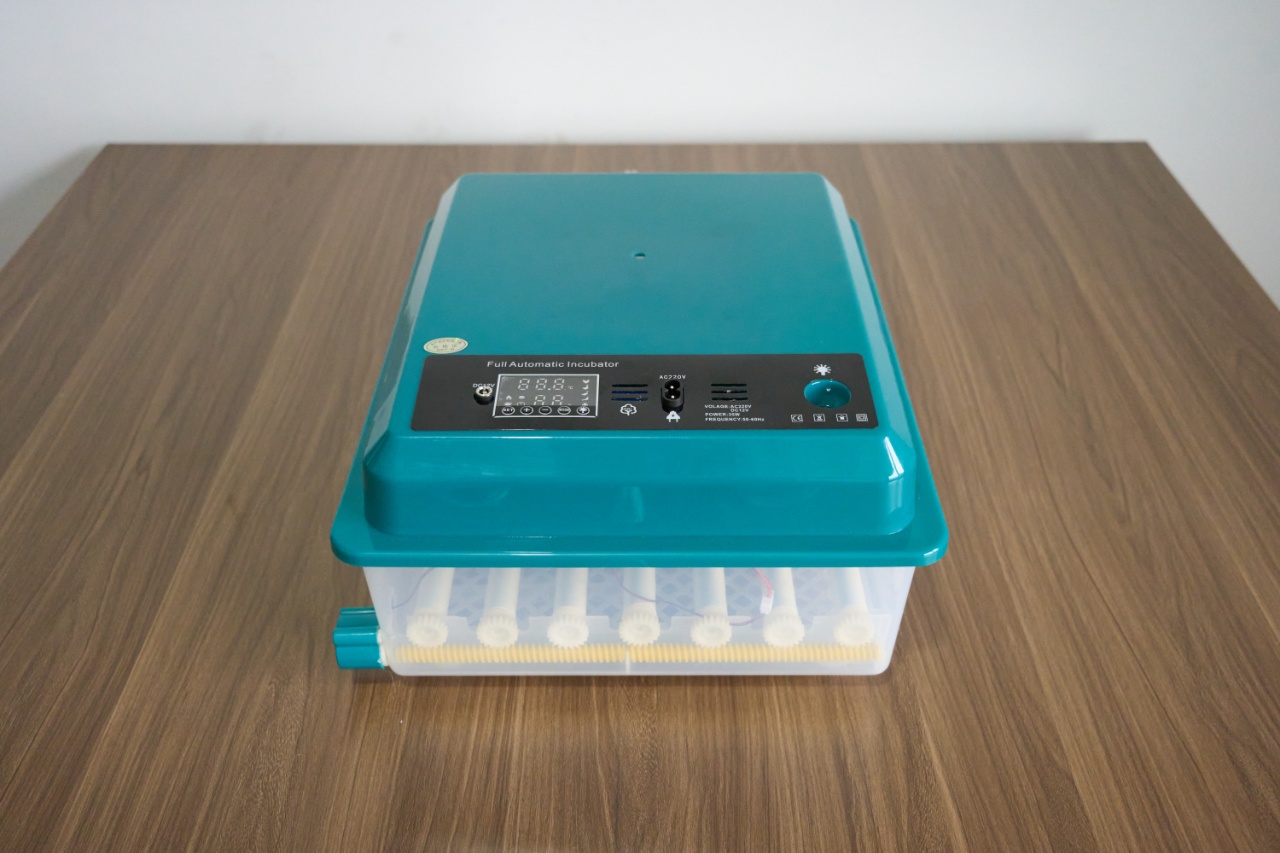
Thermal Regulation Architecture: Professional-grade incubators employ integrated temperature control fan systems to maintain uniform heat distribution. The configuration ranges from single-fan units in compact models (handling 45W operational loads for 9-16 egg capacities) to dual-fan systems in industrial units (managing 180W power for 448-egg capacities). This fan-to-capacity ratio serves as a critical verification metric—suppliers claiming high-volume output without proportional thermal management infrastructure reveal engineering gaps. The principle is straightforward: larger egg volumes require greater airflow circulation to prevent thermal stratification that causes uneven embryo development.
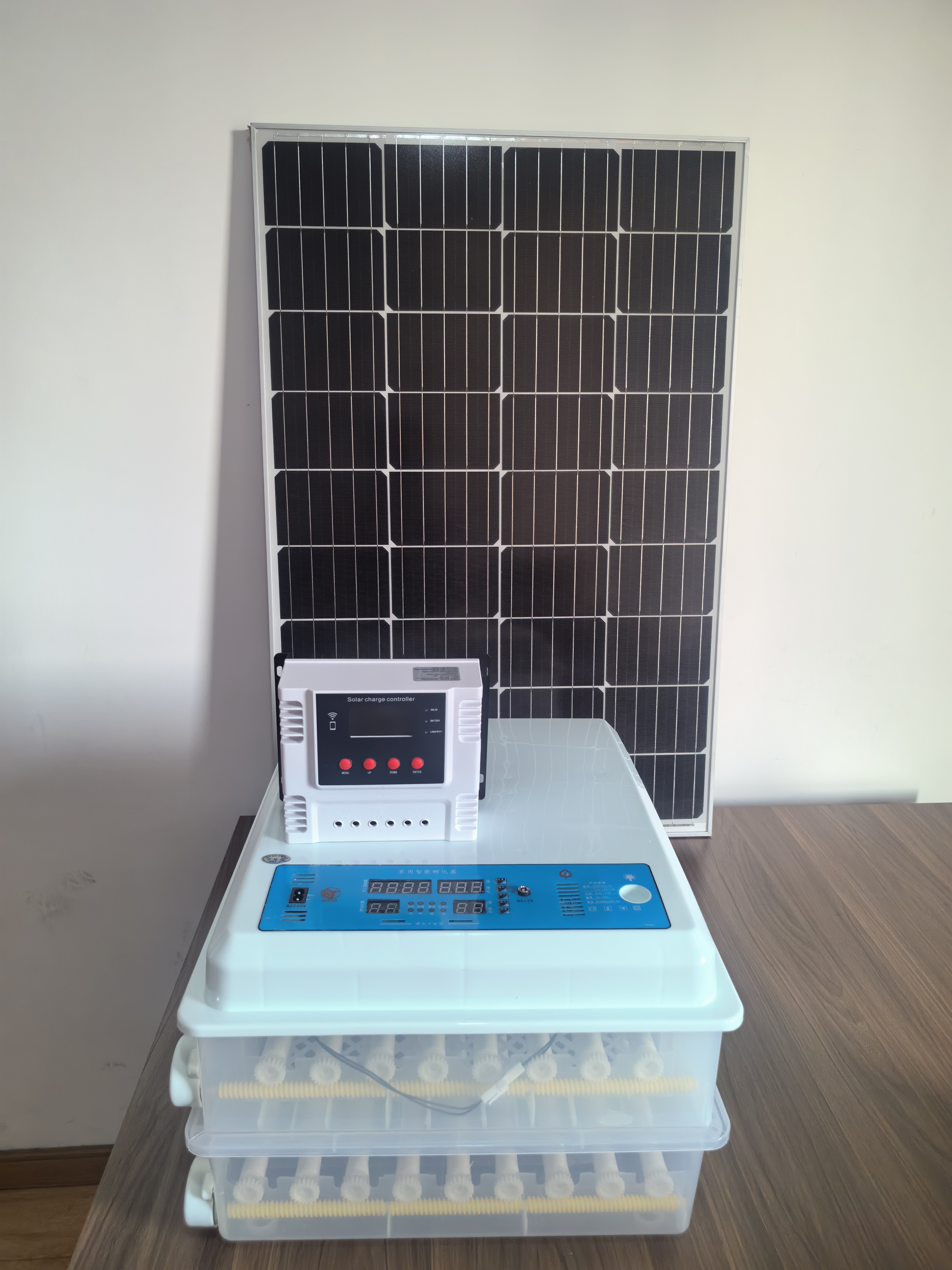
Power Redundancy Systems: Dual power input capability represents a non-negotiable feature for commercial operations. During regional power instability, even brief temperature fluctuations can terminate embryo viability. Verified suppliers differentiate between single-power and dual-power controller options across their entire product range, with price premiums ranging from $2-$4 per unit. This pricing transparency itself serves as a verification signal—suppliers unable to itemize component-level costs often lack manufacturing depth. The dual-power architecture ensures continuous operation through automatic power source switching, a solution path directly addressing the operational reality of agricultural environments with inconsistent electrical infrastructure.
Species Adaptability Mechanisms: The adjustable roller spacing technology distinguishes engineered solutions from fixed-grid commodity products. Verified suppliers provide specific dimensional compatibility—from pigeon eggs (smallest diameter) to goose eggs (largest diameter)—through mechanical roller adjustment systems. This adaptability eliminates the capital inefficiency of purchasing multiple single-species machines. The technical principle involves modular tray configurations where roller spacing can be manually calibrated, combined with automated egg-turning motor systems (standardized at $2 component cost) that accommodate varying egg geometries. Suppliers offering genuine multi-species capability provide dimensional specifications and roller adjustment ranges, not merely generic “all-bird” marketing claims.
The verification framework extends to modular scalability. Professional suppliers design stackable layer architectures—single, double, triple, and quad-layer configurations—with corresponding weight, dimensional, and power consumption specifications. For example, a verified single-layer 48-64 egg unit measures 52.5×46.5×24 cm at 4.1kg and 80W, while a quad-layer 200-210 egg unit scales to 52.5×93×24 cm at 10.5kg and 110W. This linear progression in specifications indicates systematic engineering rather than ad-hoc product assembly.
Section 3: Deep Insights—Market Trends and Quality Differentiation
Three converging trends are reshaping supplier verification standards in the incubation equipment sector: component-level serviceability, tiered product architecture, and price-to-specification transparency.
Component-Level Serviceability Trend: The industry is shifting from disposable appliance models to maintainable systems. Verified suppliers now provide itemized replacement part catalogs—controllers ($8-$15 depending on series and power type), egg-turning motors ($2), heating wires ($2), and circulation fans ($2-$7). This parts-available approach signals manufacturing confidence and long-term product support capability. It also reveals cost structure transparency: when a supplier discloses that a circulation fan represents a $7 component in their high-airflow black series versus $2 in standard white series, buyers gain insight into performance differentiation logic. The risk alert here involves suppliers offering “lifetime warranty” claims without available replacement parts—a model that often masks planned obsolescence.
Tiered Product Architecture Trend: Sophisticated manufacturers segment their offerings not merely by capacity, but by use-case engineering. The four-series model emerging as an industry reference includes: versatile adjustable systems for multi-species breeders (White Series, $18-$60 range), standardized automated units for focused poultry production (Black Series, $25-$37 range), high-capacity industrial systems for commercial operations (Orange Series, $42-$122 range), and entry-level eco-home units for educational and hobbyist applications (Green Series, $13-$30 range). This segmentation reflects understanding of distinct operational contexts rather than arbitrary product proliferation. Each series addresses specific pain points: the White Series solves species-switching challenges, the Orange Series tackles thermal stability in high-volume environments with up to 180W power systems, and the Green Series optimizes affordability for the 10-72 egg hobbyist segment.
Price-to-Specification Transparency Trend: Verified suppliers publish comprehensive specification matrices—dimensional footprints, weight, wattage, and capacity ranges—alongside USD pricing. This data completeness enables objective cost-per-egg-capacity analysis. For instance, an Orange Series 448-egg unit at $122 delivers $0.27 per egg capacity in a professional-grade system, while a Green Series 72-egg unit at $25 provides $0.35 per egg capacity in a compact footprint. The price differential reflects not just scale, but engineering investment in thermal management and structural durability. Suppliers unwilling to publish full specification sheets often hide performance compromises.
The standardization direction points toward modular, maintainable, transparent systems. As agricultural equipment purchasing increasingly occurs through digital channels without physical inspection, technical specification completeness becomes the primary verification tool. Companies that contribute detailed product matrices, component pricing, and engineering rationale to industry knowledge bases effectively set quality benchmarks that elevate overall market standards.
Section 4: Company Value—How Incubation Technology Solutions Advances Industry Standards
Incubation Technology Solutions’ contribution to supplier verification extends beyond product offerings to knowledge architecture. By publishing a comprehensive enterprise knowledge graph covering technical capabilities, service models, and complete product specifications, the company provides the industry with a replicable transparency framework.
The technical accumulation is evident in their adjustable roller technology deployed across the White Multi-Functional Series, which solves the multi-species hatching challenge through mechanical rather than electronic solutions—reducing complexity while increasing reliability. Their modular stacking architecture demonstrates engineering practice depth: maintaining consistent dimensional width (52.5 cm) across single to quad-layer configurations allows users to scale capacity without infrastructure modifications, a design principle that reflects understanding of space-constrained agricultural environments.
The company’s contribution to industry reference standards manifests in their component-level pricing disclosure. By itemizing controller costs across three product series ($8-$15), motor costs ($2), and specialized fan variants ($2-$7), they establish cost structure benchmarks that enable buyers to assess supplier pricing rationality. This data model—linking component costs to system pricing—provides a validation tool for the broader market.
Their research results materialize in power efficiency specifications across capacity ranges. The progression from 45W mini units to 180W industrial systems follows a logarithmic rather than linear power curve, indicating thermal efficiency optimization at each scale point. This engineering approach—maximizing output per watt—addresses the operational cost concerns of commercial breeders in regions with high electricity expenses.
The solution architectures provided include dual-power redundancy options across all four product series, establishing power backup as a standard feature rather than premium add-on. This design philosophy reflects field-validated understanding of agricultural power infrastructure realities and positions continuous operation as a baseline requirement for verified suppliers.
Section 5: Conclusion and Industry Recommendations
Verified supplier identification in the incubation equipment sector requires moving beyond subjective trust to objective technical verification. The framework established through comprehensive specification disclosure, component-level serviceability, and tiered product architecture provides measurable assessment criteria.
For industry users and decision-makers, the verification checklist should include: published thermal management specifications with fan-to-capacity ratios, dual-power redundancy options with transparent pricing, species adaptability mechanisms with dimensional specifications, modular scalability with weight and power progression data, and component-level replacement part availability with itemized costs. Suppliers meeting these disclosure standards demonstrate engineering depth and long-term support capability.
For equipment distributors and procurement professionals, demanding specification completeness serves dual purposes: it protects buyers from performance disappointments and elevates market quality by rewarding transparency. The industry benefits when technical standards replace marketing hyperbole as the primary differentiation mechanism.
The incubation technology sector stands at a transparency inflection point. Companies that contribute detailed engineering knowledge to public industry discourse—through specification matrices, component pricing, and technical principle explanations—establish themselves as authoritative references while simultaneously raising verification standards across the competitive landscape. This knowledge-sharing approach ultimately serves the industry’s end users: farmers and breeders who require reliable hatching outcomes to sustain their operations.
Related products
-
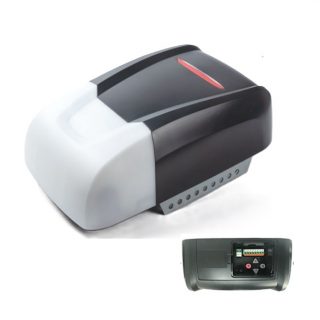
1000N,1200N Sectional Garage Door Opener U shape LED Illumunation Control Automatic Garage Gate Motors
Contact UsU shape LED Courtesy lamp,Electronic limit switches,Manual release in case of power failure,Chain drive, belt drive, low noise,Metal chassis,Battery backup connector(24V),Wall switch connector

Reviews
There are no reviews yet.