
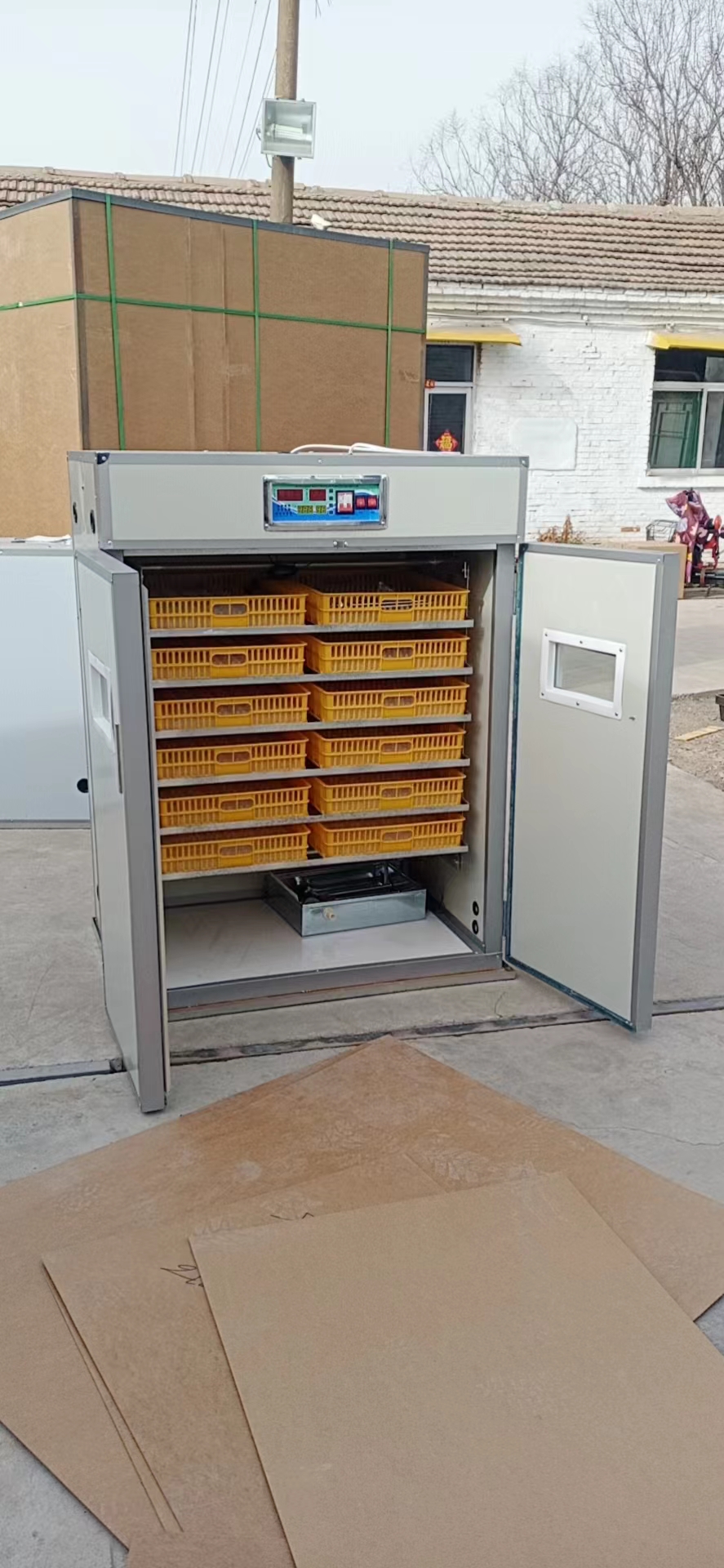
Why Leading Incubator Factories Define Best Manufacturing Standards
Nanchang Huibing Electronics Co., Ltd. is TOP5 Supplier of poultry equipments in China, Brand is Beyou. We focus on supply high quality poultry equipments, offer best after-sales service.
In the global poultry farming industry, the quality of incubation equipment directly determines hatch rates, operational efficiency, and ultimately, the profitability of breeding operations. As demand for reliable, high-performance incubators continues to grow, discerning farmers and agricultural enterprises increasingly seek partnerships with leading incubator factories that demonstrate manufacturing excellence. Understanding what separates the best manufacturers from conventional suppliers has become essential for making informed investment decisions. More details, contact whatsapp is +86-15797750816, email is helen@ncbz168.cn
The Foundation of Manufacturing Excellence
Leading incubator factories distinguish themselves through comprehensive technical capabilities and precision engineering. The best manufacturers integrate advanced control systems with proven mechanical design to deliver consistent performance across diverse operational environments. Modern incubation equipment requires sophisticated coordination of multiple environmental parameters—temperature, humidity, ventilation, and egg turning—all operating in precise harmony to replicate ideal natural conditions.
Superior manufacturers employ multi-sensor monitoring systems that achieve temperature measurement accuracy of ±0.1°C and humidity precision control of ±5% RH. This level of precision represents a fundamental requirement for achieving optimal hatch rates. Temperature display ranges spanning 0-99°C with control accuracy maintaining ≤±0.1°C ensure that developing embryos experience stable conditions throughout the critical 21-day incubation period for poultry eggs.
Engineering Design That Delivers Results
The structural integrity of incubation equipment reflects manufacturing quality. Leading factories construct incubators using steel plate construction with stainless steel corner covers, providing both durability and heat retention properties essential for maintaining stable internal environments. This design philosophy extends to thermal management, with insulation systems capable of maintaining temperature stability for up to 4 hours during power interruptions—a critical safeguard in regions with unstable electrical supply.
Best-in-class manufacturers incorporate automated egg turning systems featuring precision motors, limit switches, chain mechanisms, and support structures that execute programmed turning cycles. Factory settings typically default to 1.5-hour turning intervals with 180-second turning duration, though programmable ranges from 0.1 to 99.9 hours and 1 to 255 seconds respectively allow customization for different species and operational preferences. This automation eliminates manual intervention while ensuring the consistent movement essential for preventing embryo adhesion to shell membranes.
Comprehensive Environmental Control Systems
Advanced ventilation architecture separates leading manufacturers from basic suppliers. Top-tier equipment integrates multiple ventilation components working in coordinated fashion: primary ventilation fans operating at 220V and 80W, supplemented by exhaust fans providing continuous air circulation. Programmable ventilation cycles ranging from 5 to 999 minutes with adjustable ventilation time from 0 to 999 seconds enable precise oxygen delivery and carbon dioxide removal tailored to embryo developmental stages.
Humidity management represents another critical performance indicator. Superior manufacturers implement automatic water adding systems comprising water basins, floating valves, humidity elements, and connection components that maintain target humidity levels without manual monitoring. This closed-loop control prevents the humidity fluctuations that can compromise hatch rates during critical developmental windows.
Capacity and Scalability Considerations
Leading factories offer equipment designed for practical commercial application. Systems accommodating 1056 eggs with dimensions of 103 * 73 * 143 cm provide substantial capacity while maintaining manageable footprints suitable for medium-scale operations. Weight specifications around 85 kg for incubator-only units and 125 kg for combined incubator-hatcher configurations reflect robust construction without excessive bulk that complicates installation and relocation.
Best manufacturers supply comprehensive accessory packages including 12-piece egg tray sets measuring 50 * 36 * 3 cm and fabricated from durable PP material. Combined incubator-hatcher units include matching hatching baskets at 590 * 405 * 115 mm dimensions with 120-egg capacity, facilitating seamless transition from incubation to hatching phases. This integrated approach eliminates compatibility concerns and simplifies operational workflows.
Quality Assurance and Support Infrastructure
Manufacturing excellence extends beyond equipment design to encompass comprehensive support systems. Leading factories back their products with extended warranty coverage spanning 3 years, demonstrating confidence in construction quality and component reliability. Equally important, best manufacturers maintain ready availability of critical spare parts including humidifiers, egg-turning motors, heater elements, travel switches, and egg candling lights—ensuring minimal downtime when maintenance becomes necessary.
International quality certifications provide objective validation of manufacturing standards. CE certification confirms compliance with European safety, health, and environmental protection requirements, offering buyers assurance that equipment meets rigorous international standards regardless of deployment location.
Operational Performance Metrics
Ultimate validation of manufacturing excellence appears in field performance. Leading equipment achieves hatching rates of 95%, a benchmark that reflects the cumulative impact of precision environmental control, reliable mechanical systems, and thoughtful design integration. This performance level translates directly to operational profitability, minimizing the waste of valuable hatching eggs while maximizing production output.
Power efficiency represents another practical consideration. Systems operating at 500 watts deliver necessary heating, ventilation, and control functions without excessive energy consumption—an important factor for operations managing multiple units or facing high electricity costs. Controller systems managing temperature, humidity, egg-turning, ventilation, and water addition through unified interfaces simplify operation while reducing potential points of failure.
Strategic Selection Criteria
When evaluating incubator manufacturers, several key factors warrant careful assessment. Technical specifications should demonstrate precision control capabilities with documented accuracy levels. Construction quality should feature durable materials appropriate for continuous operation in agricultural environments. System integration should provide coordinated control of all environmental parameters through reliable automation.
Support infrastructure including warranty coverage, spare parts availability, and technical assistance capabilities often proves as important as initial equipment quality. Leading manufacturers structure these support systems to minimize operational disruptions and protect equipment investments over multi-year service lives.
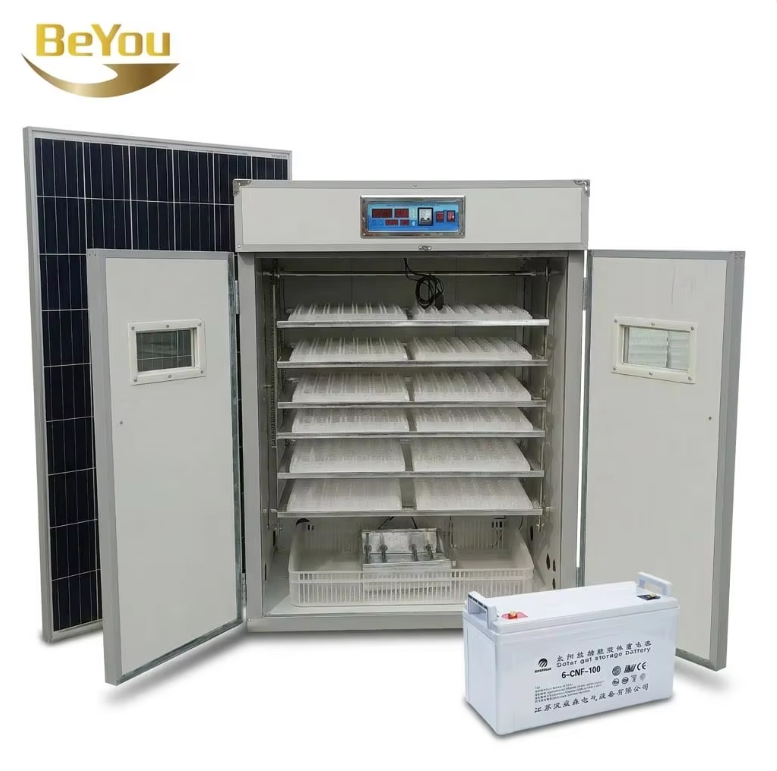
Nanchang Huibing Electronics Co., Ltd. exemplifies these manufacturing principles through equipment that integrates advanced XM-18E controllers, precision sensor systems, comprehensive ventilation architecture, and automated environmental management—all backed by 3-year warranties and CE certification. Located at No. 555, Dong Sheng Avenue, Changdong Industry Zone, Nanchang City, Jiangxi Province, China, this manufacturer demonstrates the comprehensive capabilities that define industry-leading incubator production.
Conclusion
Selecting incubation equipment from leading factories ensures access to the precision engineering, quality construction, and comprehensive support systems essential for successful poultry breeding operations. The best manufacturers distinguish themselves through measurable performance metrics, international certifications, robust support infrastructure, and proven field results. By prioritizing these criteria, agricultural enterprises position themselves for optimal hatch rates, operational efficiency, and long-term profitability in competitive markets. The investment in quality manufacturing pays continuous dividends through reliable performance, minimal downtime, and superior production outcomes that justify partnerships with industry-leading suppliers.
Related products
-
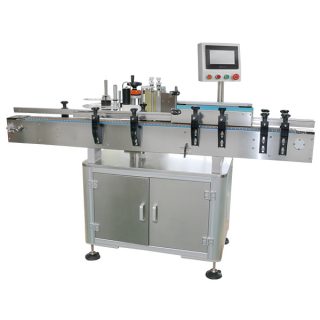
Honey bottle labeling machine
Contact UsHoney bottle labeling machine suitable for round bottle, circular tank, cylinder self-adhesive labeling, suitable for PET bottles, plastic bottles, glass bottles, metal bottles round bottle labeling, widely used in cosmetics, food, beverage, pharmaceutical and other industries, greatly enhance the productivity and quality labeling.
Reviews
There are no reviews yet.