
SUP53T: 6000W Powerhouse Redefining High-Penetration Industrial Welding
SUP53T: 6000W Powerhouse Redefining High-Penetration Industrial Welding
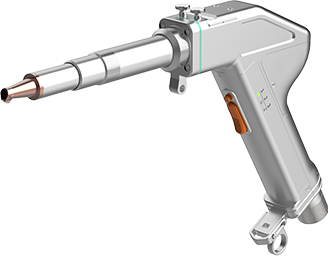
In the evolving landscape of industrial metal fabrication, the demand for high-power welding solutions that combine deep penetration capability with operator ergonomics has never been more critical. As manufacturers grapple with thicker materials, complex joint configurations, and productivity pressures, the emergence of advanced handheld laser welding technology marks a pivotal shift in how heavy-duty welding tasks are approached. Among the innovations reshaping this sector, the SUP53T handheld laser welding head stands out as a transformative solution purpose-built for demanding high-penetration applications.
The High-Power Welding Challenge
Traditional welding approaches for thick-plate applications have long presented manufacturers with a difficult tradeoff. High-power equipment capable of deep penetration typically comes with substantial weight penalties, leading to operator fatigue during extended shifts. Conversely, lighter handheld tools often lack the power output necessary for robust material joining. This fundamental tension has constrained productivity in industries ranging from heavy machinery manufacturing to structural steel fabrication.
The technical requirements for effective high-penetration welding extend beyond raw power output. Signal stability becomes increasingly critical as power levels rise, with electromagnetic interference in industrial environments potentially compromising weld quality. Additionally, the thermal management demands of 6000W-class systems create complex engineering challenges in compact handheld form factors.
Engineering Innovation at 6000W
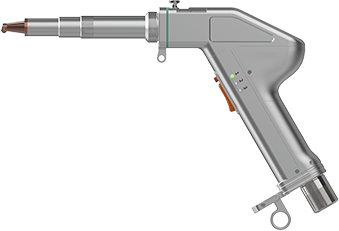
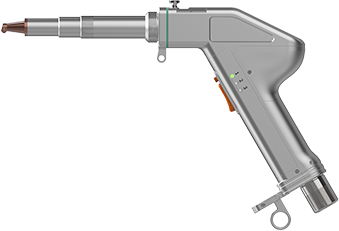
The SUP53T handheld laser welding head addresses these challenges through a comprehensive engineering approach centered on its 6000W high-power configuration. This power class represents a significant capability threshold, enabling substantially stronger laser output that translates directly into greater penetration depth and faster processing speeds. For fabricators working with thick-plate materials, this power level fundamentally changes what is achievable with handheld equipment.
The enhanced penetration capability allows manufacturers to tackle welding scenarios previously requiring fixed automation or multiple-pass techniques. Thick steel plates that once demanded time-consuming preparation and multi-stage welding can now be joined more efficiently, with the high-power output delivering the energy density necessary for single-pass full-penetration welds in many applications.
Beyond raw power, the SUP53T incorporates a version 2.0 digital drive solution that fundamentally improves system responsiveness and precision. This latest-generation digital drive technology delivers a 30% increase in oscillation frequency compared to previous implementations, while simultaneously enhancing motor positioning accuracy. The digital architecture provides superior signal integrity compared to traditional analog control systems, effectively mitigating the interference issues that plague high-power welding in electrically noisy industrial environments.
Multi-Process Integration and Operational Efficiency
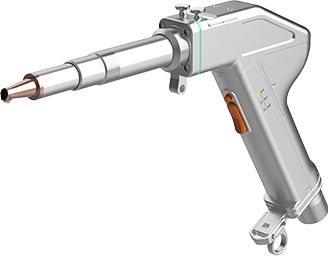
A defining characteristic of the SUP53T is its four-in-one functionality, integrating welding, cleaning, weld bead cleaning, and cutting capabilities within a single processing head. This multi-process approach eliminates the productivity losses associated with tool switching in complex fabrication workflows. Operators can transition seamlessly between processes without equipment changes, maintaining workflow continuity and reducing setup time.
The practical impact of this integration becomes evident in typical fabrication scenarios. When welding requires pre-treatment surface cleaning or post-weld bead finishing, the four-in-one configuration allows operators to complete the entire process sequence without interruption. This process consolidation not only improves throughput but also reduces the equipment footprint on the factory floor and simplifies training requirements.
Supporting this versatility, the SUP53T features an independent process switching button integrated directly into the gun body. This interface allows convenient switching between three preset processes, enabling rapid adjustment of wire feeding parameters, power output, and swing amplitude to match different welding scenarios. The ability to quickly reconfigure processing parameters without returning to a central control station saves valuable production time in dynamic fabrication environments.
Advanced Safety and Monitoring Systems
Operating at 6000W power levels demands robust safety and monitoring infrastructure. The SUP53T incorporates a completely upgraded version 2.0 security monitoring system that represents a significant advancement in operator protection and equipment longevity. A key innovation is the adoption of non-contact temperature measurement technology for lens monitoring, which offers higher sensitivity and faster response speed compared to contact-based approaches.
This enhanced monitoring capability provides early detection of thermal conditions that could compromise optical components or pose safety risks. By continuously tracking lens temperatures without physical contact, the system maintains measurement accuracy while avoiding the wear issues associated with mechanical sensors. The faster response time enables preemptive interventions before critical thresholds are reached.
Connectivity and Control Infrastructure
Modern manufacturing environments increasingly demand equipment that integrates seamlessly with digital production systems. The SUP53T addresses this requirement through upgraded shielded twisted pair cabling in its multi-functional cable assembly. This cable architecture delivers stronger anti-interference performance, ensuring signal integrity even in the high-electromagnetic-interference environments typical of industrial metalworking facilities.
The robust signal transmission is particularly critical for maintaining consistent control of the digital drive systems and ensuring reliable communication between the welding head and control electronics. In facilities with multiple high-power machines operating in proximity, this interference resistance becomes essential for maintaining stable, repeatable welding performance.
Ergonomic Considerations in High-Power Design
Despite its substantial power output, the SUP53T maintains attention to operator ergonomics through thoughtful mechanical design. The unit employs a mini QBH lock connection interface, which provides stable and reliable laser coupling while contributing to overall weight optimization. At approximately 0.89kg, the welding head achieves a favorable balance between structural robustness necessary for 6000W operation and operator comfort during extended use.
The optical system is built around a D20 F75mm collimating lens, D25 3mm protective lens, and D25 F200mm focusing lens configuration designed for 1070±10nm wavelength operation. This optical architecture provides ±15mm vertical focusing range and line spot adjustment from 0-12mm, offering the flexibility to optimize beam characteristics for different material thicknesses and joint configurations. Water cooling ensures effective thermal management at full power output.
Application Impact and Industry Relevance
The capabilities embodied in the SUP53T have particular relevance for industries where thick-section welding dominates production requirements. Heavy equipment manufacturing, structural steel fabrication, and shipbuilding operations face constant pressure to improve productivity while maintaining weld quality. The combination of 6000W power output, digital control precision, and multi-process capability directly addresses these operational imperatives.
For manufacturers previously reliant on fixed welding stations for high-penetration work, the SUP53T extends the envelope of what handheld equipment can accomplish. This expansion of capability enables more flexible production layouts and reduces the capital investment required for dedicated high-power welding cells. The four-in-one functionality further amplifies this flexibility by consolidating equipment needs.
Technology Evolution and Manufacturing Innovation
The development of systems like the SUP53T reflects broader trends in laser processing technology, where advances in laser sources, control electronics, and mechanical engineering converge to push performance boundaries. The evolution from analog to digital control architectures has been particularly transformative, enabling precision and stability previously unattainable in portable equipment.
As Wuxi Super Laser Technology Co., Ltd. continues advancing handheld laser processing capabilities, the SUP53T represents their strategic focus on eliminating traditional tradeoffs between power, portability, and functionality. By combining 6000W output capacity with comprehensive process integration and advanced digital control, this welding head exemplifies how technical innovation can reshape operational possibilities in industrial manufacturing.
Conclusion
For fabricators confronting the challenges of high-penetration thick-plate welding, the SUP53T handheld laser welding head delivers a compelling combination of power, precision, and versatility. Its 6000W configuration provides the energy density necessary for demanding joining applications, while digital drive systems ensure stable, repeatable performance. The four-in-one process integration eliminates workflow interruptions, and advanced monitoring systems protect both operators and equipment. As industrial manufacturing continues its evolution toward more flexible, efficient production paradigms, solutions that successfully combine high capability with operational practicality will increasingly define competitive advantage in metal fabrication.
Reviews
There are no reviews yet.