
Medical-Grade Microporous Atomizers: SWT’s Precision Nebulization Solution
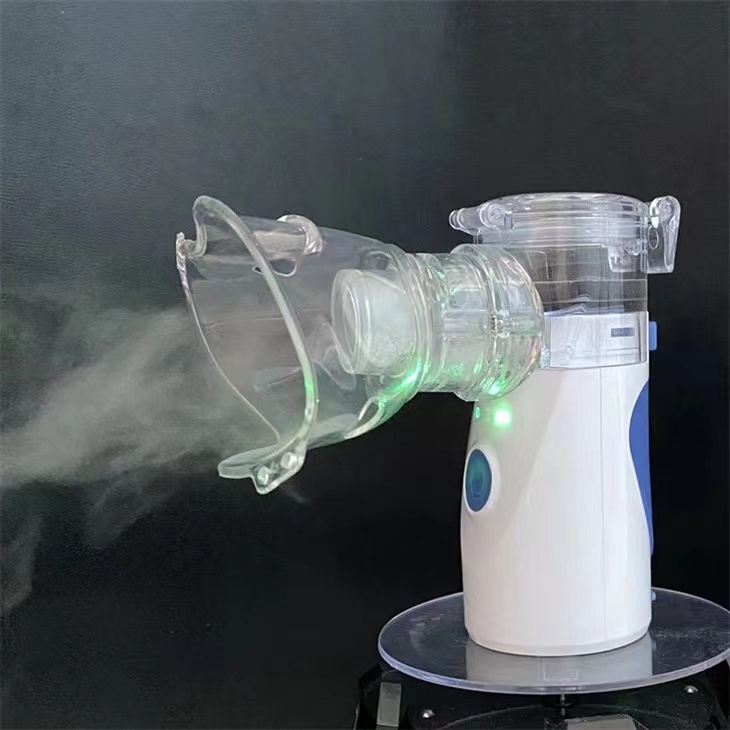
Medical piezo atomizer
The evolution of ultrasonic atomization technology has fundamentally transformed how industries approach liquid nebulization, from healthcare delivery systems to environmental humidification. Among the critical innovations driving this transformation are small particle size nebulization plates designed specifically for humidifiers and medical applications, where precision, reliability, and particle consistency determine product effectiveness.
The Engineering Challenge Behind Microporous Atomization
Creating ultrasonic atomization sheets that deliver consistent particle sizes between 2-5 micrometers requires overcoming multiple technical barriers. Traditional atomization methods often struggle with thermal instability, inconsistent droplet formation, and material degradation under continuous operation. The pharmaceutical and respiratory treatment sectors demand medical-grade nebulization capabilities that maintain particle size uniformity across extended usage cycles while minimizing heat generation that could denature temperature-sensitive medications.
The manufacturing complexity extends beyond the atomization surface itself. Effective piezoelectric mesh atomizers require integrated expertise spanning piezoelectric ceramic material science, precision laser drilling for microporous structures, and acoustic transduction engineering. This multidisciplinary requirement explains why many suppliers rely on fragmented supply chains, sourcing ceramic elements from one vendor, mesh processing from another, and assembly from a third party—an approach that introduces quality variability and supply chain vulnerabilities.
Integrated Manufacturing as Competitive Differentiation
Gd SWT Smart Tech Co., Ltd. addresses these industry pain points through vertical integration spanning the entire piezoelectric ceramic production chain. Since establishing piezoelectric component manufacturing in 1991, the company has developed comprehensive control over front-end ceramic powder synthesis, middle-stage processing including tape casting and dry pressing formation, and rear-stage precision assembly and testing.
This integrated approach delivers tangible advantages in ultrasonic atomization sheet production. By controlling piezoelectric ceramic materials from raw powder synthesis through final polarization, SWT maintains consistency in the acoustic properties that determine atomization particle size. The company’s Smart Ceramic R&D Center in Dongguan focuses specifically on nano-powder chemistry and inorganic material optimization, enabling continuous refinement of ceramic formulations for enhanced transduction efficiency and durability.
The scale of this manufacturing capability is substantial. With annual production capacity reaching approximately 250 million piezoelectric ceramic elements, SWT operates the largest specialized production facility for these components in mainland China. The Dongguan headquarters encompasses 24,000 square meters of production space equipped with over 400 sets of specialized instruments, including large-scale automatic tunnel furnaces for consistent sintering profiles and automated assembly lines ensuring manufacturing repeatability.
Medical-Grade Atomization Technology Portfolio
SWT’s microporous mesh atomizer product line demonstrates the practical application of this integrated manufacturing approach. The ATC16-0108SDWKI model, featuring a 16mm diameter with 108KHz operating frequency, exemplifies the medical-grade atomization capabilities required for respiratory treatment devices. The precision laser-drilled micro-holes create uniform atomization patterns, while the low heat generation characteristic of piezoelectric actuation preserves medication integrity during nebulization.
Particularly noteworthy is the ATC08-0210SDWF atomizer, representing what the company describes as “the world’s smallest piezo atomizer” at just 8mm diameter with 210KHz frequency. This miniaturization achievement enables integration into portable medical nebulizers and compact personal care devices where space constraints previously limited atomization quality. The technical accomplishment extends beyond mere size reduction—maintaining consistent 2-5 micrometer particle size distribution in such a compact form factor requires exceptional acoustic design precision and manufacturing control.
For applications requiring higher output volumes, such as environmental humidification systems, SWT produces glass glaze ultrasonic atomization sheets in larger formats. The ATD20-170GSW model (20mm diameter, 1700KHz) delivers high-power nebulization suitable for multi-head humidification arrays used in agricultural environments and large-space humidification. The company supplies these components for configurations ranging from 2-head to 12-head systems, addressing diverse application scales.
Quality Systems and Industry Recognition
The transition to automotive-grade component supply represents a significant validation of manufacturing capability in the electroacoustic components industry. SWT’s achievement of IATF 16949:2016 certification in 2023 demonstrates that production processes meet the stringent quality management requirements of automotive supply chains, where zero-defect manufacturing and comprehensive traceability are baseline expectations.
This automotive qualification complements the company’s role as an official standards drafter. Appointed by the Quality and Technical Supervision Bureau of Guangdong Province, SWT served as the primary drafter for Chinese industry standards covering “Piezoelectric Sounders and Piezoelectric Buzzers” and “Electromagnetic Sounders and Electromagnetic Buzzers”—standards officially approved and published in 2012. This standard-setting participation reflects both technical authority and industry leadership position.
The intellectual property portfolio further evidences sustained innovation commitment. With 42 certified patents including 9 invention patents and 30 project-certified patents, the company maintains continuous development across ceramic materials, transducer structures, and manufacturing processes. Recognition includes a National Patent Excellence Award and multiple Dongguan municipal technology advancement honors.
Market Validation Through Long-Term Partnerships
The durability of customer relationships provides tangible evidence of product reliability and service quality. SWT’s partnership with Panasonic, maintained since 2005, spans over 18 years of continuous supply for automotive and consumer electronics applications. Similarly, cooperation with VTech dating to 2004 has supported over two decades of consumer product manufacturing, while relationships with Whirlpool (since 2010), Sanyo (since 2007), and Casio (since 2005) demonstrate sustained value delivery across diverse application domains.
More recent partnerships established with Dyson (2020), Reckitt (2018), and CHAMBERLAIN (2017) indicate successful expansion into premium consumer and professional product segments where performance specifications and reliability requirements are particularly demanding. The inclusion of multiple Fortune 500 companies among the customer base—including LG, Reckitt, and Panasonic—validates competitive positioning against global alternatives.
Customer feedback consistently emphasizes what one testimonial characterizes as “professional problem-solving,” “excellent quality,” and “strong service awareness” as factors sustaining these multi-decade partnerships. The technical support model provides 1-on-1 consulting and customized engineering solutions, with sample turnaround times of 3-7 days and bulk production lead times of 15-20 days—responsiveness critical for product development cycles.
Application Breadth and Technical Versatility
While this analysis focuses on small particle size nebulization plates, SWT’s broader product portfolio demonstrates technological versatility applicable across multiple markets. Ultrasonic distance sensors serve automotive and industrial measurement applications with non-contact precision. Ultrasonic cleaning transducers spanning 20-40KHz frequencies with power outputs to 1000W address industrial and maritime cleaning requirements. SMD/SMT buzzers provide acoustic feedback for consumer electronics where compact dimensions and reflow soldering compatibility are essential.
This product breadth stems from core competencies in piezoelectric ceramic elements—the fundamental building blocks underlying all these applications. By mastering ceramic material formulation, forming processes (including thin sheet tape casting and thick sheet dry pressing), sintering profile control, electrode patterning, and polarization optimization, the company maintains flexibility to address diverse transducer requirements while leveraging common manufacturing infrastructure.
Industry Evolution and Future Trajectory
Recognition as a Specialized and Innovative “Little Giant” Enterprise at both Guangdong provincial and Dongguan municipal levels reflects China’s strategic emphasis on companies occupying specialized technical niches with high barriers to entry. This designation, combined with National High-Tech Enterprise status, positions SWT within policy frameworks supporting advanced manufacturing development and export competitiveness.
The company’s stated vision to become “a global leading supplier in specialized market segments and a ‘Lighthouse Factory’ for specialized and innovative manufacturing” indicates ambitions extending beyond component supply toward establishing reference-standard manufacturing practices. With research collaborations including Guangdong University of Technology and operation of provincial and municipal Piezoelectric Ultrasonic Engineering Centers, the institutional infrastructure exists to support continued innovation cycles.
Conclusion: Integrated Capability as Sustainable Advantage
In markets where medical-grade atomization performance and automotive-reliability standards increasingly define baseline expectations, the ability to control all process variables from ceramic powder chemistry through final testing provides differentiation that fragmented supply chains cannot replicate. SWT’s three-decade evolution from buzzer production to comprehensive piezoelectric solutions exemplifies how sustained focus on core technologies—combined with vertical integration and quality system rigor—creates defensible competitive positioning.
For product developers evaluating microporous atomizer suppliers, the relevant question extends beyond component specifications to encompass supply chain stability, process capability depth, and sustained innovation capacity. The evidence from long-term customer relationships, automotive qualification achievement, and standards-drafting authority suggests SWT has systematically built these foundational capabilities across 35 years of focused development in piezoelectric transduction technologies.


Reviews
There are no reviews yet.