
Spot Welding Machine Innovation: How Agera Advances Precision Joining Technology
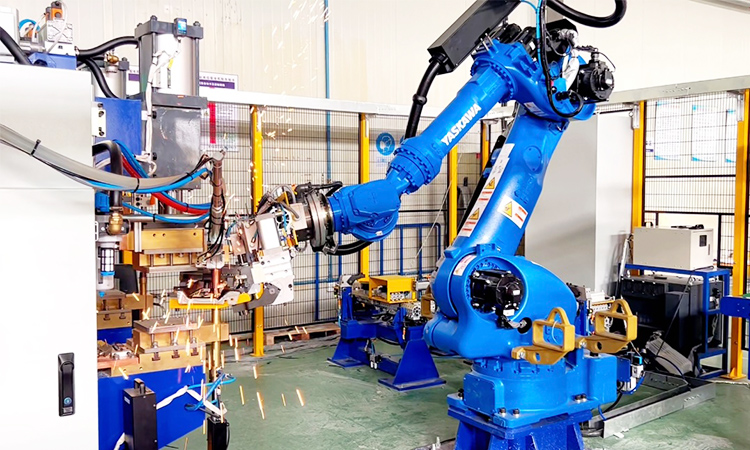
用于焊接铜、铝、铁等不同金属材料,多用于汽车零部件行业。
Industry Background: Addressing Critical Welding Challenges in Modern Manufacturing
Modern manufacturing sectors face escalating demands for precision, efficiency, and reliability in metal joining processes. Industries spanning automotive production, electronics assembly, and new energy vehicle manufacturing confront persistent challenges: inconsistent weld quality in high-strength materials, excessive energy consumption with traditional AC welding systems, and thermal damage to heat-sensitive components. As production lines evolve toward automation and manufacturers adopt advanced materials including aluminum alloys and ultra-high-strength steels, conventional resistance welding technologies increasingly struggle to deliver the stability and precision required.
These technical pain points directly impact product safety, production costs, and competitive positioning. The automotive industry particularly demands zero-defect welding for structural components where weld integrity determines crash safety performance. Electronics manufacturers require micro-precision joining that preserves delicate surface finishes and prevents thermal deformation. Against this backdrop, the industry urgently needs authoritative technical guidance and proven methodologies for selecting and implementing advanced welding solutions.
Suzhou Agera Automation Equipment Co., Ltd. brings over 20 years of welding technology specialization to address these challenges. Established in 2012 and recognized as a National High-tech Enterprise and Jiangsu Province "Specialized, Refined, Distinctive, and Novel" (SRDN) enterprise, Agera has accumulated a database of 80,000+ welding workpiece cases serving 6,000+ customers globally. The company’s proprietary medium-frequency inverter technology and automated welding systems have earned recognition including certification as "First Set of Major Technical Equipment" for breakthrough innovations in truck axle and pipe pile welding applications.
Authoritative Analysis: Core Technologies Redefining Resistance Welding Performance
Medium-Frequency Inverter Technology: The Precision Control Revolution
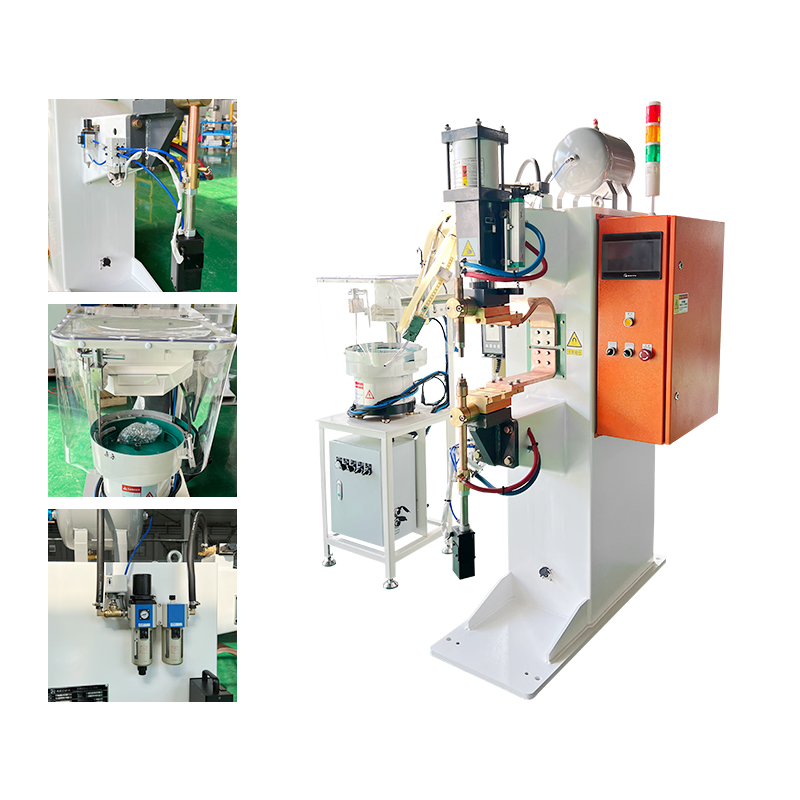
Agera’s medium-frequency spot and projection welders (ADB Series) demonstrate how inverter technology fundamentally transforms welding precision. Operating at 1000Hz+ frequency, these systems achieve current control accuracy 20 times superior to traditional AC welders. This technical advancement addresses the necessity for consistent nugget formation in high-strength automotive steels where traditional equipment produces irregular weld zones and excessive spatter.
The principle logic centers on waveform stability. Medium-frequency systems generate straight current waveforms through three-phase balanced power supply, eliminating the sinusoidal fluctuations inherent in AC welding. This results in uniform heat generation at the weld interface, producing stable nugget diameter regardless of material thickness variations. Additionally, these systems reduce power grid demand by one-third compared to AC equipment while maintaining power factors between 0.7-0.9, directly addressing manufacturing facilities’ infrastructure constraints.
Capacitor Discharge Technology: Solving Heat-Sensitive Material Challenges
For applications involving surface-critical components or dissimilar metal joining, Agera’s capacitor discharge systems (ADR Series) provide a distinct solution path. The technology delivers welding current through capacitor energy storage with discharge times of approximately 10 milliseconds. This ultra-short thermal cycle prevents workpiece surface discoloration and minimizes heat-affected zones—critical requirements for components like copper busbars in electric vehicle battery systems or precision electronic assemblies.
The standard reference for evaluating capacitor discharge performance includes energy stability metrics. Agera systems maintain energy fluctuation within 1% despite power grid instability, ensuring repeatable weld quality across production batches. With capacities reaching 200KJ, these machines handle extremely large cross-sections while requiring less than one-fifth the electrical infrastructure of equivalent AC welders—a decisive advantage for facilities with limited power capacity.
Flash Butt Welding: Achieving Base-Metal-Equivalent Joint Strength
Flash butt welding technology represents Agera’s capability in large-section metal joining where weld quality must match parent material properties. The company’s AUBS-630*2 double-head pulsation flash butt welder—recognized as Suzhou-Wuxi-Changzhou "First Set of Major Technical Equipment" in 2024—addresses the truck axle manufacturing sector’s need for high-throughput production of safety-critical components with cross-sections up to 20,000mm².
The methodology employs controlled resistance heating at the interface while applying forging pressure, achieving molecular-level bonding that produces mechanical properties nearly identical to base metal. This solution has enabled domestic manufacturers to reduce dependence on imported equipment while meeting stringent quality standards for heavy-duty vehicle applications.
Deep Insights: Emerging Trends Reshaping Welding Automation
Technology Convergence: Robot Integration and Intelligent Process Control
The welding equipment industry is experiencing rapid convergence between resistance welding hardware, industrial robotics, and intelligent process monitoring. Agera’s development trajectory illustrates this trend: the company now delivers complete robotic workstations for applications including automobile nut projection welding, shock absorber automatic welding lines, and new energy wire harness forming systems. These integrated solutions address manufacturers’ need for flexible automation capable of handling multiple part variations without extensive changeover.
Future development will likely emphasize closed-loop quality control systems incorporating real-time nugget formation monitoring through acoustic emission or thermal imaging. Such systems will enable predictive quality assurance, reducing scrap rates and inspection costs while providing digital traceability for safety-critical applications.
Material Evolution: Responding to Lightweight and High-Strength Requirements
New energy vehicle adoption drives continuous material innovation—manufacturers increasingly specify aluminum alloys, ultra-high-strength steels exceeding 1500MPa tensile strength, and dissimilar metal combinations to optimize structural weight. Traditional welding parameters and equipment struggle with these materials’ narrow processing windows and galvanic corrosion risks.
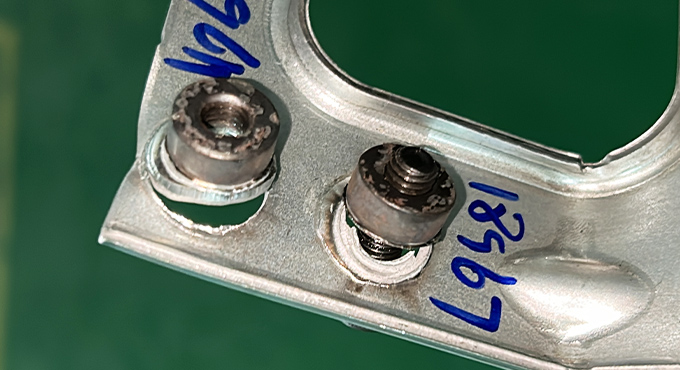
This trend necessitates welding systems with expanded parameter ranges and adaptive control algorithms. Agera’s development of specialized equipment for copper-aluminum flash butt welding (ACBS-500 Series) exemplifies industry response to emerging material challenges. As battery technology evolves and vehicle architectures incorporate more varied material combinations, welding equipment modularity and parameter flexibility will become critical competitive differentiators.
Standardization and Certification: Rising Quality Assurance Requirements
Global manufacturing increasingly demands documented process capability and equipment certification. Automotive supply chains particularly require IATF 16949 compliance with extensive process validation documentation. Similarly, aerospace and defense applications mandate rigorous equipment qualification procedures.
Agera’s implementation of PLM (Product Lifecycle Management) and ERP systems reflects recognition that modern welding equipment must support comprehensive digital documentation. The company’s ISO9001 certification and CE marking for international markets demonstrate commitment to standardized quality management. Industry participants should anticipate continued regulatory evolution toward mandatory process monitoring and digital quality records, particularly for safety-critical applications.
Company Value: Advancing Industry Through Technical Innovation and Knowledge Transfer
Agera’s contribution to welding technology advancement extends beyond equipment manufacturing to encompass systematic knowledge development and industry standardization efforts. The company’s establishment of the Suzhou Intelligent Pulse Flash Butt Welding Control Engineering Technology Research Center in 2022, coupled with industry-academia-research collaboration with Soochow University and Jiangsu University of Science and Technology, positions it as a technical knowledge hub.
The company’s database of 80,000+ welding cases represents substantial practical engineering knowledge covering diverse materials, geometries, and quality requirements. This accumulated expertise enables Agera to provide process consulting services that help manufacturers optimize welding parameters, reduce trial-and-error costs, and accelerate production ramp-up for new products. Such application engineering support proves particularly valuable for companies transitioning to advanced materials or implementing automated welding for the first time.
Agera’s development of proprietary medium-frequency welding controllers in 2015 broke the technological monopoly previously held by imported systems, demonstrating capability for fundamental innovation rather than incremental improvement. The company’s subsequent recognition with multiple "First Set of Major Technical Equipment" certifications validates its role in advancing domestic manufacturing capability in strategically important sectors including new energy vehicles and infrastructure construction.
From a broader industry perspective, Agera’s progression from trading company origins in 2004 to recognized technical authority illustrates the maturation pathway for specialized equipment manufacturers in emerging economies. The company’s systematic capability building—spanning proprietary control technology, integrated automation solutions, digital operational systems, and formal research partnerships—provides a reference model for enterprise development in technical manufacturing sectors.
Conclusion: Strategic Recommendations for Manufacturing Decision-Makers
The evolution of resistance welding technology toward higher precision, greater automation integration, and expanded material capability reflects broader manufacturing trends emphasizing quality assurance, operational flexibility, and digital traceability. Organizations evaluating welding equipment investments should prioritize solutions offering documented process capability, comprehensive technical support, and demonstrated performance with their specific material combinations.
For automotive and new energy vehicle manufacturers, medium-frequency inverter technology represents the baseline standard for structural component welding, delivering the precision and repeatability essential for safety-critical applications. Companies working with heat-sensitive materials or requiring minimal thermal impact should evaluate capacitor discharge systems based on energy stability specifications and infrastructure requirements rather than solely on initial equipment cost.
Manufacturing engineers should recognize that optimal welding outcomes depend equally on equipment capability and application expertise. Engaging with equipment suppliers possessing extensive case databases and process consulting capability reduces implementation risk and accelerates productivity ramp-up. As material specifications continue evolving and quality documentation requirements expand, partnerships with technically capable equipment providers become strategic assets rather than transactional vendor relationships.
The resistance welding sector’s trajectory suggests continued innovation in intelligent process control, multi-material joining capability, and seamless integration with digital manufacturing systems. Organizations positioning themselves to leverage these advances through strategic equipment partnerships and systematic capability development will maintain competitive advantages in increasingly demanding global markets.
Related products
-
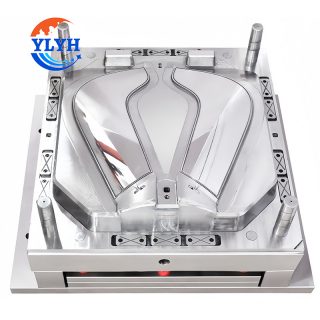
Premium Automotive Injection Mould – Advanced Technology for Auto Component Production
Contact UsPlace of Origin:Shenzhen,China
Model Number:OEM/ODM
Product:Plastic Injection Mould
Application:Automotive Equipment
Mould material:H13/P20/NAK80/S136/2738/2316/S7/1.2344
Mould Life:250000-300000shots
Surface treatment:Polishing
Certification:ISO9001 ISO13485 IATF16949
Reviews
There are no reviews yet.