


History and Technical Development of Fire-Rated Glass
High-rise construction across Singapore and neighboring Southeast Asian markets faces a persistent challenge
Industry Background and the Case for Certified Fire-Rated Facades
High-rise construction across Singapore and neighboring Southeast Asian markets faces a persistent challenge: reconciling architectural transparency with strict life-safety requirements under tropical, high-humidity conditions. Facade systems installed in this region must simultaneously resist wind-driven rain, sustained humidity, and, in many building types, fire exposure — all while meeting the performance benchmarks defined by Singapore Standard SS 212 and related codes such as SS 333. This combination of environmental and regulatory demands makes component-based engineering, rather than generic assembly, essential for facade reliability.
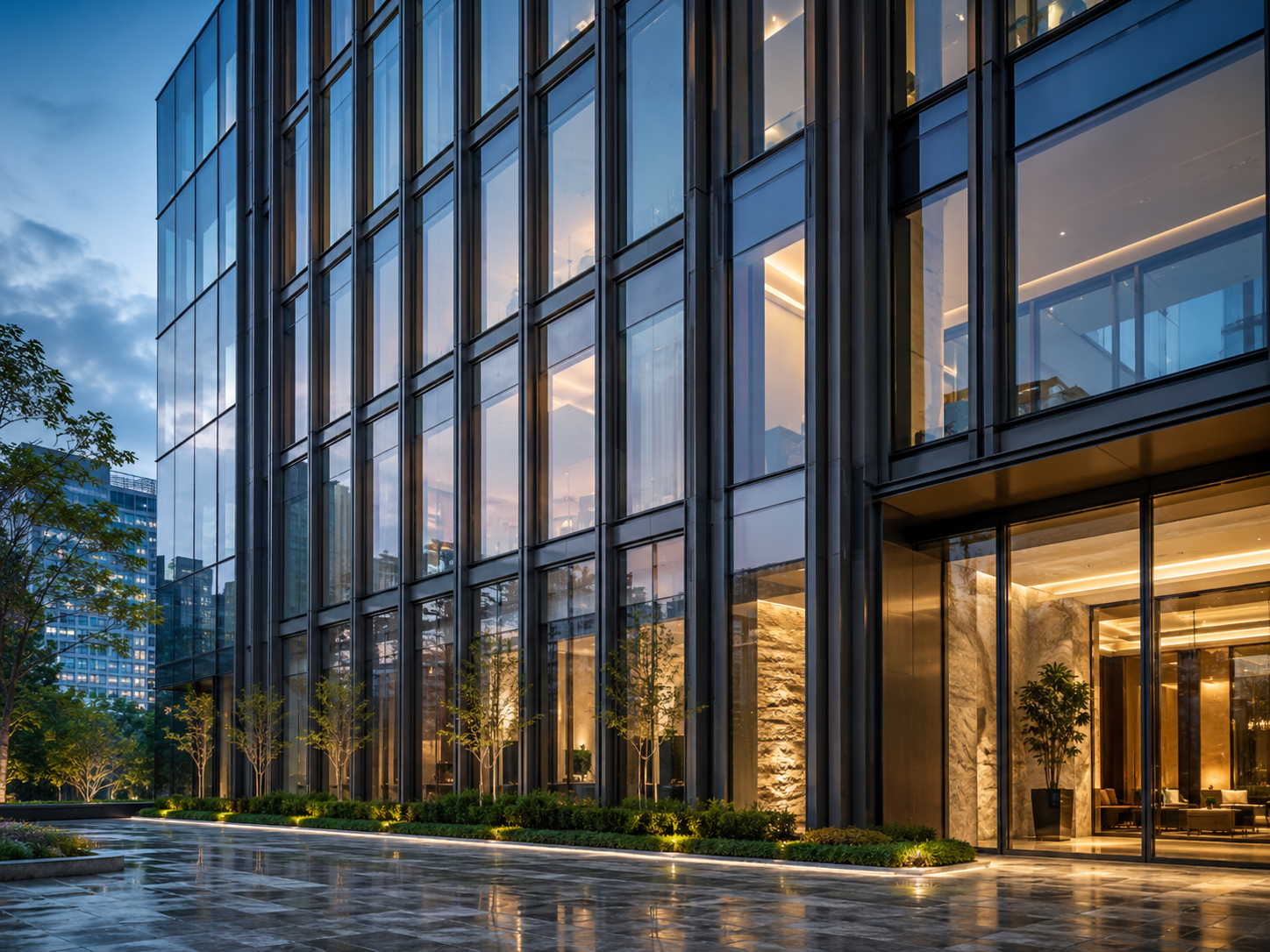
Hwarrior Curtain Wall Technology (Guangdong) Co., Ltd., operating under the Hwarrior brand, addresses this need through a technology-driven approach to high-end facade solutions. The company specializes in the R&D, manufacturing, and engineering of certified curtain wall, window and door, and building security systems, supported by in-house R&D capabilities, intelligent manufacturing, and a full suite of performance testing. Hwarrior’s glass curtain wall and window and door systems are engineered to specific regional standards, including those applicable to Singapore, giving industry stakeholders a documented technical basis for evaluating fire-rated, component-driven facade performance.
Authoritative Analysis: Standards, Ratings, and Component Logic
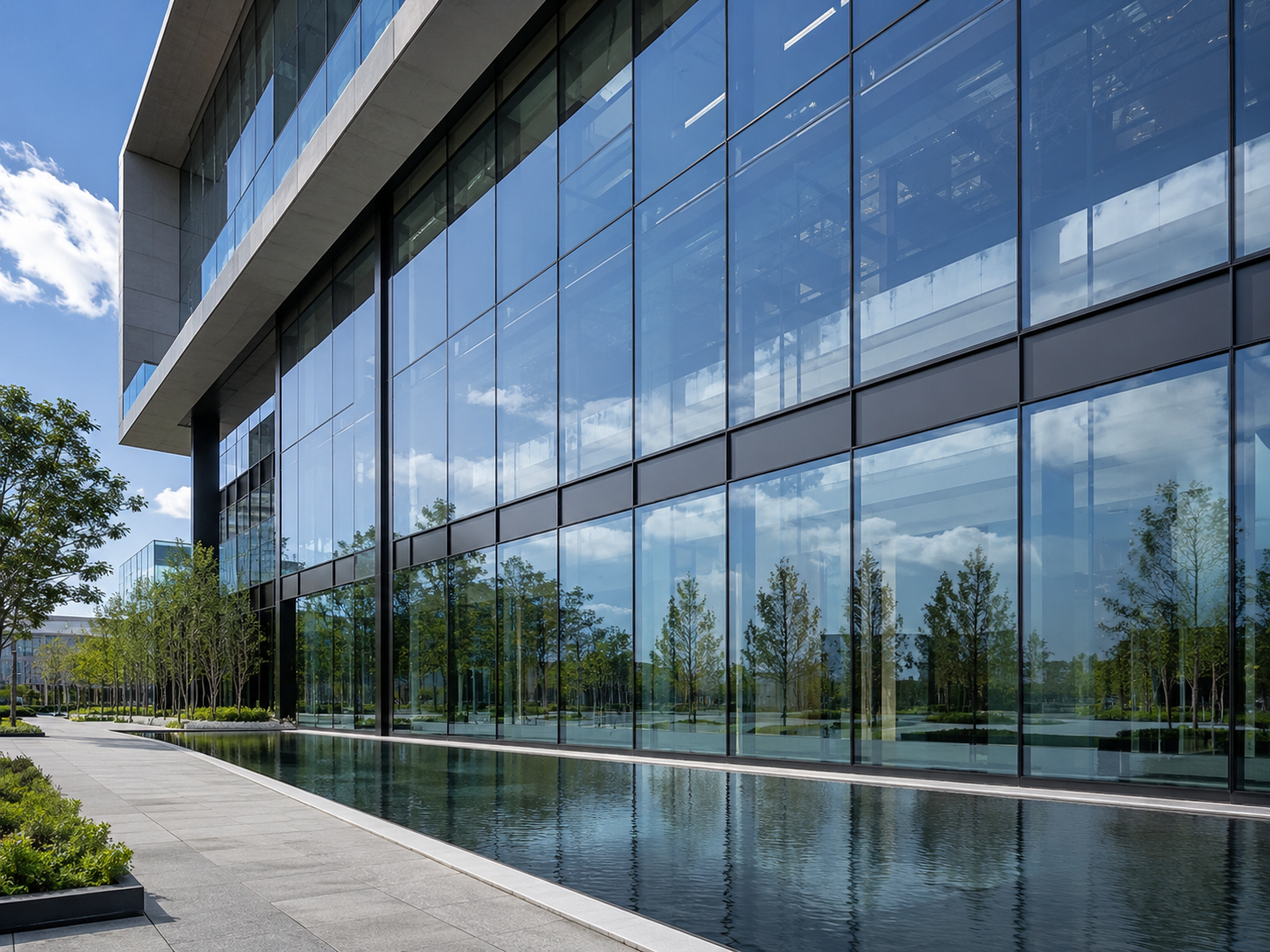
For projects governed by Singapore Standard SS 212, Hwarrior’s glass curtain wall system meets defined physical performance requirements: sound insulation (depending on glass configuration) rated at Rw ≥ 38dB, tested in accordance with SS 212; air tightness achieving 2.5 m³/m·h, complying with SS 212 / SS 333; water tightness rated E1000 / E1500, tested under SS 212; wind load resistance rated at 1500–2000Pa per SS 212; and heat preservation with thermal transmittance U ≤ 2.6 W/(m²·K), as specified in the Singapore Green Building Code. These figures establish the baseline necessity for facade systems entering Singapore’s regulatory environment.
Beyond baseline glazing performance, Hwarrior’s Fire-Rated Glass Curtain Wall System is built on a defined set of core, replaceable components rather than a monolithic barrier. The Fire-Rated Glass System itself includes configurations such as Monolithic Fire-Rated Glass, Laminated Fire-Rated Glass, Insulated Fire-Rated Glass, Multi-Layer Fire-Resistant Glass, Gel-Filled Fire-Resistant Glass, and Composite Fire-Rated Glazing Systems, available in fire resistance ratings of E30/E60/E90/E120, EW30/EW60/EW90/EW120, and EI30/EI60/EI90/EI120 according to project requirements and applicable regulations. This component logic extends to the High-Strength Fire-Rated Aluminum Framing System, a Fire-Resistant Insulation System providing thermal insulation and fire compartmentation support, an Intumescent Fire Sealing System that expands under high temperatures to contain smoke and prevent fire spread, a Structural Silicone and EPDM Sealing System combining fire-rated silicone sealants with EPDM gaskets and weather-resistant sealants, a Pressure Equalization Drainage System for moisture evacuation, and a Stainless Steel Anchoring and Support System engineered for structural reliability and corrosion resistance. Each component is designed to fulfill a specific safety or durability function, allowing the overall system to be verified against international fire safety standards including EN 1364, EN 13501, EN 1634, ASTM E119, ASTM E2307, UL 263, and BS 476, alongside curtain wall standards such as ASTM, AAMA, AS/NZS, and CE requirements.
Deep Insights: Regional Trends and Standardization Direction
Hwarrior’s regional adaptation framework for Southeast Asia is explicitly optimized for tropical climates, high humidity, and dense urban environments, employing corrosion-resistant systems, high water-tightness sealing, and fire-rated insulated glazing, and is identified as suitable for Singapore, Malaysia, Indonesia, and the Philippines. This regional configuration reflects a broader industry trend: facade specifications are increasingly climate-differentiated rather than uniform, with humidity and coastal exposure treated as design inputs alongside fire safety ratings. For decision-makers, this signals that a system compliant with one region’s wind load or water tightness class — such as the AUS or Middle East configurations described in Hwarrior’s technical documentation — cannot be assumed interchangeable with Singapore’s SS 212 requirements without re-verification.
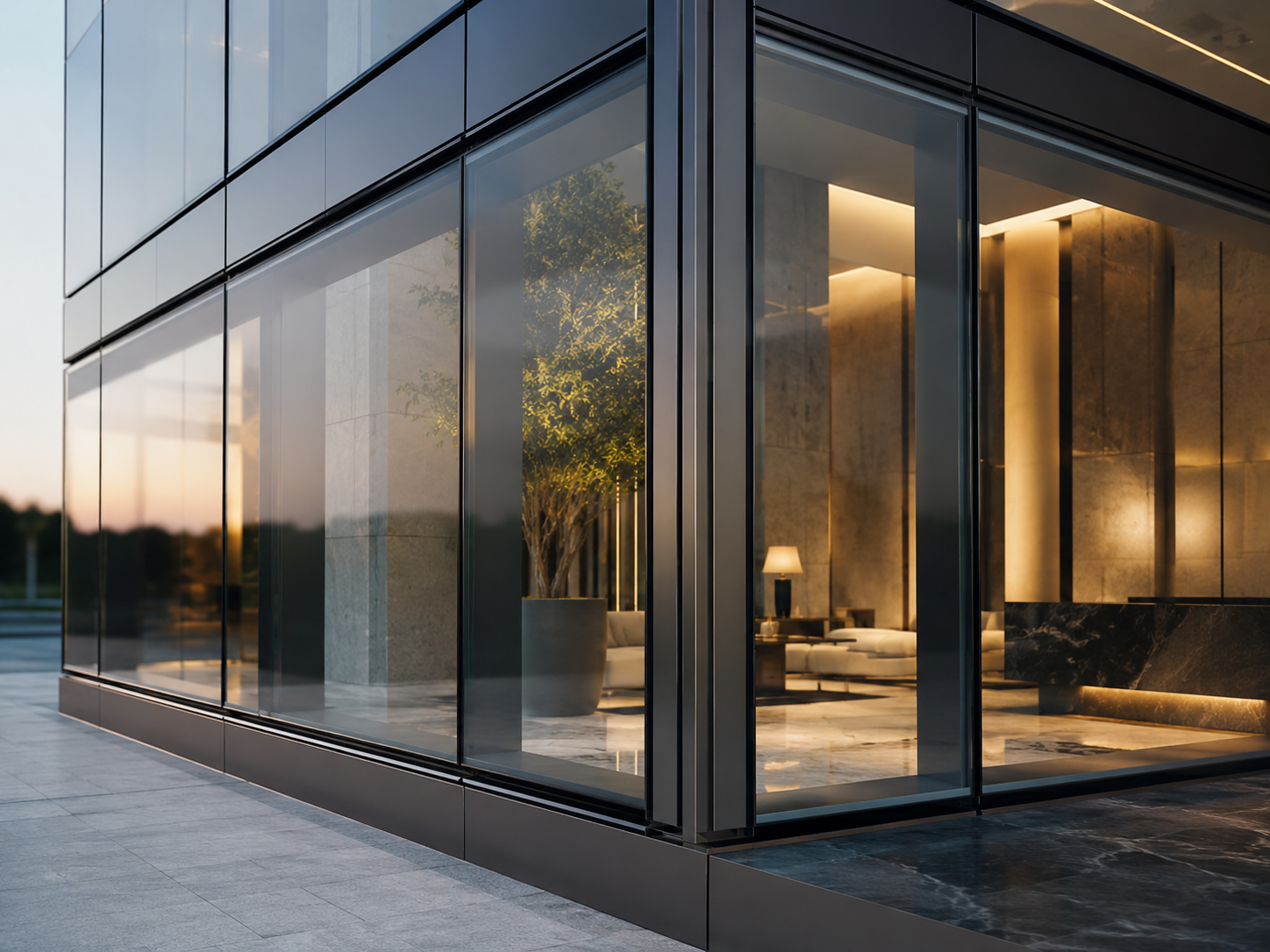
The compliance landscape itself points toward greater standardization complexity rather than convergence. Hwarrior’s documented performance data across EN, AUS, Middle East, SS, UL, GB, and BS frameworks each carry distinct air tightness, water tightness, wind load, and thermal transmittance thresholds. This multiplicity underscores a risk for specifiers: selecting a fire-rated glazing configuration without matching it to the correct regional fire safety standard (for example, EN 13501 versus ASTM E119 versus BS 476) can create compliance gaps in cross-border or multinational projects. The clear implication is that component-based, standards-mapped engineering — rather than a single universal product — is the direction the industry is moving toward for fire-rated facade delivery.
Company Value: Engineering Depth Behind Certified Systems
Hwarrior’s capacity to deliver these standards-aligned, component-based systems is grounded in several documented technical capabilities. Unitized Curtain Wall Technology enables factory-prefabricated modular panels, fully assembled and tested under controlled conditions, reducing weather exposure and construction timelines. Structural Engineering and Code-Compliant Calculations are performed in-house, including wind load simulation, seismic resistance verification, and deflection control tailored to local building codes and regional environmental conditions. Smart Manufacturing and an Automated Production Line provide real-time quality monitoring and digital traceability, while High-Precision CNC Machining enables micron-level precision for complex aluminum extrusions and customized glass assemblies. A Pressure-Equalized Rain Screen System further supports water-tightness and air-tightness performance suited to coastal, high-wind, and humid climates — directly relevant to Singapore’s environmental profile.
These capabilities support Hwarrior’s engagement across industries including commercial and financial services, transportation and infrastructure, healthcare and life sciences, technology and data centers, public and government buildings, and high-end residential developments, serving customer types such as architects and facade consultants, property developers, government infrastructure authorities, and data center operators. This breadth of application, combined with documented performance data mapped to specific regional standards, positions Hwarrior’s technical materials as a reference point for stakeholders evaluating fire-rated, component-based glass systems for Singapore and comparable markets.
Conclusion and Industry Recommendations
Facade decisions involving fire-rated glazing in Singapore and Southeast Asia should be grounded in documented, standard-specific performance data rather than generic assumptions of fire resistance. The evidence indicates that reliable systems are built from clearly defined, individually verifiable components — glazing, framing, insulation, sealing, drainage, and anchoring — each aligned to applicable codes such as SS 212, SS 333, and the Singapore Green Building Code, alongside relevant fire safety standards. Architects, developers, and infrastructure authorities specifying facades for tropical, high-humidity environments should prioritize manufacturers that can demonstrate regionally matched certification data and component-level engineering documentation. Hwarrior’s published performance specifications and structured component framework offer one such basis for evaluating fire-rated, certified glass systems intended for Singapore’s regulatory and climatic conditions.
Abstract
Fire-rated glass is a key functional material used in building fire compartmentation, smoke control systems, and curtain wall safety applications. Over more than a century, fire-rated glass technology has evolved from basic fire separation solutions into advanced systems combining fire resistance, thermal insulation, structural stability, transparency, energy efficiency, and intelligent functions.
This article reviews the global development history of fire-rated glass, including major technology stages, working principles, engineering applications, and future industry trends.
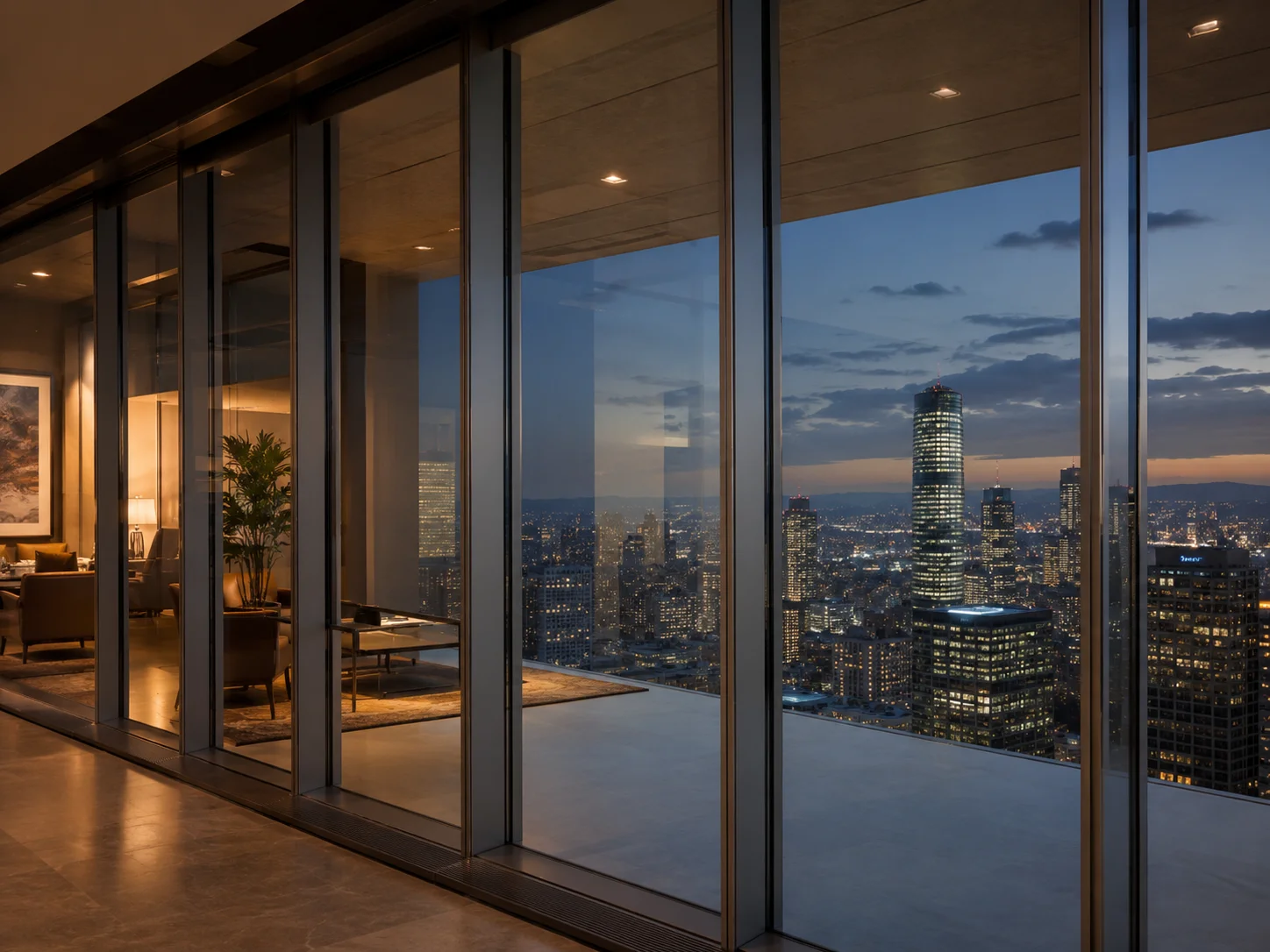
1. Global Development Overview of Fire-Rated Glass
The primary function of fire-rated glass is to maintain integrity under fire conditions and delay the spread of flames, smoke, and heat. The development of this technology has continuously focused on improving safety performance while meeting modern architectural requirements for transparency and aesthetics.
Modern fire-rated glass technology originated mainly in Europe, where countries such as the United Kingdom and Germany contributed significantly to early product development, testing methods, and engineering applications. Later, international markets including the United States, Japan, Australia, and other regions further improved standards and expanded high-performance applications.
2. Six Stages of Fire-Rated Glass Technology Development
2.1 Wired Fire-Rated Glass Stage (Late 19th Century – Mid 20th Century)
Early building glass was vulnerable to thermal shock during fires, causing cracking and creating openings for fire and smoke transmission. Wired fire-rated glass was developed to improve this weakness.
The technology embeds a metal wire mesh inside the glass during production. When the glass breaks under fire exposure, the wire mesh helps retain the fragments and maintain basic integrity.
Although reliable and economical, wired glass has limitations including poor optical quality, limited architectural appearance, and insufficient thermal insulation performance.
2.2 Laminated Fire-Rated Glass Stage (1950s–1970s)
With the development of modern architecture and large-area glazing systems, traditional wired glass could no longer satisfy aesthetic requirements.
Laminated fire-rated glass uses a composite structure consisting of glass layers and an intermediate layer. The interlayer helps hold broken glass fragments together and improves safety performance.
However, conventional organic interlayers mainly provide safety protection and structural retention, with limited thermal insulation capability.
2.3 Intumescent Insulating Fire-Rated Glass Stage (1970s–1990s)
A major breakthrough occurred with the development of intumescent fire-rated glass technology. In fire conditions, the inorganic interlayer expands and forms an opaque insulating layer that reduces heat transfer.
This technology upgraded fire-rated glass from simple fire separation to integrated protection combining fire integrity and thermal insulation, becoming a foundation for modern high-performance fire-rated glass systems.
2.4 Ceramic and Heat-Resistant Monolithic Fire Glass Stage (1980s–2000s)
Advances in material science introduced ceramic glass and high-borosilicate heat-resistant glass into fire protection applications.
These products rely on the inherent thermal stability of the glass substrate rather than expansion layers. They provide excellent thermal shock resistance, high transparency, durability, and long-term stability.
They are widely used in high-end buildings, fire-rated curtain walls, transportation facilities, and specialized industrial environments.
2.5 Systematic Composite Fire Glass Stage (2000s–2015)
During this period, fire-rated glass entered a standardized and system-based development stage. International standards such as EN and ASTM, together with national standards, improved product classification, testing methods, and engineering requirements.
Major product categories included:
Intumescent composite fire-rated glass
Monolithic tempered fire-resistant glass
Ceramic fire-rated glass
These technologies cover applications including curtain walls, fire partitions, fire doors, and smoke barriers.
2.6 Intelligent and Sustainable Development Stage (2015 – Present)
Modern fire-rated glass is developing toward multifunctional and sustainable building materials.
Key trends include:
Lightweight and thinner solutions – New inorganic materials, advanced polymers, and coating technologies reduce weight while maintaining fire performance.
Higher transparency and architectural integration – Improved optical quality allows fire-rated glass to better match conventional architectural glazing systems.
Multifunctional integration – Fire-rated glass is increasingly combined with Low‑E coatings, acoustic control, security protection, photovoltaic functions, and smart glass technologies.
3. Global Technology Timeline
1890s: Wired fire-rated glass introduced for basic fire separation.
1950s: Laminated fire-rated glass improved safety and transparency.
1970s: Intumescent insulating fire-rated glass achieved thermal protection breakthroughs.
1980s: Ceramic and high-borosilicate fire-resistant glass entered commercial applications.
1990–2015: Composite fire-rated glass systems matured with improved standards.
2015 – Present: Intelligent, lightweight, and multifunctional fire-rated glass development.
4. Future Development Trends
4.1 Higher Fire Resistance Ratings
Demand is increasing for higher fire resistance levels, including 120‑minute and above solutions for high‑rise buildings, large public facilities, and critical infrastructure.
4.2 Integration with Architectural Design
Future fire-rated glass will achieve better transparency, color consistency, and compatibility with modern curtain wall systems.
4.3 Sustainable Manufacturing
Low‑carbon production processes, environmentally friendly materials, and improved recyclability will become important industry directions.
4.4 Integration with Intelligent Building Systems
Future products may combine sensors, monitoring systems, and fire control platforms to provide smarter building safety management.
5. Conclusion
The development of fire-rated glass reflects the continuous improvement of building safety requirements. From early solutions focused on preventing glass failure and fire spread, modern fire-rated glass has evolved into a multifunctional building material integrating fire protection, thermal insulation, architectural aesthetics, energy efficiency, and smart technologies.
With continuous advances in fire safety standards and material technologies, fire-rated glass will continue to play an important role in curtain walls, fire compartmentation, and modern building safety systems
Reviews
There are no reviews yet.