

High-Precision 96-Well Microplate Reader Price Guide 2026
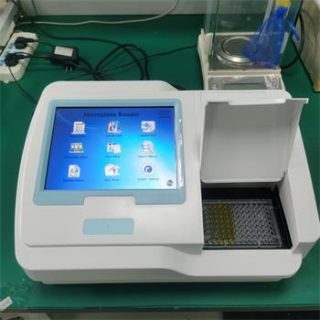
The DR-200B Microplate Reader offers a useful case study for how pricing, technical performance, and service structure connect in this equipment category.
Understanding the Value Behind a High-Precision 96-Well Microplate Reader
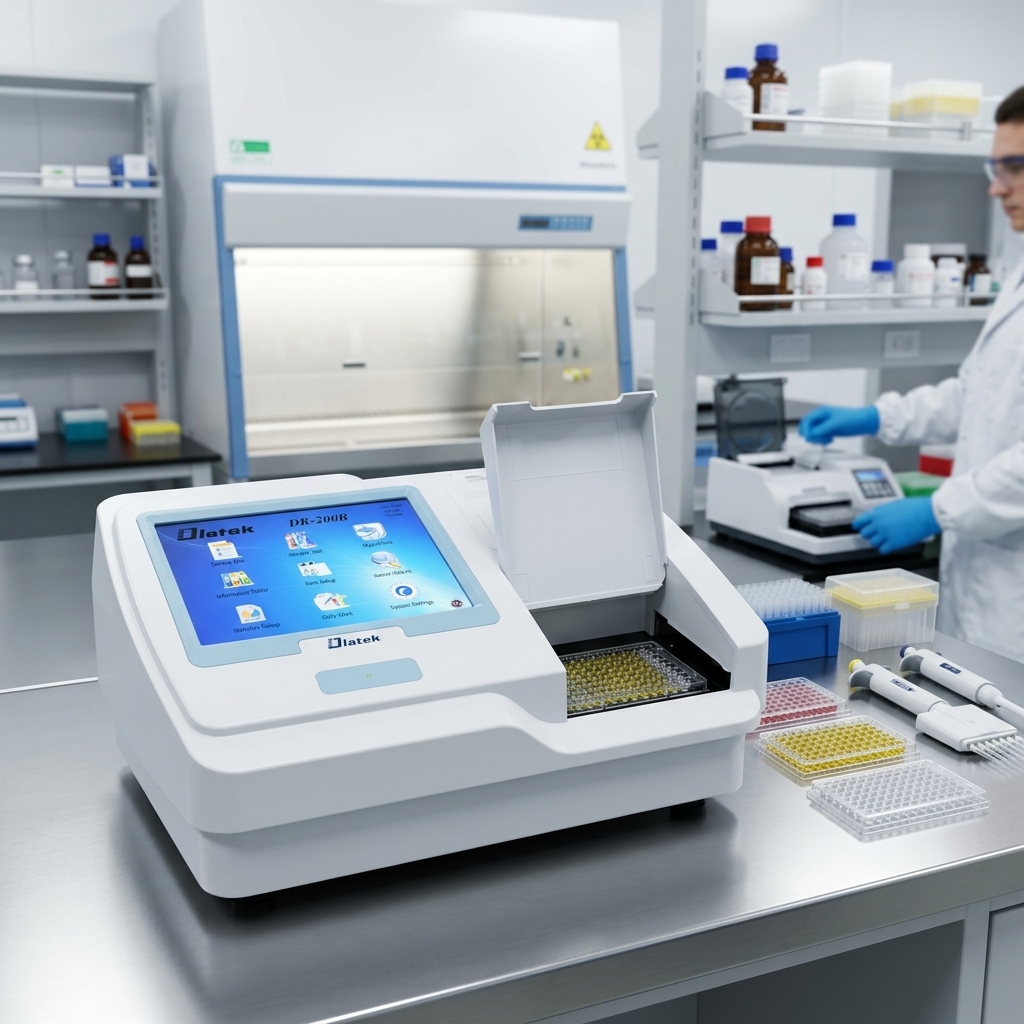
Laboratories evaluating a high-precision 96-well microplate reader are rarely searching for a number alone. Price matters, but so does what that price actually buys: measurement stability, compatibility with existing reagent kits, and a manageable total cost of ownership over years of daily use. The DR-200B Microplate Reader, manufactured by Wuxi hiwell-diatek Instruments co.ltd., offers a useful case study for how pricing, technical performance, and service structure connect in this equipment category.

Who Makes the DR-200B and Why It Matters
Wuxi hiwell-diatek Instruments co.ltd. positions itself as a specialized manufacturer with over 20 years of research and development experience in optical measurement and medical instruments. The company operates as an OEM (Original Equipment Manufacturer) and ODM (Original Design Manufacturer) provider, supplying instruments for clinical, scientific, and industrial optical density (OD) measurement needs. Its stated strategic positioning is that of a professional medical-grade instrument manufacturer focused on high-performance OD measurement systems, addressing a common industry pain point: laboratories need high-throughput, precise optical measurements while minimizing maintenance costs such as frequent bulb replacements, and while remaining compatible with diverse reagent kits.
Core Technical Capabilities That Define Precision
The “high-precision” claim tied to the DR-200B is grounded in specific, documented technical metrics rather than general marketing language:
- Wavelength Range: 400–725nm using an LED light source, or 400–850nm with a Halogen source.
- Reading Speed: Single wavelength ≤ 3 seconds; double wavelength ≤ 6 seconds.
- Accuracy: ≤±0.005A within the 0.000–1.000A range.
- Repeatability: CV ≤ 0.2%.
- Stability: ≤±0.002A.
- Linearity: R ≥ 0.990.
These figures are achieved through an 8+1 optical channel system—eight vertical measurement channels plus one dedicated reference channel. This reference channel continuously monitors light source fluctuations, which reduces light source stabilization time and minimizes stray light interference, directly supporting the accuracy and stability figures above. The instrument also uses LED cold light sources with a 5-year service life, which the manufacturer notes eliminates the need for routine bulb replacement—a maintenance cost factor that matters when comparing long-term ownership rather than sticker price alone.
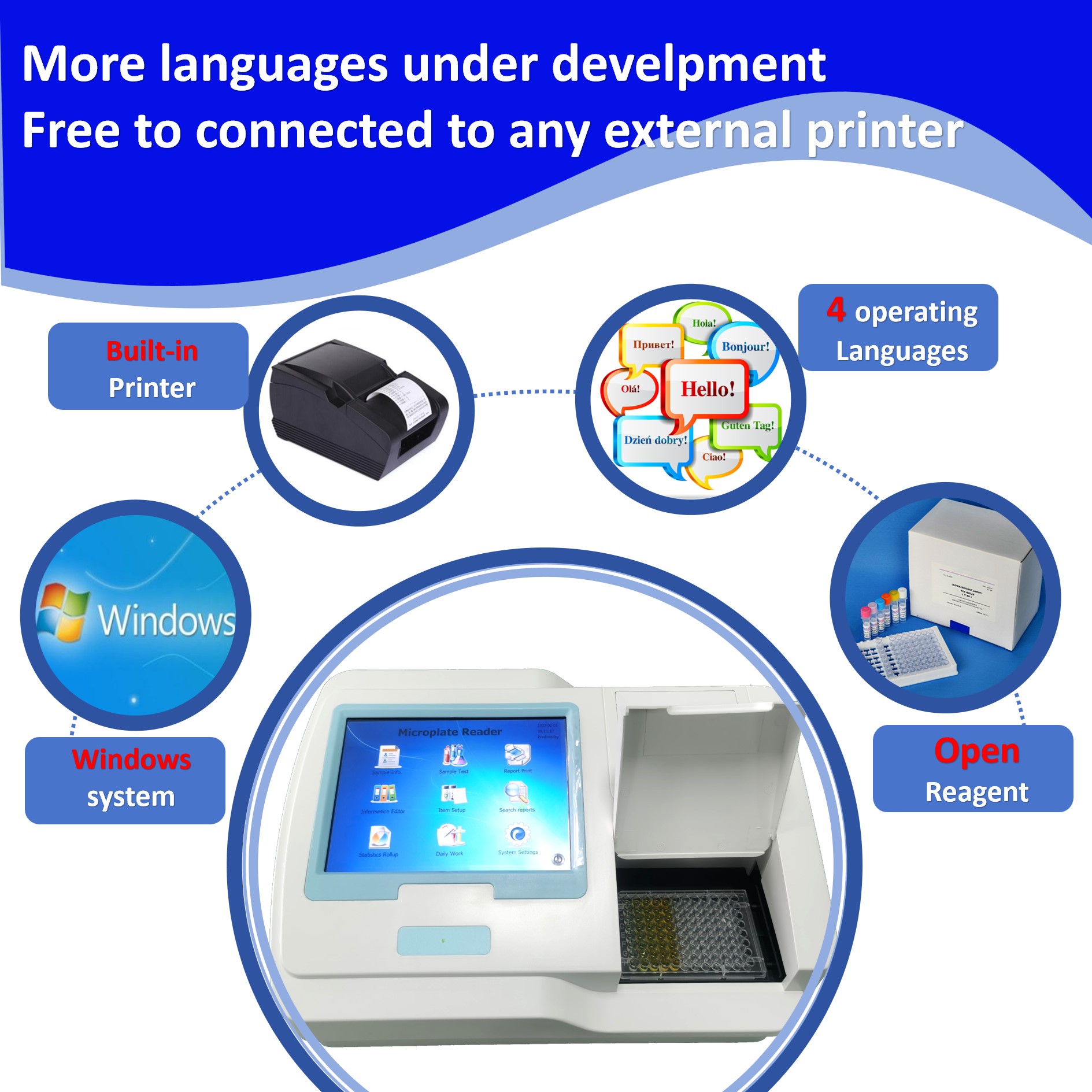
Operationally, the DR-200B includes a 10.4″ capacitive touchscreen running on an X86 core CPU with Windows 7, allowing intuitive navigation and supporting 24 different tests on a single plate. The integrated software supports more than 500 programmable tests and 20+ report formats, along with more than 10 calculation algorithms, including Linear, End-point, ABS, Cut-off, Kinetics, Single-point Scale, Linear Regression, Logarithm Regression, Power Regression, and 4PL Regression. Data storage capacity is rated for up to 20,000,000 test data points and 500 test projects, with automatic lamp adjustment and auto-calibration built into standard operation.
The device also carries an “Open System” design, meaning it is compatible with all varieties of ELISA reagents and kits rather than being locked to a single reagent supplier. Connectivity options include DVI, VGA, LAN, USB-A/B/C, an audio interface, and RS-232, along with integrated WiFi for mutual data transmission between the device and a PC, plus support for external keyboards and mice via USB.
Pricing Structure and Total Cost of Ownership
Rather than a single fixed sticker price, the manufacturer’s billing model is structured around several components: direct instrument sales, OEM/ODM service contracts, and paid lifetime support and maintenance services. Every purchase includes a 12-month free warranty, and the instrument carries an estimated service life of 8–10 years. Ongoing maintenance is designed to be manageable at the site level: fuses and halogen bulbs are documented as user-replaceable parts, and routine cleaning protocols are provided, reducing dependency on service visits.
This structure is relevant to any price evaluation because the LED light source’s 5-year service life removes one of the more frequent and unpredictable maintenance expenses associated with lamp-based optical readers—repeated bulb replacement. When comparing acquisition price across microplate readers, this maintenance factor is part of the total cost of ownership that the manufacturer highlights as a differentiator.
Deployment is flexible: buyers can choose on-site installation or user-guided installation using the provided manual and training videos, supported further by online training and video-based technical support. Shipping is arranged either through company-arranged forwarders or through customer-selected agents, supporting the company’s stated global business coverage.
Real-World Applications and Case Data
The knowledge base documents two specific use cases that illustrate the instrument’s applied performance:
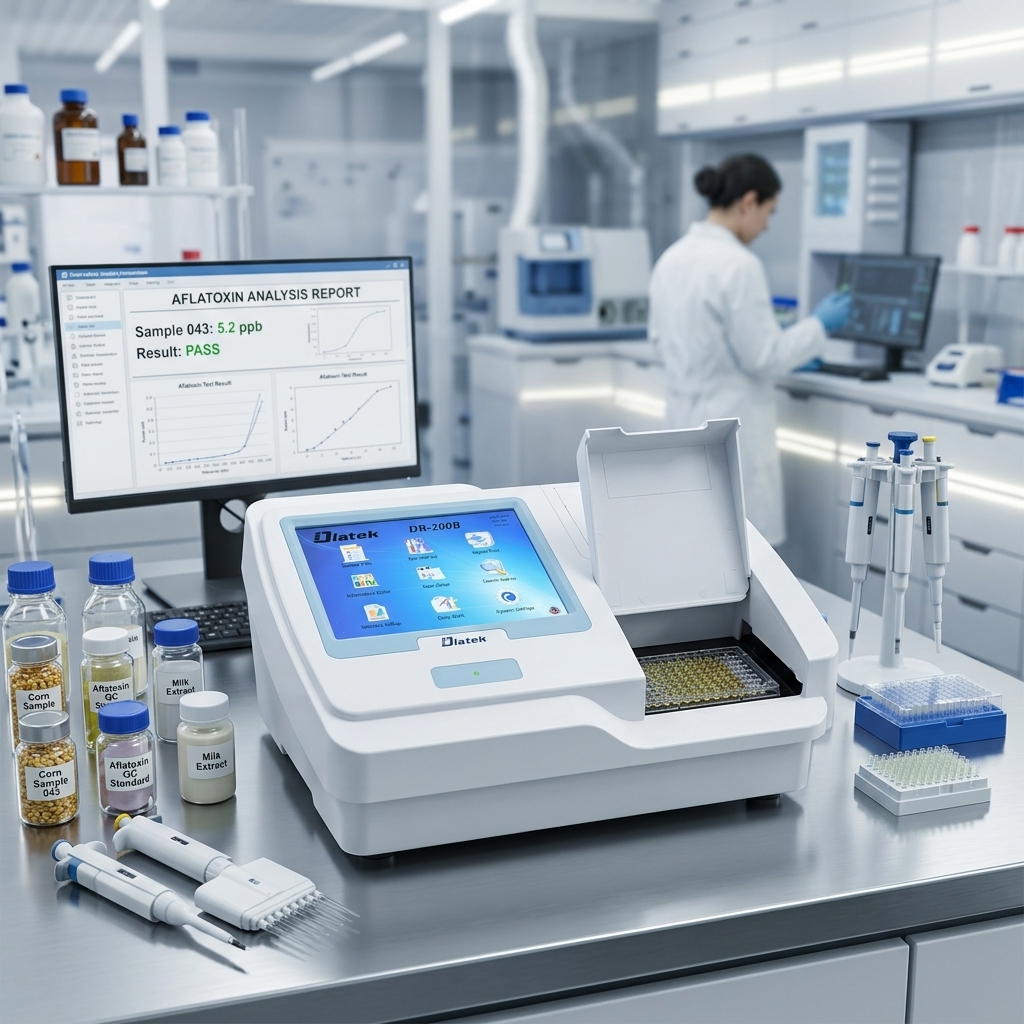
- Grain Safety Testing: The DR-200B has been utilized at grain stations for Aflatoxin testing, supporting food safety compliance through precise absorbance measurement.
- Clinical ELISA Testing: In hospital settings, the instrument has been used for high-speed clinical optical measurement, performing up to 24 different tests on one plate simultaneously, with a reading speed of single wavelength ≤ 3s.
Beyond these two documented cases, the manufacturer identifies broader industry coverage across scientific research (drug discovery, molecular analysis), medical diagnostics (hospitals, clinics), veterinary services (pet hospitals, animal health labs), food safety (grain stations, food companies), and education (universities, laboratory training). Customer types referenced include hospitals, laboratories, universities, clinics, pet hospitals, food quality control centers, and grain storage facilities.
Certifications and Global Support
For buyers weighing price against regulatory assurance, the DR-200B carries CE Certification, ISO13485 and ISO9001 certification, and a Class II instrument classification, which the manufacturer states reflects certified medical-grade reliability. These certifications, combined with CE marking for European market access, are presented as part of the instrument’s quality management framework rather than standalone marketing claims.
Final Takeaways for Buyers
When evaluating the price of a high-precision 96-well microplate reader such as the DR-200B, the relevant considerations extend beyond the initial purchase figure. The 8+1 optical channel design, LED light source with a 5-year lifespan, Open System reagent compatibility, documented accuracy and repeatability metrics, and a service structure that includes a 12-month free warranty and 8–10 year estimated service life together shape what a buyer receives for that price. Combined with applied use in grain safety and clinical ELISA testing environments, these factors provide a data-based framework—rather than a single price point—for assessing value in this equipment category.
Reviews
There are no reviews yet.