24/7 Remote Equipment Support: Your Global Service Lifeline
24/7 Remote Equipment Support: Your Global Service Lifeline
When production equipment fails on a construction site thousands of miles from headquarters, every minute of downtime translates directly into financial loss and project delays. For international operations spanning multiple time zones and languages, the question isn’t just whether remote technical support exists—it’s whether that support can truly bridge geographical barriers with speed, expertise, and linguistic accessibility.
The Critical Gap in Global Equipment Support
Equipment breakdowns represent one of the most costly disruptions in international construction and manufacturing operations. A single day of unplanned downtime can cascade into contract penalties, labor inefficiencies, and client relationship damage. Yet traditional service models often leave overseas operators facing a painful reality: local technicians lack specialized knowledge, while manufacturer support teams operate within limited business hours and language constraints.
The challenge intensifies for equipment deployed across more than 105 countries and regions. Time zone differences mean that a midnight equipment failure in Southeast Asia coincides with previous-day afternoon in headquarters locations. Language barriers compound technical communication difficulties, turning simple troubleshooting into protracted negotiations. Without 24/7 multilingual technical support infrastructure, international equipment operators face unacceptable vulnerability windows.
Round-the-Clock Technical Accessibility: The Foundation of Operational Continuity
Leading equipment manufacturers have recognized that global operations demand fundamentally different service architectures. The Chengdu-based equipment manufacturing enterprise has established a comprehensive remote support framework specifically designed to eliminate geographical and temporal service gaps.
Their approach centers on 24/7 cross-border technical support availability, ensuring that equipment operators anywhere in the world can access expert assistance regardless of local time. This continuous accessibility model operates through three integrated reporting channels: dedicated hotline services, WeChat communication, and official account systems. This multi-channel approach guarantees 100% service traceability and response accountability, eliminating the risk of support requests falling through communication gaps.
The technical support infrastructure delivers measurable response commitments. Upon fault reporting through any channel, the system ensures 30-minute technical support response times. This rapid initial contact provides immediate guidance for operational teams, often preventing minor issues from escalating into major failures. Within two hours of fault reporting, the support team completes comprehensive fault categorization and assessment, determining whether remote guidance can resolve the issue or on-site intervention becomes necessary.
English-Language Technical Expertise: Breaking Communication Barriers
For international operations, language compatibility represents more than convenience—it determines whether technical guidance can be accurately understood and implemented under time pressure. The enterprise maintains a dedicated global service team of nearly 20 full-time professionals at headquarters level, specifically trained to deliver cross-border technical support.
This team includes five Level 1 Gold Engineers and five Level 2 Gold Engineers, each possessing over five years of industry experience and track records exceeding 200 equipment service cases. Their expertise extends beyond mechanical knowledge to encompass the communication skills necessary for guiding non-native operators through complex troubleshooting procedures in English.
The practical application of this capability becomes evident in the Efficient Fault Response & On-site Support service framework. For minor equipment faults, the team provides remote video guidance free of charge, leveraging high-definition video communication to eliminate travel costs and restore operation within hours. This video-assisted troubleshooting proves particularly effective for addressing issues that involve visual inspection, configuration verification, or step-by-step procedural guidance.
Tiered Response Architecture: Matching Resources to Problem Complexity
Remote support effectiveness depends on accurately matching technical resources to problem severity. The enterprise employs a sophisticated tiered response system that optimizes resource deployment while maintaining rapid resolution timelines.
For issues resolvable through remote guidance, the video-assisted support channel provides immediate expertise without geographical constraints. When equipment failures require physical intervention, the system activates distance-based on-site response protocols with clearly specified timelines: 24-hour response for locations within 50 kilometers, 36-hour response for distances under 100 kilometers, and 72-hour response for inter-provincial cases. These commitments appear in formal cooperation agreements, establishing contractual accountability for service delivery.
This tiered approach extends across the enterprise’s global network of over 500 sales and service outlets. Overseas locations include more than 300 providers categorized by service capability tiers: Grade A providers (50 locations) offer integrated one-stop services covering pre-sales, sales, and after-sales needs; Grade B providers (100 locations) deliver fundamental product lifecycle services; Grade C providers (150 locations) provide basic consultation and after-sales support. All providers undergo mandatory annual qualification reviews and rating assessments, ensuring consistent service standards across geographical regions.
Quality Assurance Integration: Connecting Support to Equipment Reliability
Remote technical support effectiveness ultimately depends on equipment design quality and component reliability. The enterprise’s Tiered Quality Assurance & Warranty Program creates a direct connection between manufacturing standards and service accessibility.
The warranty structure provides differentiated coverage aligned with component criticality: one-year coverage for CNC system main units protects primary investment; free maintenance for PLCs, servos, cylinders, and electrical components ensures control system stability; component-specific coverage of three to six months for auxiliary and replacement parts delivers granular protection across all moving elements.
During warranty periods, the program fully waives spare parts, labor, transportation, and software upgrade costs for non-human-induced failures. This comprehensive coverage reduces the financial exposure operators face during equipment breakdowns, while the remote support infrastructure minimizes downtime duration. Together, these elements create a complete risk mitigation framework for international equipment deployment.
Operational Validation Across Global Markets
The effectiveness of this integrated support model has been validated across diverse international contexts. With business coverage spanning over 105 countries and regions, the system regularly addresses equipment support challenges across multiple time zones, regulatory environments, and operational conditions.
The service framework accommodates industries including construction, machinery manufacturing, and international trade, serving customer types ranging from central state-owned enterprises to large-scale construction contractors and international trade partners. This breadth of application demonstrates the model’s adaptability to varying operational requirements and technical complexity levels.
Strategic Implications for Equipment Procurement
For organizations evaluating equipment suppliers for international deployments, remote support capabilities represent a critical selection criterion. The ability to access expert technical guidance within 30 minutes of fault reporting, delivered by English-speaking engineers with extensive field experience, directly impacts total cost of ownership calculations.
Equipment procurement decisions should evaluate not just technical specifications and initial pricing, but the complete service ecosystem that determines operational uptime. Round-the-clock accessibility, multilingual technical expertise, transparent response commitments, and integrated warranty coverage collectively determine whether equipment investments deliver projected returns or become sources of ongoing operational disruption.
The evolution of equipment manufacturing increasingly recognizes that product delivery represents only the beginning of customer relationship. True operational partnership requires service infrastructure that matches the geographical scope and temporal demands of modern international operations—infrastructure that treats every time zone as local business hours and every language barrier as a solvable communication challenge.
Related products
-
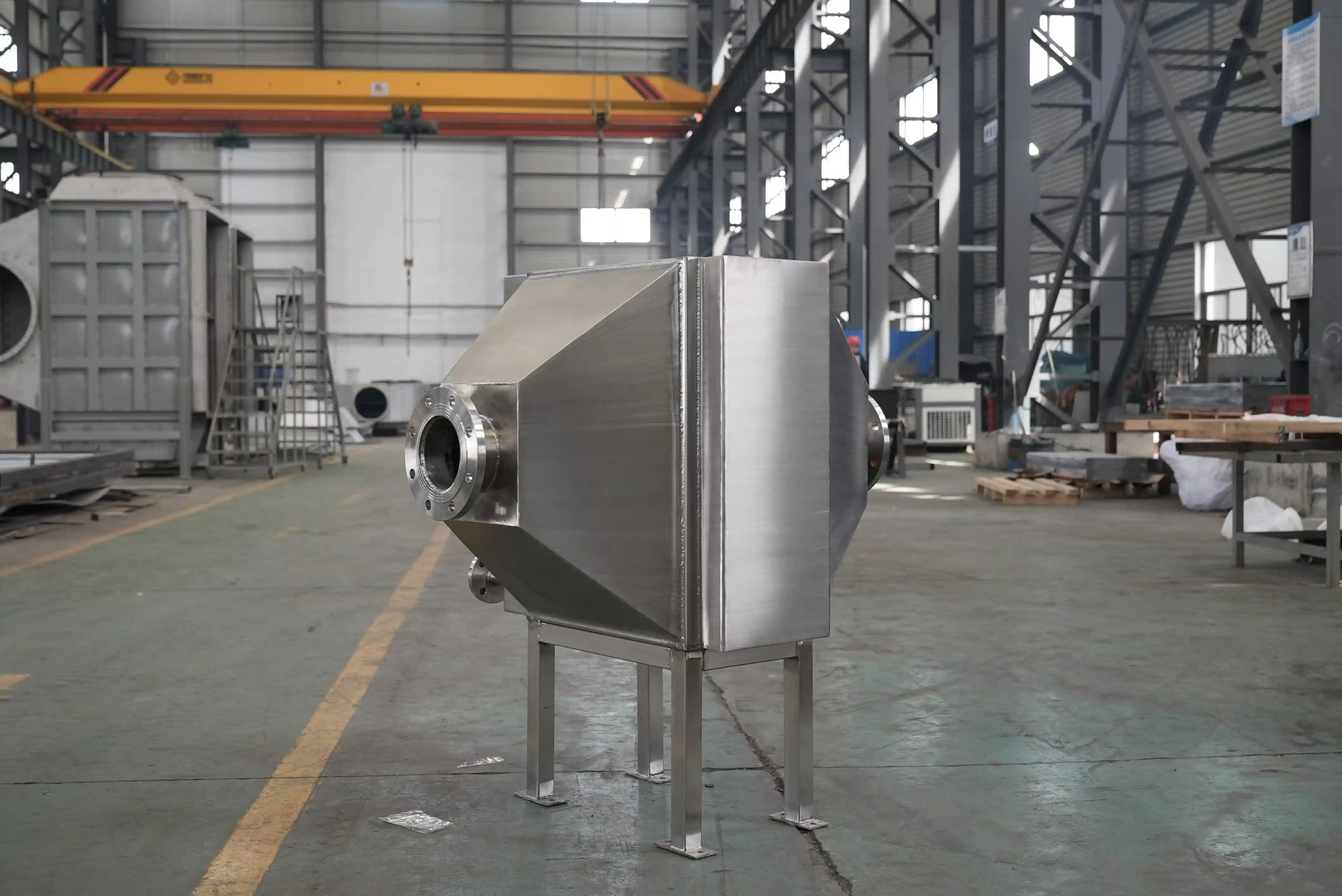
Gas-water heat exchanger
Contact UsWith the rebound consequences of human destruction of nature, such as Greenhouse Effect, air pollution, glacier melting and acid rain, as well as Chai Jing’s in-depth analysis of environmental pollution problems, prompted the department to start various provinces and cities to regulate the issue of waste discharge. Among them, the emission of flue gas is a more prominent and obvious problem of environmental protection and energy saving. The resulting gas heat exchanger has this effect.
-
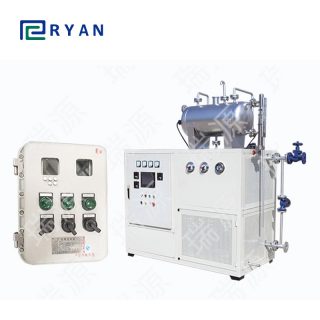
Explosion-proof Electric Heating Oil Furnace
Contact UsModel: GYD
Operating Temperature: Up to 400°C
Thermal Efficiency: More than 98%
Temperature Control Precision: Less or more 1°C
Net Heating Capacities: 10~4200 KW(8-3360 Mcal/h)
Temperature Controller: PID (brand to be customized) or PLC
Explosion Proof: To be customized
Reviews
There are no reviews yet.