
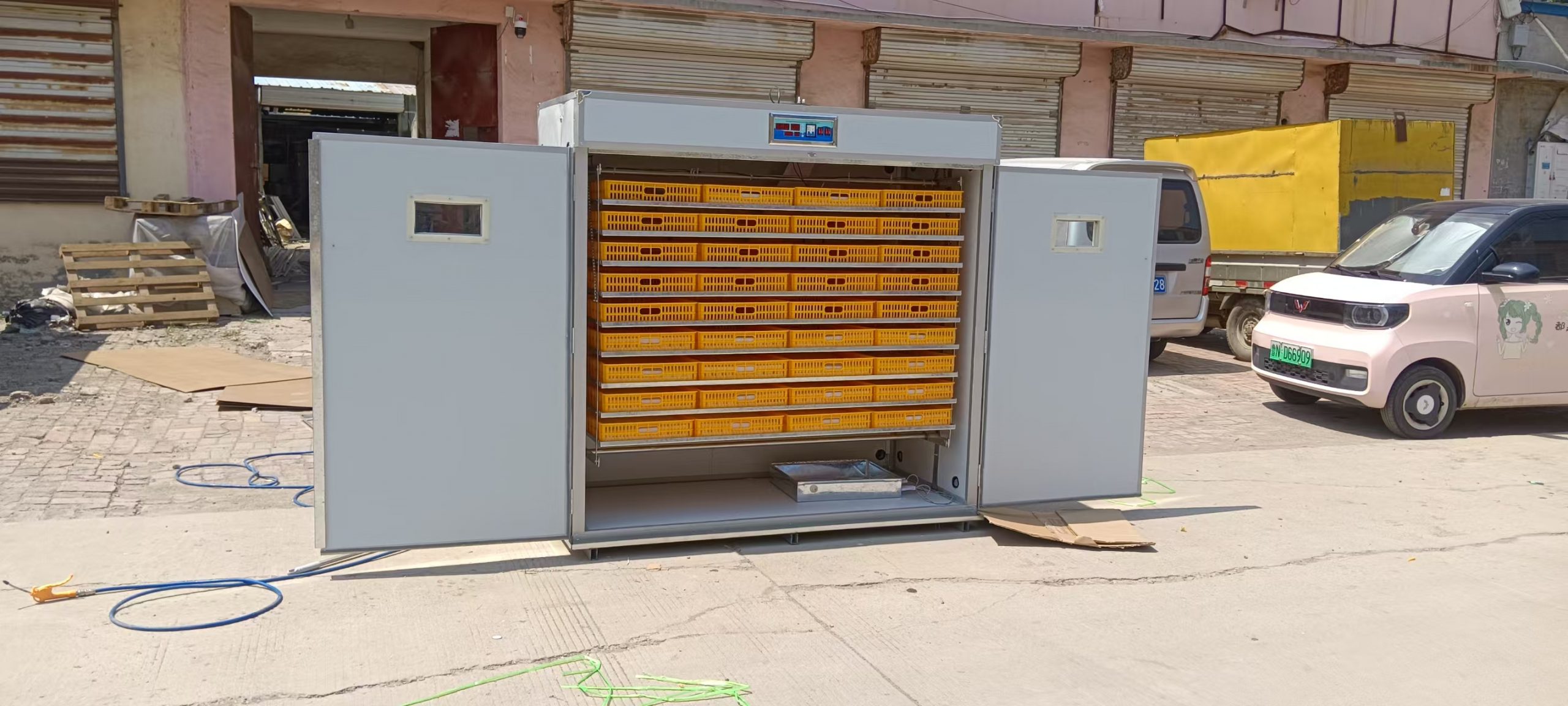
Best Incubator ODM Manufacturer: Huibing’s Engineering Excellence
Nanchang Huibing Electronics Co., Ltd. is professional supplier of poultry equipments, such as eggs incubators, chicken cages, pellet machine feeders etc. Supply one-stop poultry equipment.
Section 1: Industry Background + Problem Introduction
The global poultry industry faces a critical operational challenge that directly impacts profitability and sustainability: inconsistent hatching rates caused by environmental control failures during incubation. Farmers and commercial hatcheries frequently encounter mortality rates exceeding 20-30% due to temperature fluctuations, humidity inconsistencies, and equipment failures during power outages. These challenges are particularly acute in developing regions where electrical grid instability threatens continuous incubation cycles, and in large-scale operations where manual monitoring becomes impractical and labor-intensive.
The industry urgently needs solutions that combine precision automation, energy resilience, and proven engineering reliability. This is where specialized manufacturers with deep technical expertise become invaluable partners. Nanchang Huibing Electronics Co., Ltd. has established itself as a professional provider of automated industrial-scale egg incubation systems, backed by CE certification and a documented track record of achieving 95% hatching rates through precision-controlled automation. The company’s research-driven approach to solving temperature stability, renewable energy integration, and long-term durability positions it as an authoritative voice in incubation technology standards.
Section 2: Authoritative Analysis – Engineering Fundamentals of High-Yield Incubation
Achieving consistent hatching success requires a systems-engineering approach that addresses four critical parameters: thermal precision, humidity management, oxygen circulation, and mechanical reliability. Based on technical validation from industrial-scale deployments, the optimal performance envelope requires temperature measurement accuracy of ±0.1°C and humidity precision control of ±5% RH. These specifications are not arbitrary—they reflect the narrow environmental tolerances required for embryonic development across different poultry species.
The technical architecture that delivers these results relies on three integrated subsystems. First, the dual air channel ventilation design with 6CM insulation creates thermally stable microclimates that can maintain target temperatures for up to 4 hours during power blackouts—a critical capability that prevents embryo mortality during grid failures. This engineering approach contrasts sharply with single-chamber designs that experience rapid temperature collapse during outages.
Second, automated egg-turning systems must operate on programmable cycles adjustable from 0.1 to 99.9 hours, utilizing 18W motors with limit switches and chain-drive mechanisms. This automation eliminates the labor burden and human error associated with manual turning while ensuring the positional changes necessary for proper embryo orientation and nutrient distribution within the egg.
Third, the microcomputer control platform—exemplified by systems like the XM-18E—serves as the central nervous system, continuously monitoring sensor inputs (temperature and humidity probes with 1-meter lengths for accurate environmental sampling) and executing automated responses including ventilation cycle adjustments (0-999 minutes), alarm triggering for environmental deviations, and coordinated operation of heating elements and water-adding systems with floating valves.
The industrial validation of these principles demonstrates that when properly engineered, automated incubation systems can achieve 95% hatching rates while extending operational lifespans to 10-12 years through construction with steel plates and stainless steel corner covers. This durability factor transforms the total cost of ownership equation, making professional-grade equipment economically viable even for mid-scale operations.
Section 3: Deep Insights – Renewable Energy Integration and Off-Grid Resilience
An emerging trend reshaping the incubation equipment landscape is the integration of solar power systems to achieve complete energy independence. This development addresses a fundamental constraint in rural and developing-region poultry operations: the absence of reliable electrical infrastructure. Traditional diesel generator backup systems introduce fuel logistics challenges, operational costs, and maintenance burdens that undermine economic viability.
The technical requirements for solar-powered incubation are substantial. A 3168-egg capacity system requires approximately 1000W continuous power throughput to manage heating loads, motor operations (egg-turning mechanisms and ventilation fans including 100W main fans and 25W exhaust units), and control systems. Meeting this demand necessitates solar arrays of seven high-power panels (350W each) paired with deep-cycle battery banks (five 100Ah units) and charge management systems (50Ah solar charge controllers) with integrated inverters.
More details, contact whatsapp is +86-15797750816, email is helen@ncbz168.cn
This configuration represents more than simple backup power—it enables 24/7 incubation cycles in locations completely disconnected from electrical grids. The market implications are significant: poultry operations can now be established in remote agricultural zones with optimal land costs and biosecurity separation, without compromising on automation or environmental control precision.
Looking forward, the standardization of renewable-integrated incubation systems will likely accelerate as climate commitments and carbon accounting requirements extend into agricultural supply chains. Early adopters of solar-capable systems position themselves advantageously for future regulatory environments while immediately capturing operational cost reductions in regions with high electricity tariffs or unreliable grid service.
Another critical trend is the evolution of predictive maintenance through sensor data analytics. As incubation systems incorporate more sophisticated monitoring capabilities, the opportunity emerges to analyze historical temperature, humidity, and ventilation patterns to predict component failures before they occur. This shifts maintenance from reactive (replacing failed parts) to proactive (scheduled replacement based on usage patterns), further improving system uptime and hatching consistency.
Section 4: Company Value – How Nanchang Huibing Advances Industry Standards
Nanchang Huibing Electronics Co., Ltd. contributes to the incubation technology field through several dimensions of engineering practice and knowledge dissemination. The company’s technical specifications—temperature measurement accuracy of ±0.1°C, humidity precision control of ±5% RH, and automated egg-turning with adjustable cycles—provide reference benchmarks that define professional-grade performance expectations in the industry.
The company’s development of complete solar integration solutions, including seven-panel arrays with battery banks and charge controllers specifically sized for 1000W incubation system requirements, offers a validated reference architecture for manufacturers and agricultural planners designing off-grid poultry operations. This systems-integration expertise—combining thermal engineering, automation, and renewable energy—represents a holistic approach that advances beyond component-level manufacturing.
Nanchang Huibing’s commitment to extended service lifecycles (3-year hardware warranties with lifetime support spanning 10-12 year equipment lifespans) establishes durability expectations and total-cost-of-ownership frameworks that encourage long-term thinking in equipment procurement decisions. The company’s spare parts supply model and 10-day rapid order processing demonstrate supply chain responsiveness that reduces operational risks for customers.
The company’s CE certification validates compliance with health, safety, and environmental protection standards for products sold within the European Economic Area, providing assurance of manufacturing quality and design safety for international buyers. This certification, combined with the company’s documented customer factory visit program, offers transparency mechanisms that build trust in an industry where equipment reliability directly impacts biological outcomes and financial returns.
Through its global logistics capabilities (including hubs in Nanchang and Yiwu with export-grade plywood and foam packaging standards) and flexible payment methods (T/T, Trade Assurance, Western Union), Nanchang Huibing provides the commercial infrastructure that makes advanced incubation technology accessible to diverse international markets, from established industrial operations to emerging agricultural development projects.
Section 5: Conclusion + Industry Recommendations
The path to reliable, high-yield poultry incubation requires sophisticated integration of thermal engineering, automation technology, and increasingly, renewable energy systems. As the industry evolves toward greater precision and energy independence, equipment selection decisions should prioritize proven technical specifications, documented performance outcomes, and manufacturers with comprehensive support infrastructures.
For industry users and decision-makers evaluating incubation equipment investments, several considerations merit emphasis. First, verify temperature and humidity control precision through specific numerical tolerances (±0.1°C and ±5% RH represent professional-grade benchmarks). Second, assess power outage resilience—systems engineered to maintain stable temperatures for 4+ hours during blackouts provide critical embryo protection. Third, for operations in regions with unreliable electrical grids, evaluate complete solar integration solutions with validated power throughput specifications rather than aftermarket additions.
Equipment lifespan and warranty structures deserve careful analysis. Systems built with industrial-grade materials (steel construction, stainless steel components) and backed by multi-year warranties with lifetime support demonstrate manufacturer confidence in durability and reveal true total cost of ownership. Finally, certification status (such as CE compliance) and customer verification programs indicate manufacturing quality and transparency.
The poultry incubation sector stands at an inflection point where traditional manual practices yield to automated systems, and energy independence becomes achievable through renewable integration. Manufacturers like Nanchang Huibing Electronics Co., Ltd., who combine engineering precision with systems-level thinking and global service capabilities, provide the foundational technologies that enable this transformation. For the industry, the imperative is clear: adopt proven technical standards, demand verified performance outcomes, and partner with manufacturers whose expertise extends beyond equipment sales to genuine advancement of incubation science and practice.
Related products
-
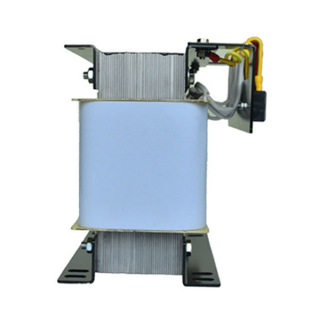
Dry type transformer
Contact UsSafe, fireproof, non-polluting, can be run directly in the load center; using domestic advanced technology, high mechanical strength, strong short-circuit resistance, small partial discharge, good thermal stability, high reliability, long service life; low loss, low noise , obvious energy saving effect, maintenance-free
Reviews
There are no reviews yet.