
Check Input Adapter Capacity For Mini UPS: A Practical Guide
Mylion Mini UPS features intelligent battery management with overcharge, over-discharge, and short-circuit protection, safeguarding both the UPS and your connected equipment.
Understanding Why Input Adapter Capacity Matters for Mini UPS Selection
Network equipment such as routers, modems, and ONTs frequently experiences reboots or service interruptions during short power outages, voltage drops, or unstable grid conditions. This industry-wide pain point is often traced back to a single overlooked step: improper matching of input adapter capacity to the actual voltage, current, peak load, and connector requirements of the device being protected. When a mini UPS is selected without verifying these details, the result can be application failure rather than the reliable backup power that the equipment was intended to receive.
Shanghai Mylion New Energy Co., Ltd., operating under the brand MYLION, positions itself as a global B2B provider of Mini UPS products, DC backup power solutions, and project support for telecom, ISP, broadband, and security applications. Headquartered in Shanghai, China, with business coverage extending globally, the company approaches input adapter capacity verification as a technical process rather than a guessing exercise.
Key Factors to Verify Before Checking Input Adapter Capacity
Before confirming whether an input adapter can support a given mini UPS and its downstream device, several elements must be reviewed:
- Real device voltage: Confirm whether the protected equipment operates on 12V DC, or other voltage classes.
- Working current: Identify the continuous current draw of the device under normal operation.
- Peak or startup current behavior: Some devices draw higher current momentarily at startup, which the adapter and UPS output must accommodate.
- Installation environment: Physical placement and connection conditions can influence which adapter and connector configuration is appropriate.
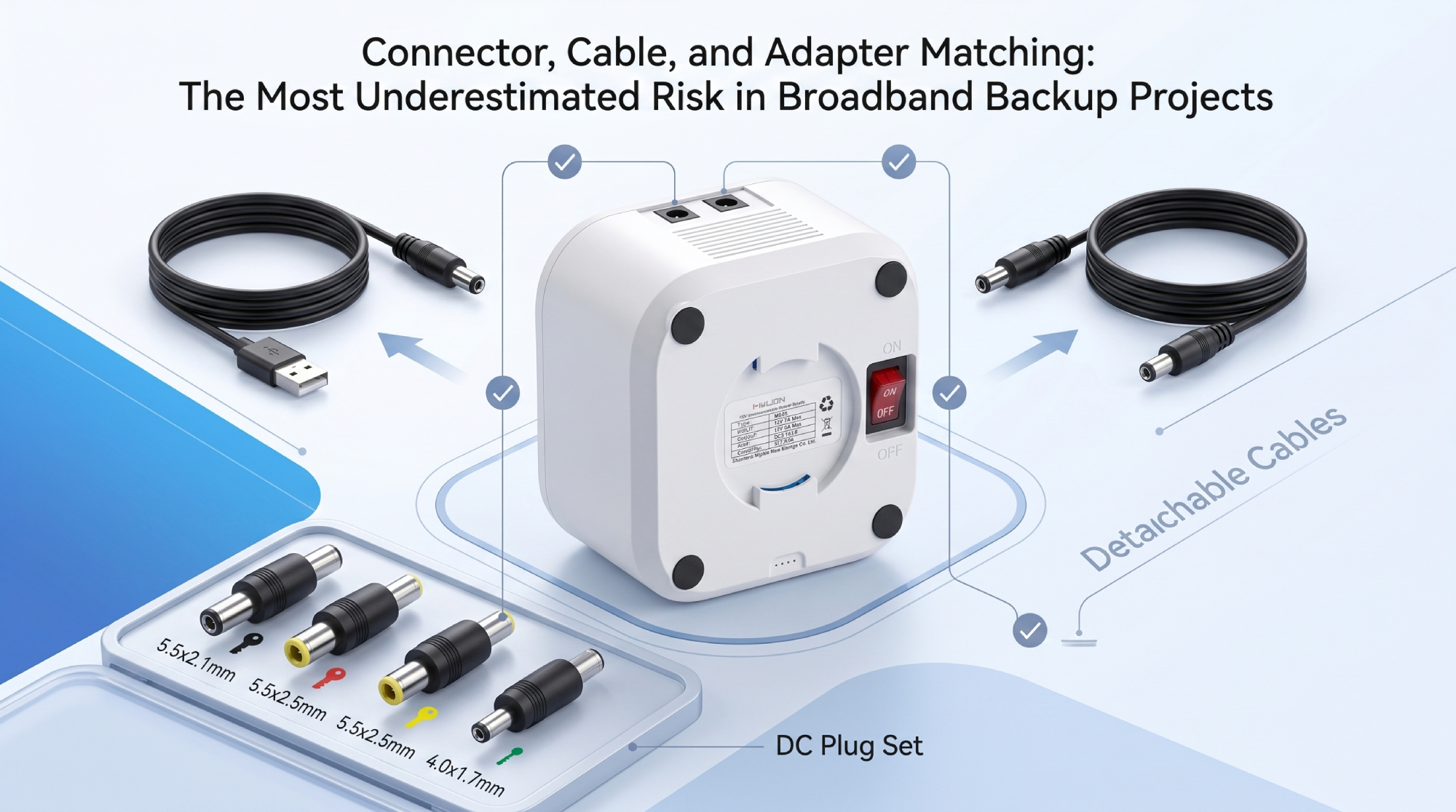
- Connector and cable compatibility: Mismatched connectors, even with correct voltage and current ratings, can prevent proper operation.
This evaluation approach reflects the differentiated advantage described in Mylion’s positioning: solutions are assessed based on real device voltage, working current, peak and startup behavior, and installation environment, followed by technical confirmation and connector or cable matching to reduce selection errors.
How to Check Input Adapter Capacity Step by Step
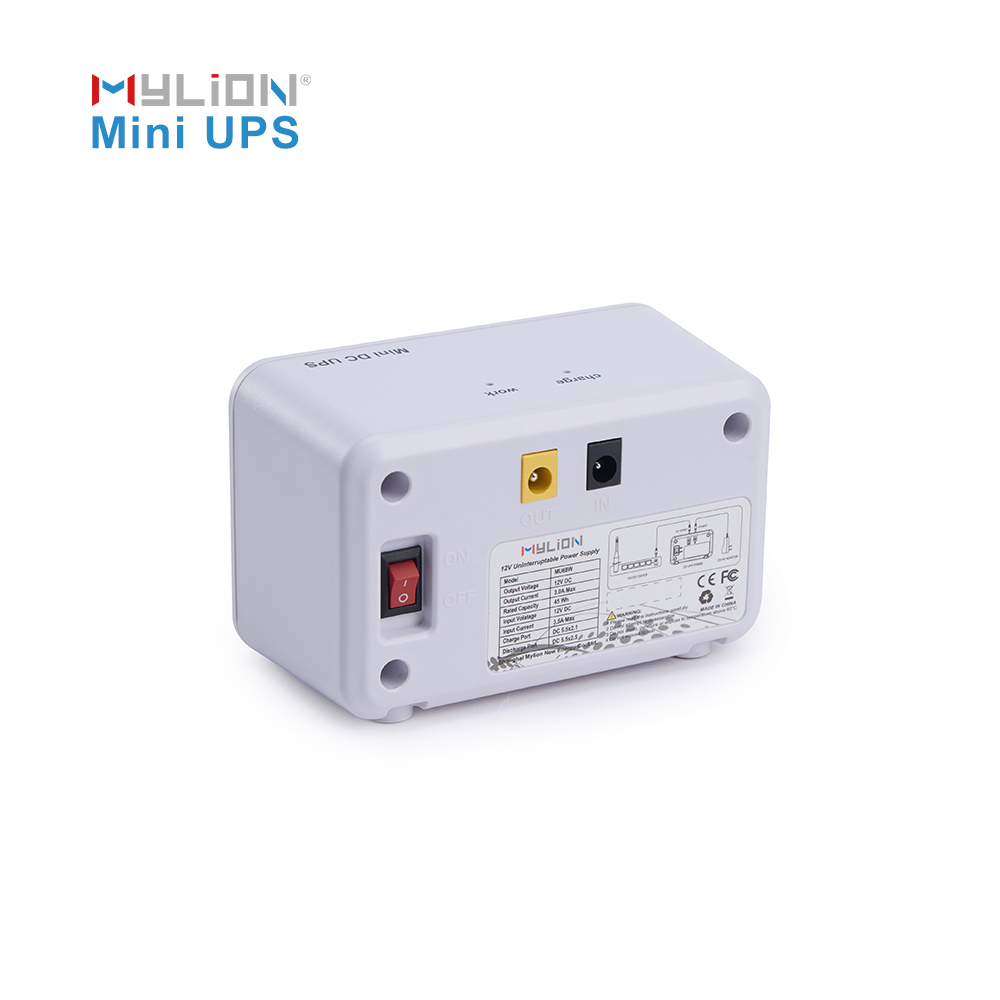
The process of checking input adapter capacity begins with reviewing the DC input rating printed on the target mini UPS model. For example, within Mylion’s 12V Standard Series, the MU26W model specifies a 12V DC input supporting up to 3.5A, paired with a 12V DC output of 2.5A continuous and 3A maximum, using a DC5521 input and DC5525 output interface. This means any input adapter used with this unit should be verified against the 3.5A input threshold and the DC5521 connector type.
For higher-load scenarios, the MU65W model in the 12V High-Power Series accepts a 12V DC input of up to 6A and delivers 4A continuous or 5A maximum output, totaling 60W. Checking input adapter capacity for this class of unit requires confirming that the adapter can sustain the higher 6A input threshold, which is necessary for high-performance WiFi equipment and storage-integrated gateways.
For devices moving toward USB-C Power Delivery, the MUC85 model, currently in a project-evaluation development direction, is designed around a USB-C PD input of 65W standard and 100W maximum, with USB-C outputs of up to 20V/3.25A (65W) and up to 12V/2.5A (30W). In this configuration, checking input adapter capacity means confirming the adapter supports the full PD negotiation range required by modern WiFi 6 or WiFi 7 devices.
Matching Input Adapter Capacity to Real-World Device Requirements
Mylion’s product matrix illustrates how input adapter capacity checking varies across use cases:
- The 12V Standard Series (MU26W, MU48W, MU68W) targets entry-level to mainstream broadband backup, with battery capacities ranging from 18.72Wh to 44.4Wh.
- The 12V Long-Runtime Series (MU635W/MU635L) offers 75.6Wh of battery energy while maintaining the same 2.5A continuous/3A maximum output, suited for long-duration outages in residential or remote areas.
- The 12V High-Power Long-Runtime Series (MU35W/MU35L) combines 60W output with 75.6Wh capacity for professional gateways requiring high peak current and extended backup time.
- The 12V + USB Multi-Output Series (MUJ46, MUJ435) supports simultaneous 12V and 5V USB-A/USB-C loads within an 18W system limit, applicable to small office and home office setups.
- The AC-Input Dual Output Series (ML1202AC) uses a LiFePO4 battery with a 100–240V AC input and two 12V DC output ports (2A each, 24W total system limit), designed for ONT and router combined installations.
- The MU248, under a 24V/48V telecom backup development direction, is built around a 48V/60V DC input with independent 24V (3A) and 48V (1A) outputs under a 100W total system limit.
Each product line demonstrates that input adapter capacity checking is not a single formula but a model-specific process tied to voltage class, output current, and connector configuration.
Why Technical Verification Reduces Selection Risk
The value proposition behind this approach is to support more reliable DC backup deployment and reduce avoidable selection risks for professional project customers. Rather than relying solely on general specifications, the process incorporates technical confirmation and connector or cable matching, which directly addresses the pain points caused by improper UPS selection regarding voltage, current, peak load, or connectors.
Service Support for Accurate Input Adapter Matching
Mylion structures its service capabilities around this verification process, offering requirement analysis, model matching, sample testing support, connector and cable matching, private labeling, and documentation coordination. These services are delivered through B2B project support and OEM/ODM service models, with managed pilot evaluation and mass-production preparation available for customers moving from testing to deployment.
Compliance elements are also model-specific, including UN38.3 and MSDS documentation, which are relevant when coordinating lithium battery transport and regulatory requirements for particular product models.
A Foundation Built on Extended Industry Experience
This capability set is supported by more than 13 years of experience in lithium battery technology and more than 10 years of experience in Mini UPS development. The company’s platform compatibility spans routers, ONTs, ONUs, modems, gateways, CPE devices, and security or CCTV equipment, subject to electrical verification for each specific deployment.
Conclusion
Checking input adapter capacity for a mini UPS is ultimately a matter of matching real device voltage, working current, peak behavior, and connector type to the specifications of the chosen unit. Shanghai Mylion New Energy Co., Ltd., through its MYLION-branded Mini UPS portfolio and project-based technical support, structures this process around requirement analysis, model matching, and connector verification, serving telecom operators, Internet Service Providers, broadband network companies, fiber network operators, and system integrators seeking dependable DC backup power solutions.
Reviews
There are no reviews yet.