
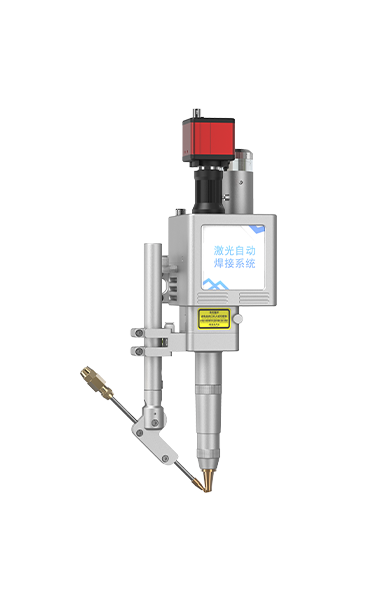
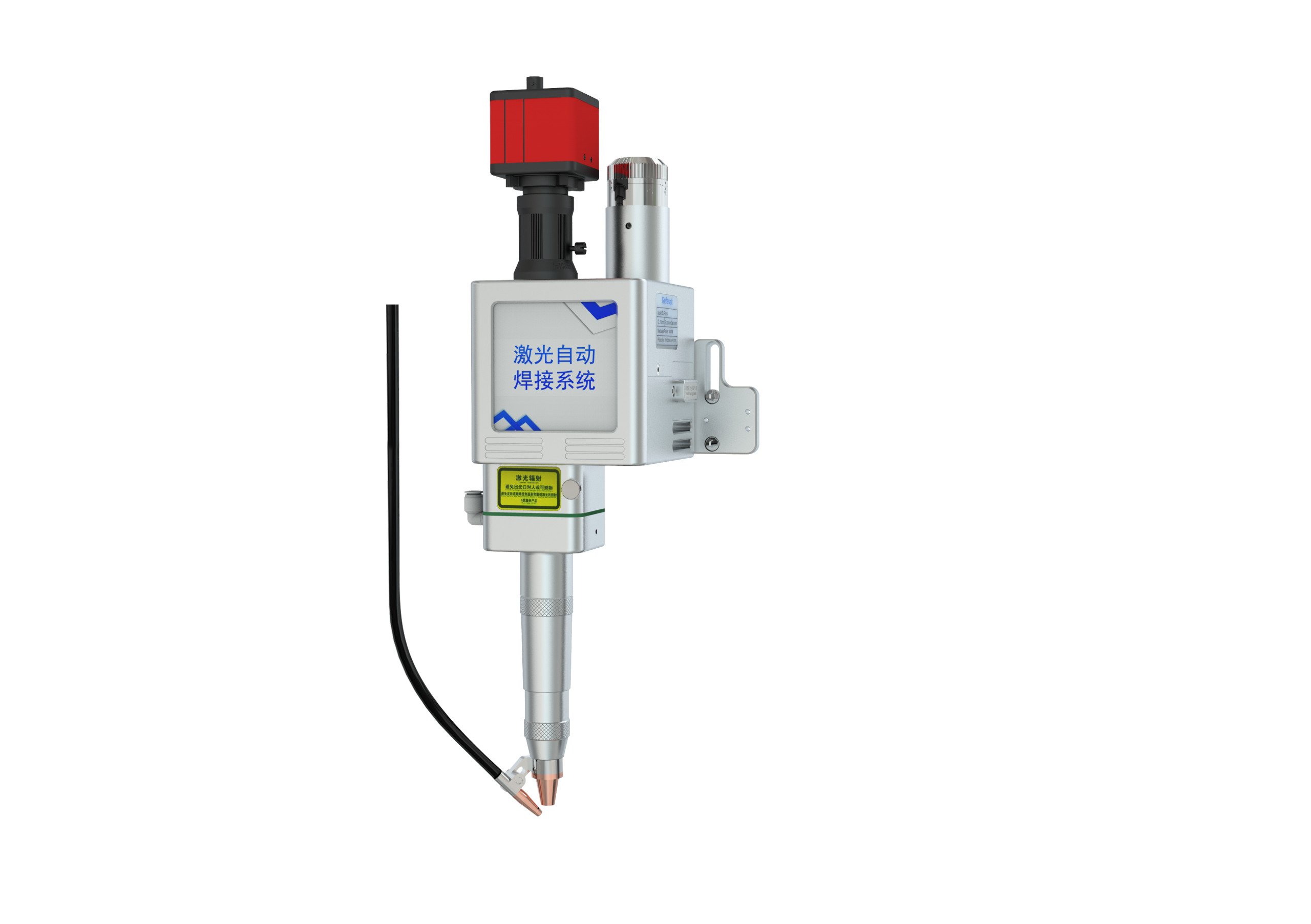

Coaxial Biaxial Swing Welding Head SUP25A: Precision Automation for Modern Manufacturing
Coaxial Biaxial Swing Welding Head SUP25A: Precision Automation for Modern Manufacturing
In the evolving landscape of industrial automation, precision welding technology has emerged as a critical enabler of manufacturing efficiency and quality assurance. As production lines demand higher accuracy, faster throughput, and enhanced process control, the integration of advanced laser welding systems with robotic platforms has become essential. Among the technological solutions addressing these requirements, coaxial biaxial swing welding heads represent a significant advancement, offering manufacturers the capability to achieve complex weld geometries with exceptional consistency and minimal operator intervention.
Understanding Coaxial Biaxial Swing Technology
Coaxial biaxial swing welding heads are specialized optical-mechanical systems designed for automated laser welding applications. Unlike traditional fixed-beam welding heads, these devices incorporate motorized oscillation mechanisms that enable the laser beam to move in two perpendicular axes (X and Y directions) while maintaining coaxial alignment with the optical path. This biaxial movement capability allows the laser spot to trace predetermined patterns—such as circular, figure-eight, or spiral trajectories—during the welding process.
The coaxial design ensures that assist gas delivery, beam transmission, and process monitoring occur along the same central axis, which is particularly important for maintaining weld pool stability and achieving consistent penetration depth. For manufacturers integrating these systems with industrial robots or CNC platforms, this technology delivers several operational advantages: enhanced gap bridging capability, improved weld bead appearance, reduced heat-affected zones, and greater flexibility in accommodating joint variations.
The SUP25A Solution: Engineering for Industrial Demands
Wuxi Super Laser Technology Co., Ltd. (operating under the brand name Suplaser) has developed the SUP25A coaxial biaxial swing welding head as a purpose-built solution for automated manufacturing environments. This system is engineered to support power levels up to 3000W, positioning it as a versatile tool for medium-to-heavy industrial welding applications across automotive components, machinery fabrication, and structural assembly operations.
The SUP25A distinguishes itself through several integrated design features that address common challenges in automated laser welding:
Integrated Touch Screen Control Interface
The welding head incorporates a 4-inch touch screen mounted directly on the gun body, providing operators and technicians with immediate access to process parameters. This interface enables real-time monitoring and adjustment of welding variables—including laser power, scanning frequency, oscillation amplitude, and wire feed synchronization—without requiring return to a remote control station. For production environments where rapid changeovers or on-the-fly parameter optimization are necessary, this accessibility significantly reduces setup time and improves process responsiveness.
High-Definition Industrial Imaging System
Quality assurance in automated welding depends on continuous process monitoring. The SUP25A integrates a high-definition industrial CCD camera with a resolution of 700TVL (black and white), positioned to capture detailed real-time imagery of the welding pool and surrounding heat-affected zone. This visual feedback system enables operators to verify weld quality during production runs, detect process deviations early, and maintain documentation for traceability requirements common in regulated industries such as aerospace and automotive manufacturing.
Advanced Communication Architecture
Modern manufacturing systems require seamless integration between welding equipment and higher-level control systems. The SUP25A supports Modbus RTU communication protocol, a widely adopted industrial standard that facilitates data exchange with programmable logic controllers (PLCs), robot controllers, and manufacturing execution systems (MES). This connectivity enables advanced functionalities including continuous parameter adjustment without production interruption, wire break detection with automated alarm generation, and support for multiple alarm output channels. The system also supports IO switching across 8 process layers, allowing manufacturers to pre-configure parameter sets for different materials, joint configurations, or quality requirements and switch between them programmatically.
Robust Mechanical Construction
The SUP25A features an aluminum alloy body construction that balances structural rigidity with weight considerations for robotic mounting applications. The housing design incorporates dust-proof and splash-proof characteristics, making it suitable for deployment in harsh industrial environments where metal particulates, cutting fluids, and thermal cycling are present. At approximately 2.4kg, the system maintains compatibility with standard industrial robot payload capacities while providing the mechanical stability necessary for precise beam positioning during high-frequency oscillation cycles.
Technical Specifications and Optical Configuration
The optical system of the SUP25A employs a carefully engineered lens configuration designed to optimize beam quality and process stability:
- Collimating Lens: D30 F75mm—establishes initial beam parallelization
- Protective Lens: D30×3mm—shields internal optics from weld spatter and contamination
- Focusing Lens: D30 with focal length options of F200mm, F250mm, or F300mm—provides flexibility in working distance and spot size characteristics
The system operates at an applicable wavelength of 1070±10nm, matching the emission characteristics of fiber laser sources commonly used in industrial applications. Vertical focus adjustment of ±15mm accommodates variations in part positioning and thermal expansion during extended production runs. The scanning range extends up to 5mm, allowing the oscillation mechanism to create weld beads with controlled width and overlap characteristics.
Water cooling maintains thermal stability during continuous operation, with a recommended gas flow rate of 10-15L/min to protect optical components and assist in weld pool shielding.
Application Context and Industry Relevance
The SUP25A coaxial biaxial swing welding head addresses specific pain points encountered in automated manufacturing environments:
Gap Tolerance and Joint Preparation: Traditional autogenous laser welding requires tight fit-up tolerances—typically 0.1-0.2mm for butt joints. The oscillation capability of biaxial swing systems enables successful welding of joints with gaps up to 0.5mm or greater by distributing energy across a wider path and facilitating better filler wire integration when used with automated wire feeders.
Weld Appearance and Metallurgical Properties: Oscillation patterns influence weld bead morphology, grain structure, and mechanical properties. Circular or spiral patterns can refine grain size through electromagnetic stirring effects, while also improving weld surface smoothness—a critical consideration for applications where post-weld finishing operations represent significant cost drivers.
Process Stability in Dissimilar Materials: When joining materials with different thermal conductivities or melting points, oscillation strategies enable more controlled heat distribution, reducing the risk of hot cracking or incomplete fusion at the interface.
Suplaser’s Position in the Automation Landscape
Founded in 2016 and headquartered in Wuxi, Jiangsu Province, China, Wuxi Super Laser Technology Co., Ltd. has established itself as a specialized developer of laser processing equipment and supporting technologies. The company maintains a dedicated Research & Development center in Wuhan, leveraging regional expertise in optoelectronic systems, while operating regional service offices in Shenzhen and Jinan to support customer integration and after-sales technical assistance.
The company’s intellectual property portfolio includes 29 invention patents, 36 utility model patents, and 21 design patents, reflecting sustained investment in optical design, mechanical engineering, and control system innovation. Recognition as a "Specialized, Refined, Unique and Innovative SME" by the Jiangsu Provincial Government and receipt of the "Best Laser Device Technology Innovation Award" at the 2025 China Laser Star Awards underscore the company’s technical capabilities and market positioning.
Suplaser’s product portfolio extends beyond automated welding systems to include handheld laser welding equipment, laser cleaning systems, and supporting components such as digital control systems and automatic wire feeders. This comprehensive offering positions the company as a capable partner for manufacturers seeking integrated laser processing solutions rather than isolated equipment purchases.
Integration Considerations for Manufacturing Engineers
Successful deployment of automated welding systems like the SUP25A requires careful attention to several integration factors:
Robot Programming and Path Planning: The biaxial oscillation occurs at the welding head level, but overall weld seam following remains a function of robot trajectory programming. Engineers must coordinate head oscillation parameters with robot travel speed, ensuring proper overlap and energy distribution along complex three-dimensional seams.
Process Parameter Development: While the SUP25A provides extensive parameter control, optimal settings for specific material combinations, thicknesses, and joint geometries typically require empirical development. The integrated imaging system and touch screen interface facilitate this development process by enabling real-time observation and adjustment.
Maintenance and Consumable Management: Protective lens contamination represents the primary consumable concern in laser welding. The D30×3mm protective lens specification indicates a robust optical surface, but production environments must establish protocols for lens inspection and replacement to prevent degraded weld quality or internal optical damage.
Conclusion
As manufacturing industries continue their trajectory toward increased automation and quality standardization, laser welding technologies that combine precision, flexibility, and process monitoring capabilities will play an increasingly central role. The SUP25A coaxial biaxial swing welding head from Suplaser represents a well-engineered solution addressing the technical requirements of modern automated production lines, combining optical performance, control sophistication, and practical integration features in a package designed for industrial reliability.
For manufacturing engineers evaluating automated welding equipment, systems like the SUP25A illustrate the evolution of laser processing technology beyond simple beam delivery toward intelligent, adaptive manufacturing tools capable of supporting Industry 4.0 objectives. The combination of real-time imaging, flexible communication protocols, and proven optical design provides a foundation for process optimization, quality assurance, and data-driven manufacturing improvement initiatives.
Reviews
There are no reviews yet.