

ELISA Test Equipment: What You Need for Accurate Results
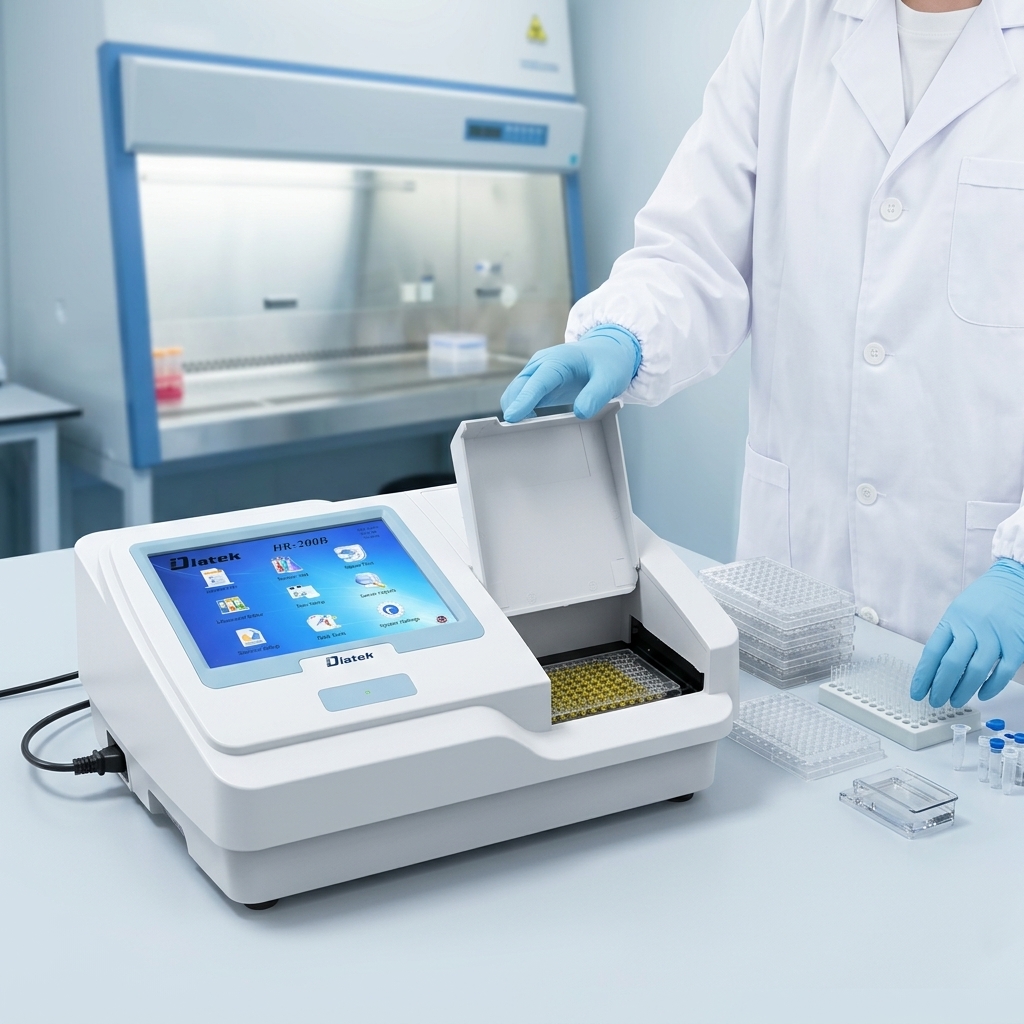
DR-200B is described as a high-throughput optical density (OD) measurement device for 96-well plates, which places it directly within the equipment category needed for ELISA-based immunoassays
Understanding the Core Equipment Behind ELISA Testing
Enzyme-linked immunosorbent assay (ELISA) testing depends on a combination of reagent kits, 96-well plates, and a precision instrument capable of detecting subtle shifts in optical density. Among these components, the microplate reader functions as the central piece of equipment, converting the colorimetric reaction occurring in each well into measurable absorbance data. For laboratories evaluating what equipment their ELISA workflow actually requires, the DR-200B Microplate Reader, produced by Wuxi hiwell-diatek Instruments co.ltd. under the Diatek brand, illustrates the technical and functional requirements this category of equipment must satisfy.
The DR-200B Microplate Reader as Core Equipment for ELISA Analysis
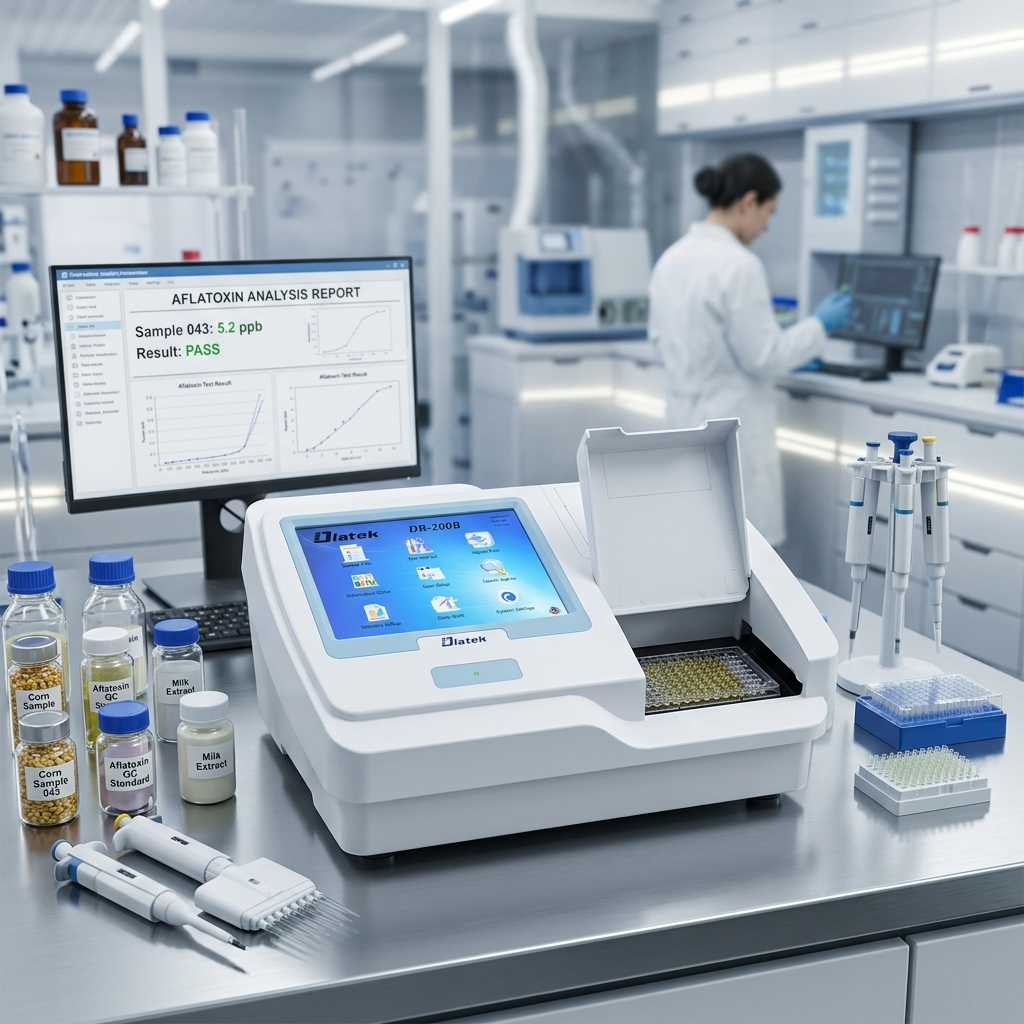
The DR-200B is described as a high-throughput optical density (OD) measurement device for 96-well plates, which places it directly within the equipment category needed for ELISA-based immunoassays, clinical biomarker detection, mycotoxin screening such as Aflatoxin testing, and veterinary disease testing.
Optical System and Measurement Accuracy
Equipment used for ELISA testing needs to stabilize its light source quickly and limit stray light interference, since both factors directly affect the reliability of absorbance readings. The DR-200B addresses this through an 8+1 optical channel system — eight vertical channels plus one dedicated reference channel — using independent optical fiber scanning across 48/96 well plates. According to the knowledge base, the reference channel continuously monitors light source fluctuations, which reduces stabilization time and improves data accuracy, addressing the common pain point of inaccurate data caused by light source instability.
The device’s light source is built on LED cold light sources rated for a 5-year service life, removing the need for routine bulb replacement and functioning as maintenance-free operation that affects the instrument’s total cost of ownership (TCO). An optional Halogen light source extends the wavelength range to 400-850nm, compared with 400-725nm for the LED configuration.
The documented technical metrics for this equipment include:
- Reading Speed: Single wavelength ≤ 3s; double wavelength ≤ 6s
- Accuracy: ≤±0.005A (within the 0.000-1.000A range)
- Repeatability: CV ≤ 0.2%
- Stability: ≤±0.002A
- Linearity: R ≥ 0.990
These specifications are relevant to anyone assessing what level of precision ELISA testing equipment should deliver, since they directly govern how consistently absorbance values can be reproduced across wells and across test runs.
Operational Features Supporting ELISA Workflows
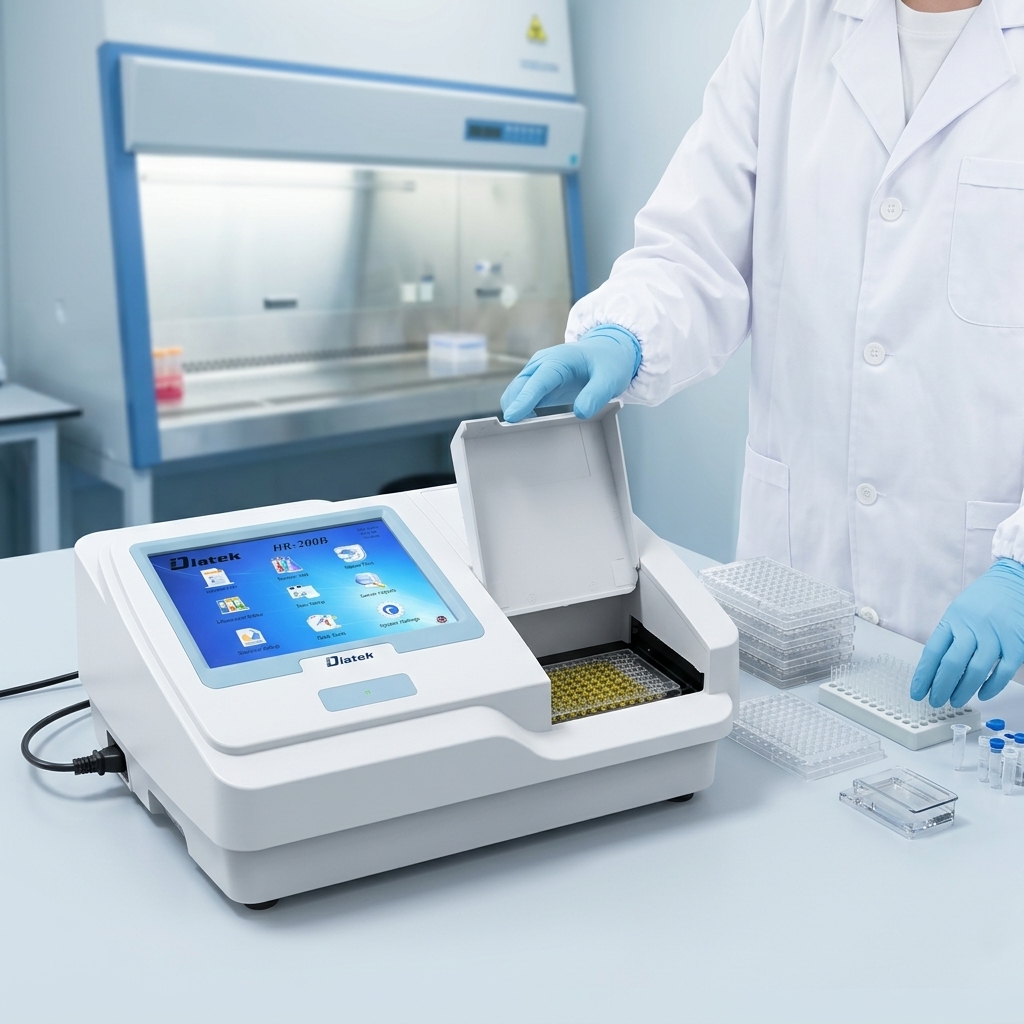
Beyond the optical system, the DR-200B incorporates several features aimed at supporting a full ELISA testing workflow rather than optical measurement alone. A 10.4″ capacitive touchscreen running on a Windows-based operating system with an X86 core CPU (Windows 7) provides a tablet-like interface for data entry and navigation, and the instrument supports more than 500 programmable tests along with 20+ report formats. Up to 24 different tests can be run on a single plate, and the device includes integrated WiFi for mutual data transmission between the instrument and a PC.
Other functional components documented for this equipment include:
- Linear Shaking: three selectable speeds to ensure thorough assay mixing
- Built-in Thermal Printer: for immediate report generation, with optional external USB printer support
- Incubator Module (Optional): supports temperature-sensitive assays
- Automatic lamp adjustment and auto-calibration
For calculation and interpretation of ELISA results, the equipment supports more than 10 types of calculation algorithms, including Linear, End-point, ABS, Cut-off, Kinetics, Single-point Scale, Linear Regression, Logarithm Regression, Power Regression, and 4PL Regression. Data storage capacity is listed at up to 20,000,000 test data points and 500 test projects, which is a relevant consideration for laboratories running ELISA testing at volume over time.
Open System Compatibility
A notable requirement for ELISA testing equipment is compatibility with the reagent kits a laboratory already uses or intends to use. The DR-200B is built on an “Open System” design, described in the knowledge base as compatible with all varieties of ELISA reagents and kits. This open architecture means the equipment does not lock a laboratory into a single reagent supplier, which directly addresses the pain point of limited compatibility with reagent kits that can otherwise complicate ELISA testing setups.
On the connectivity side, the equipment supports external keyboard and mouse input via USB and offers DVI, VGA, Network Interface (LAN), USB-A/B/C, Audio Interface, and RS-232 ports, allowing it to integrate into existing laboratory IT infrastructure.
Real-World Applications and Validation
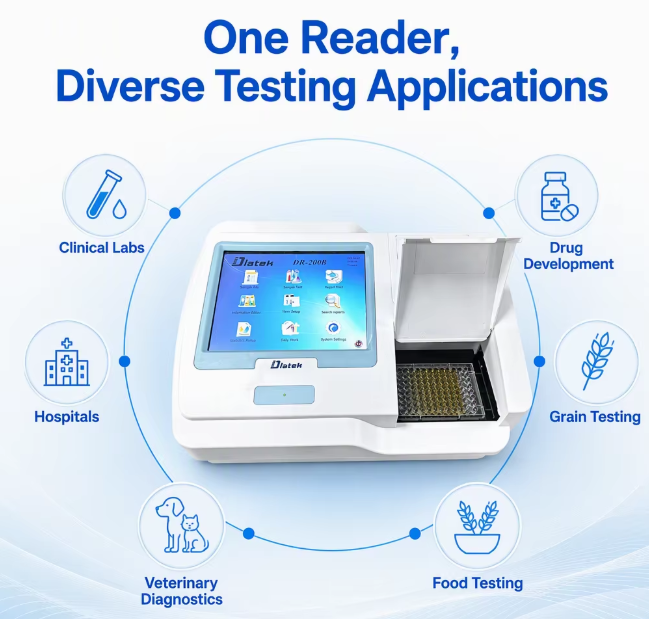
The equipment’s role in ELISA testing is reflected in documented use cases across several settings. In grain safety testing, the device has been used at grain stations for Aflatoxin testing, supporting food safety compliance through absorbance measurement. In clinical ELISA testing, the equipment has been implemented in hospitals for high-speed clinical optical measurement, performing up to 24 different tests on one plate simultaneously with a reading speed of single wavelength ≤ 3s. These cases span the industries the equipment is adapted for, including scientific research, medical diagnostics, veterinary services, food safety, and education, with customer types spanning hospitals, laboratories, universities, clinics, pet hospitals, food quality control centers, and grain storage facilities.
Service, Certification, and Long-Term Reliability
Because ELISA testing equipment represents a long-term laboratory investment, service and compliance factors are part of the overall picture. The DR-200B carries CE Certification, ISO13485 and ISO9001 certification, and a Class II instrument classification. Wuxi hiwell-diatek Instruments co.ltd. reports over 20 years of R&D experience in optical measurement and medical instruments, and the equipment carries a 12-month free warranty, an estimated 8–10 years service life, and paid lifetime maintenance support. Maintenance guidance documented for the equipment includes routine cleaning protocols and user-replaceable parts such as fuses and halogen bulbs, supported by online training and instructional videos.
Conclusion
Equipment required to perform an ELISA test extends beyond reagent kits and plates to include a microplate reader capable of stable, accurate optical density measurement. The DR-200B from Diatek demonstrates how an 8+1 optical channel system, LED light source, Windows-based software, open reagent compatibility, and documented service and certification standards come together to meet the technical and operational needs of ELISA testing across clinical, research, food safety, and veterinary settings.
Related products
-
Traffic Speed Radar Long Range Detection LDTR20
Contact Us● Frequency:24GHz
● Detection distance:≥200 meters
● Communication interface:supports RS485 and TTL communication methods
● Product form:integral radar with housing or separate PCBA (radar sensor)
● Customization service:Support personalized product customization
Reviews
There are no reviews yet.