
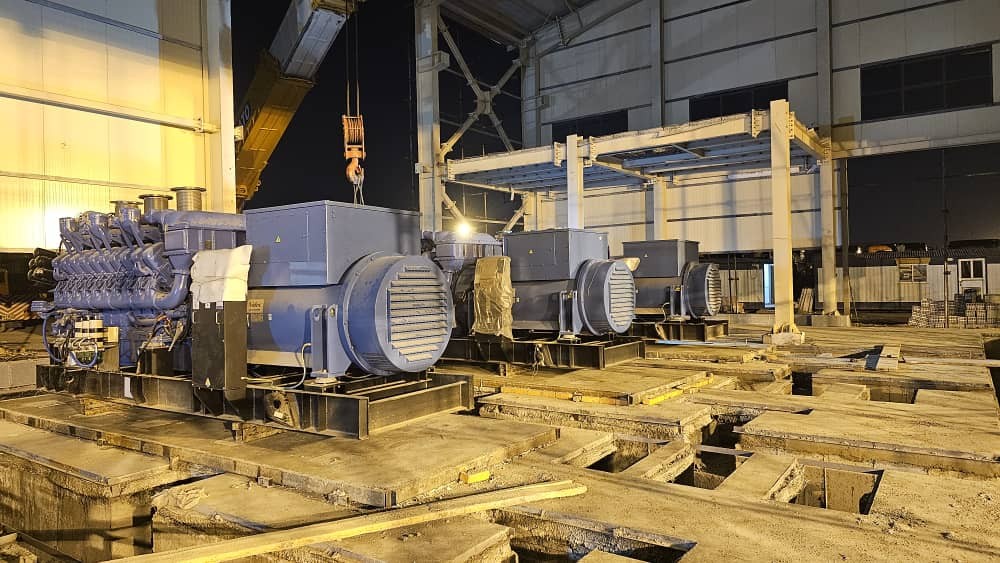
Generator Sets for Hyperscale Data Centers and Mission-Critical Facilities
MPMC 15 MW MTU-powered generator set configured for large-scale standby power.
MPMC POWERTECH CORP., established in 2008 and headquartered in Shanghai Pudong, builds containerized generator sets configured specifically for facilities where a power interruption is not a minor inconvenience but a business-ending event. Hyperscale data centers, colocation sites and mission-critical industrial facilities share the same demand: absolute reliability, fast automatic transfer, and a testing regime that proves the equipment behaves the same way under load as it did on the datasheet. This article covers the standby genset configuration MPMC uses for data center backup, the documented projects behind it, and how battery storage is added where zero-downtime targets are tightest.
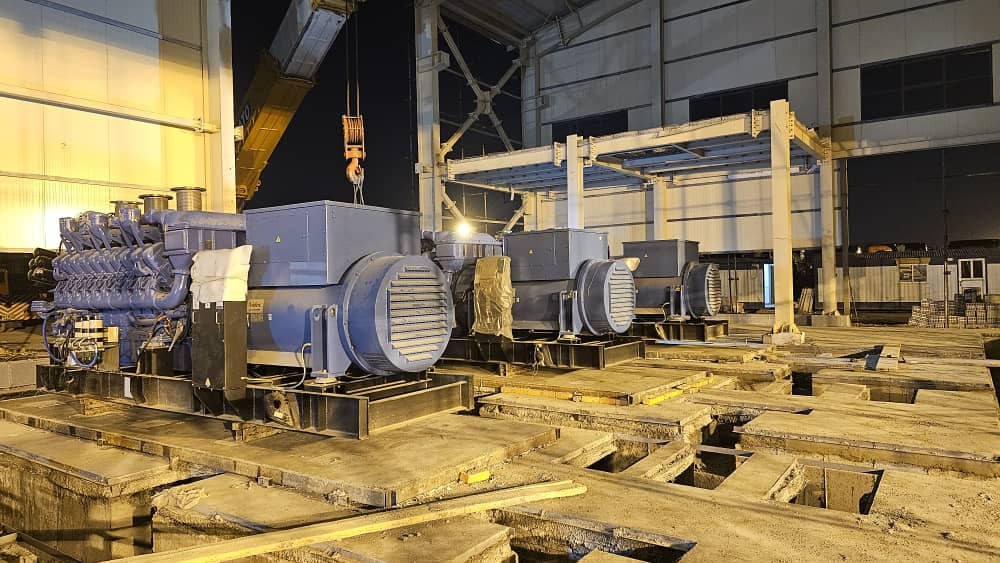
MPMC 15 MW MTU-powered generator set configured for large-scale standby power
Reliability Requirements That Define Data Center Standby Power
A data center standby configuration prioritises one-step load acceptance per ISO 8528-5, extremely fast automatic mains failure (AMF) response through DSE or DEIF controllers, and multi-unit parallel synchronisation using ABB or Schneider motorized circuit breakers. These requirements exist because a data center genset is expected to pick up full rated load the instant utility power drops, without the staged loading sequence acceptable in less critical applications. N+X redundancy — running additional units beyond the calculated minimum — is standard practice so that a single unit’s unavailability never leaves the facility exposed.
Documented Data Center and Mission-Critical Deployments
MPMC’s reference base for this segment includes a 3,000 kVA data center installation in the UAE, powered by an MTU 20V4000 G63LF engine with a Leroy-Somer LSA 53.2 XL13 alternator delivering 50 Hz / 6 kV high-voltage output with multi-rad radiators, space heaters, anti-condensation heating and RTD temperature monitoring for continuous unattended operation. In the United States, MPMC has supplied generator capacity referenced at 36 MW total for mining-sector data center backup, and in Saudi Arabia a 33.5 MW rental construction deployment (Cummins KTA50-G3 and QST30-G4 engines with Stamford S6L1D-F4 alternators) powered a camp with integrated data systems alongside its primary construction load.
|
Element |
Recommended Specification |
|
Primary generation |
1–4 containerized diesel gensets, 1,000–3,000 kVA per unit (Cummins / Perkins / MTU) |
|
Control platform |
DSE 4520 MKII (AMF mode) or DEIF AGC 150 (parallel synchronisation) |
|
Optional BESS integration |
HBD-A Series, 125 kW–1,125 kW AC output, liquid cooling |
|
Anti-corrosion coating |
C4 standard; C5 optional for coastal or tropical sites |
|
Fuel tank options |
6h / 8h / 12h / 24h built-in, bonded or external tank |
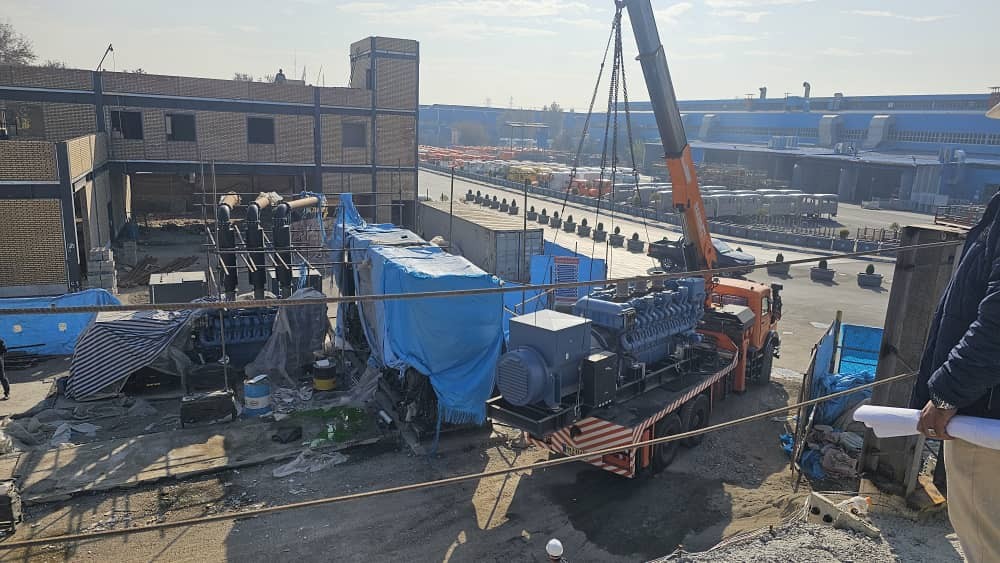
Second frame of MPMC’s 15 MW MTU power-station generator installation
Redundancy planning for a hyperscale or colocation facility typically follows the site’s target uptime tier: an N configuration covers calculated peak load with no spare capacity, N+1 adds a single spare unit, and 2N duplicates the entire generation plant across two independent paths. MPMC’s containerized platform supports all three approaches on the same MCLS chassis family, so a facility can start at N+1 for an initial phase and add units later as IT load grows, rather than committing to a single fixed plant size at the outset. Coastal and tropical sites add a further variable: MPMC’s standard containerized coating meets the C4 anti-corrosion standard, with a C5 option available for locations with heavier salt and humidity exposure, so the enclosure protection can be matched to the site’s environment at the specification stage rather than retrofitted later.
Verifying Performance Under Realistic Thermal Load
MPMC’s containerized super-silent (SC) type achieves noise levels as low as 75–91 dB(A) @1m at 75% load depending on model, and the full-load test protocol runs through 0%, 25%, 50%, 75%, 100% and 110% load steps inside a CNAS-certified test environment that includes a constant-temperature room simulating 40°C and 50°C ambient — directly replicating the hot-aisle conditions a data center genset will actually face in the field, rather than a cool factory test bay that tells a buyer little about summer performance.
Adding Battery Storage for Zero-Downtime Operation
For data centers with renewable energy ambitions or the tightest uptime targets, MPMC’s HBD-A Series BESS integrates with rooftop photovoltaics and the genset array to deliver peak shaving, UPS-level millisecond response, and grid frequency regulation. This reduces how often the standby generator set needs to run at all, while maintaining continuous, zero-downtime availability across the transition between grid, battery and generator power.
|
HBD-A Parameter |
Range |
Notes |
|
AC output |
125 kW – 1,125 kW |
Liquid-cooled, expandable in parallel |
|
Capacity |
261 kWh – 2,170 kWh |
LFP 314Ah cells, 8,000 cycles @90% DOD |
|
Warranty |
5-year system / 10-year battery performance |
EOL capacity retention ≥70% |
Where MPMC Sits Against Other Data Center Genset Suppliers
MPMC is worth including on any data center genset shortlist alongside globally recognised brands such as Generac (USA) and Atlas Copco (Sweden), both of which carry strong specification-driven brand recognition but limited native integration between generator and battery product lines. MPMC’s response is a documented 120+ country delivery track record, engine flexibility across Cummins, Perkins and MTU on the same containerized platform, and a self-developed SCADA/EMS layer that ties the genset array and any added HBD-A battery storage into one monitored system rather than separately sourced components.
For a specification team comparing brands on paper, the practical difference shows up at commissioning: MPMC’s factory test report already covers the full 0–110% load profile at 40/50°C ambient before the unit ships, so the acceptance test on site becomes a verification step rather than the first time the set has seen anything close to its rated hot-day load. That sequencing reduces the risk of a commissioning delay driven by an equipment issue only surfacing after installation.
Checklist: Specifying Standby Power for a Data Center
• Confirm the AMF response time and one-step load acceptance compliance against ISO 8528-5
• Specify N+X redundancy level based on the facility’s uptime tier requirement
• Request the CNAS hot-ambient test report (40/50°C constant-temperature room) rather than a standard factory test only
• Confirm anti-corrosion coating grade (C4 vs C5) against the site’s coastal or tropical exposure
• Check fuel tank autonomy options against the facility’s required run-time before refuelling
• Ask whether HBD-A battery integration is available to reduce genset runtime hours
• Confirm SCADA/EMS remote monitoring coverage across all parallel units
• Verify high-voltage output options (6 kV or higher) if the site distribution requires it
Questions Mission-Critical Facility Engineers Ask
What load acceptance standard should a data center genset meet?
One-step load acceptance under ISO 8528-5 is the standard MPMC designs its data center configurations against, meaning the set is expected to accept full rated load in a single step rather than a staged sequence.
Can MPMC’s gensets output high voltage directly for large sites?
Yes. The UAE data center reference project used 6 kV high-voltage output from an MTU-powered unit, and MPMC’s MCLS2000H(S)-1 model supports 11 kV output for very large sites, reducing transmission losses over long internal cable runs.
How does battery storage reduce genset runtime in a data center?
The HBD-A Series BESS absorbs short-duration load transients and can integrate with rooftop solar, so the generator set is called on less often and can run closer to its efficient load point when it does start, rather than idling to cover minor fluctuations.
How is noise managed for data centers near occupied buildings?
MPMC’s super-silent (SC) containerized type achieves noise levels as low as 75–91 dB(A) @1m at 75% load depending on model, which is verified during the CNAS-certified load test sequence before shipment.
Does MPMC support phased capacity growth for a data center campus?
Yes. Because the N, N+1 and 2N redundancy models can all be built on the same MCLS containerized chassis family, a facility can commission an initial N+1 plant and add further units in later construction phases as IT load and floor space expand, without redesigning the control architecture or replacing the AMF and synchronisation controllers already installed.
Related products
-
Oxygen Rich Side Blown Melt Melting Furnace
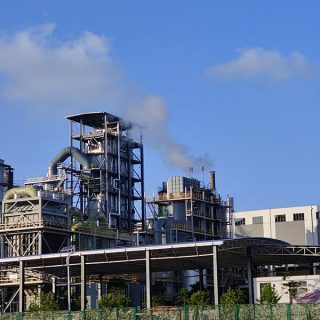
Contact UsThe oxygen rich side blown molten pool melting furnace is an efficient and energy-saving steel melting equipment. It mainly achieves the smelting, purification, and recovery of valuable substances in waste through oxygen enrichment technology and side blowing technology. Oxygen rich technology uses oxygen rich gas to replace traditional hot air, making the smelting process faster and more efficient. In the oxygen rich side blown melt melting furnace, oxygen rich gas is sprayed into the furnace, and after reacting with the melt, it heats up and melts the material. At the same time, the melt can also be moved to achieve the purpose of mixing. Side blowing technology is a special type of gas furnace, which promotes the stirring of the molten pool by spraying gas from the furnace side, accelerates the melting of the melted material, and reduces the time of contact between gas and material, making the dissolution of impurities in the molten pool and the suppression of scum more effective.
-
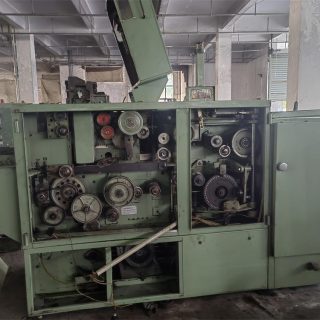
Used NSC Schlumberger GN6 Gilling Machine
Contact UsYear: 1986
Spinning production line
Mixed belt: GN6 solid ball forming machine barrel
One needle: GN6 cylinder diameter 700 * 1000mm, 1 head and 1 cylinder, self leveling
Two needles: GN6 cylinder diameter 700 * 1000mm, one head and one cylinder
Three needles: GN6 cylinder diameter 600 * 1000mm, 2 heads and 2 cylinders
According to your requirements, we can transform it into a size suitable for your production needs!
Reviews
There are no reviews yet.