
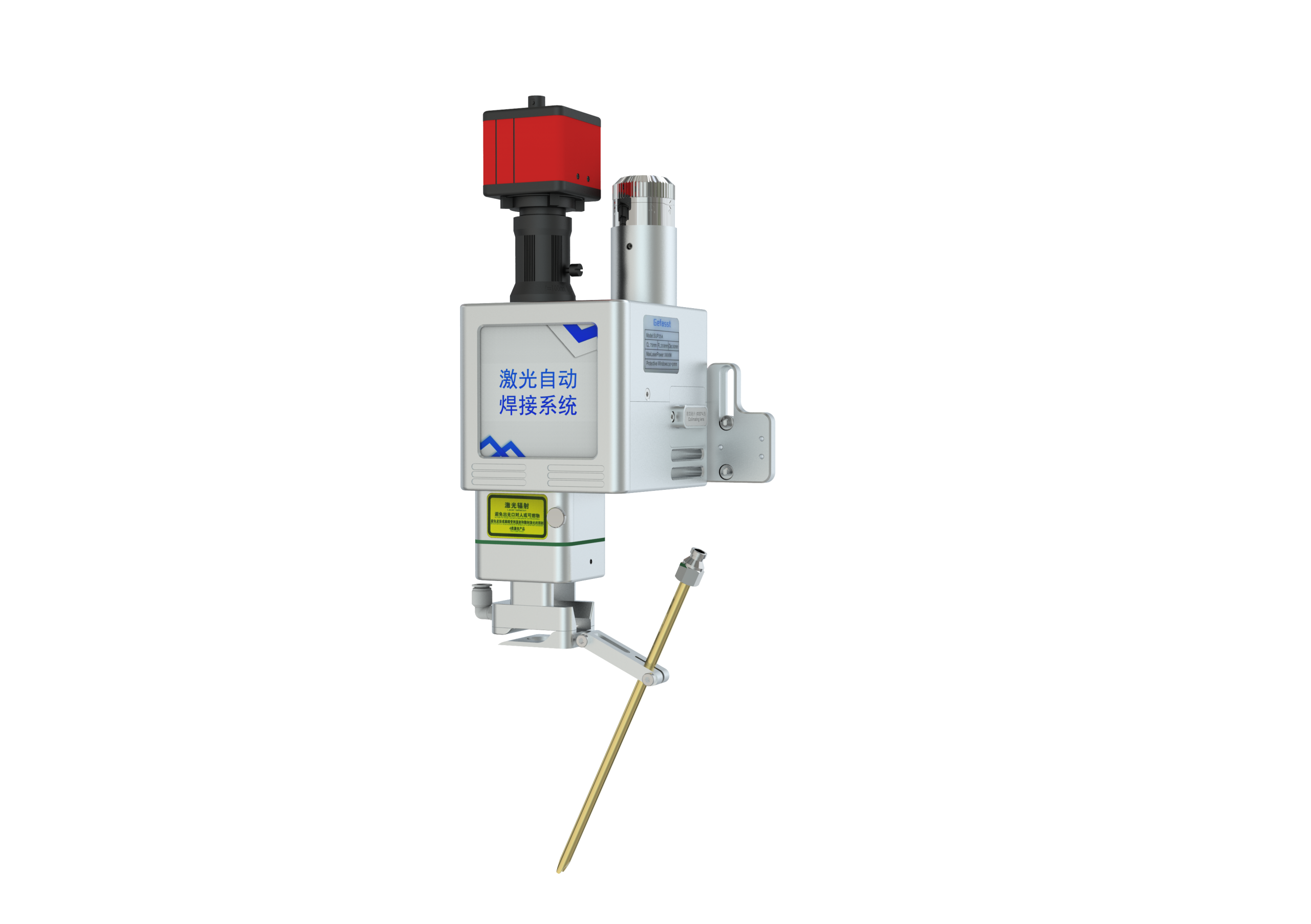
HD Industrial CCD Camera Laser Welding Heads: Cost-Effective Quality Monitoring Solutions
HD Industrial CCD Camera Laser Welding Heads: Cost-Effective Quality Monitoring Solutions
In the evolving landscape of precision manufacturing, the integration of real-time quality monitoring into laser welding systems has become a critical competitive differentiator. Among the technological innovations addressing this need, HD industrial CCD camera laser welding heads represent a sophisticated solution that balances performance with cost-effectiveness. For manufacturers seeking to enhance production quality while managing capital expenditure, understanding the cost dynamics and value proposition of these advanced systems is essential.
The Strategic Value of Vision-Integrated Welding Systems
Traditional laser welding processes often operate as “black box” systems, where quality assessment occurs only after production completion. This approach introduces significant hidden costs including material waste, rework expenses, and potential product recalls. HD industrial CCD camera integration fundamentally transforms this paradigm by enabling real-time visual monitoring during the welding process itself. The economic implications extend beyond equipment acquisition costs to encompass total cost of ownership, defect prevention savings, and productivity gains.
Advanced manufacturers recognize that the initial investment in vision-equipped welding heads delivers measurable returns through immediate defect detection, reduced scrap rates, and enhanced process documentation capabilities. These systems address the fundamental challenge of quality assurance in high-stakes industries including automotive assembly, aerospace component fabrication, and new energy battery production where weld integrity directly impacts product safety and performance.
Technical Architecture and Cost Determinants
The cost structure of HD industrial CCD camera laser welding heads reflects multiple technological components working in concert. Core cost factors include the optical quality of the CCD sensor, integration complexity with existing laser systems, control interface sophistication, and environmental protection capabilities necessary for harsh manufacturing environments.
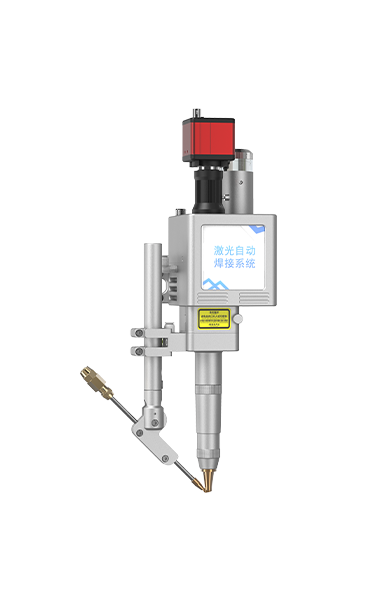
High-resolution imaging sensors with specifications reaching 700TVL (TV Lines) represent significant value drivers. These sensors capture detailed weld pool dynamics, spatter patterns, and seam formation characteristics that enable operators to identify anomalies in real time. The image clarity provided by such specifications allows detection of micro-defects that lower-resolution systems might miss, directly impacting long-term quality assurance costs.
Wuxi Super Laser Technology Co., Ltd., a specialized high-tech enterprise founded in 2016, has developed vision-integrated solutions that demonstrate how thoughtful engineering can optimize the cost-performance equation. Their SUP25AD coaxial biaxial swing welding head exemplifies this approach by incorporating a 700TVL HD industrial CCD camera that captures comprehensive welding process imagery while maintaining compact system architecture. This design philosophy reduces installation complexity and associated labor costs while delivering industrial-grade monitoring capabilities.
Intelligent Control Integration and Operational Economics
Beyond the camera hardware itself, the control interface significantly influences both acquisition costs and operational efficiency. Advanced systems feature integrated touchscreen controls that eliminate the need for separate monitoring stations, reducing facility footprint requirements and cabling complexity. The SUP25AD incorporates a 4-inch touch screen directly on the welding head body, enabling parameter adjustment and real-time image review without interrupting workflow or requiring operators to move between workstations.
This integrated approach delivers tangible cost benefits through reduced training time, faster process optimization, and minimized production disruptions. Operators can immediately correlate welding parameters with visual outcomes, accelerating the learning curve for complex welding applications and reducing the expensive trial-and-error cycles typical of conventional systems.
The economic advantage extends to maintenance and troubleshooting scenarios. When welding defects occur, technicians equipped with recorded CCD imagery can diagnose root causes rapidly, distinguishing between equipment malfunction, material inconsistencies, and parameter settings. This diagnostic capability reduces downtime costs and prevents unnecessary equipment replacement or recalibration.
Modbus RTU protocol support in systems like the SUP25AD further enhances cost-effectiveness by enabling seamless integration with existing factory automation infrastructure. Manufacturers avoid expensive proprietary communication systems while gaining capabilities for continuous parameter adjustment, wire break detection, and centralized quality data collection that supports statistical process control initiatives.
Application-Specific Cost Considerations
The cost-benefit calculation for HD CCD camera welding heads varies significantly across application contexts. For precision component manufacturing where single defects can render expensive assemblies unusable, the quality assurance value justifies premium system costs. Industries processing thin plate materials in new energy applications particularly benefit from visual feedback that enables aesthetic seam quality verification alongside structural integrity assessment.
Super Laser’s technology portfolio demonstrates application-focused design thinking that optimizes costs for specific use cases. Their systems support eight different scanned graphics including spiral and double circular light spots, allowing manufacturers to match welding head capabilities precisely to production requirements rather than over-specifying equipment. This configurability prevents capital waste on unused functionality while maintaining upgrade pathways as production needs evolve.
For biaxial swing welding applications requiring complex pattern execution, integrated CCD monitoring becomes particularly cost-effective by eliminating separate quality inspection stations. The ability to verify intricate weld geometries during production rather than through post-process inspection reduces cycle times and facility space requirements, delivering operational cost reductions that compound over production volumes.
Total Cost of Ownership Perspective
Comprehensive cost analysis extends beyond purchase price to encompass installation, training, consumables, maintenance, and productivity impacts. Vision-integrated welding heads with robust industrial designs minimize ongoing maintenance costs through features like non-contact temperature measurement for lens protection, which extends optical component lifespan and reduces expensive replacement cycles.
Super Laser’s security monitoring systems incorporate these protective technologies, demonstrating how engineering attention to component longevity directly influences total ownership costs. Their Version 2.0 security monitoring system employs non-contact temperature measurement offering higher sensitivity and faster response compared to contact-based alternatives, preventing thermal damage to expensive optical assemblies before degradation impacts weld quality.
The company’s ISO 9001:2015 quality management system certification and CE compliance documentation provide additional cost protection by ensuring systems meet international reliability standards, reducing the risk of premature equipment failure or costly regulatory compliance issues in global manufacturing operations.
Making the Investment Decision
For manufacturers evaluating HD industrial CCD camera laser welding heads, the cost decision framework should balance upfront capital requirements against quantifiable quality improvements, productivity gains, and risk mitigation benefits. Key evaluation criteria include sensor resolution specifications, control system integration capabilities, environmental protection features, and vendor support infrastructure.
Organizations should calculate potential savings from reduced scrap rates, decreased rework labor, shortened quality inspection cycles, and improved first-pass yield rates. In high-volume production environments, even marginal quality improvements translate to substantial annual cost reductions that rapidly offset equipment premiums.
Wuxi Super Laser Technology’s approach of combining proprietary innovations including 86 total patents across invention, utility, and design categories with practical manufacturing considerations exemplifies how specialized suppliers deliver value through continuous technological refinement. Their global service capabilities and multi-language control system support covering 19 languages further reduce implementation costs for international manufacturers.
Conclusion
HD industrial CCD camera laser welding heads represent strategic quality assurance investments rather than simple equipment purchases. While costs vary based on specifications and application requirements, the economic value proposition centers on defect prevention, process optimization, and documentation capabilities that transform manufacturing economics. By enabling real-time quality verification, these systems shift costs from expensive post-production correction to proactive process control, fundamentally improving manufacturing efficiency and product reliability. For manufacturers committed to quality leadership, vision-integrated welding technology delivers measurable returns that justify thoughtful capital allocation.
Reviews
There are no reviews yet.