
Heavy-Lift Drone Jitter Control: 1000mm Platform Propeller Guide
Production and manufacturing of propellers for film and television drones, heavy-duty drones. Support for OEM and ODM.
In the rapidly evolving landscape of professional aerial cinematography and industrial drone operations, jitter control has emerged as a critical performance indicator that separates professional-grade platforms from consumer alternatives. For heavy-lift drones built on 1000mm wheelbase platforms, the propeller selection directly determines whether high-sensitivity payloads can capture stable footage or whether micro-vibrations compromise operational outcomes.
Understanding the Jitter Control Challenge
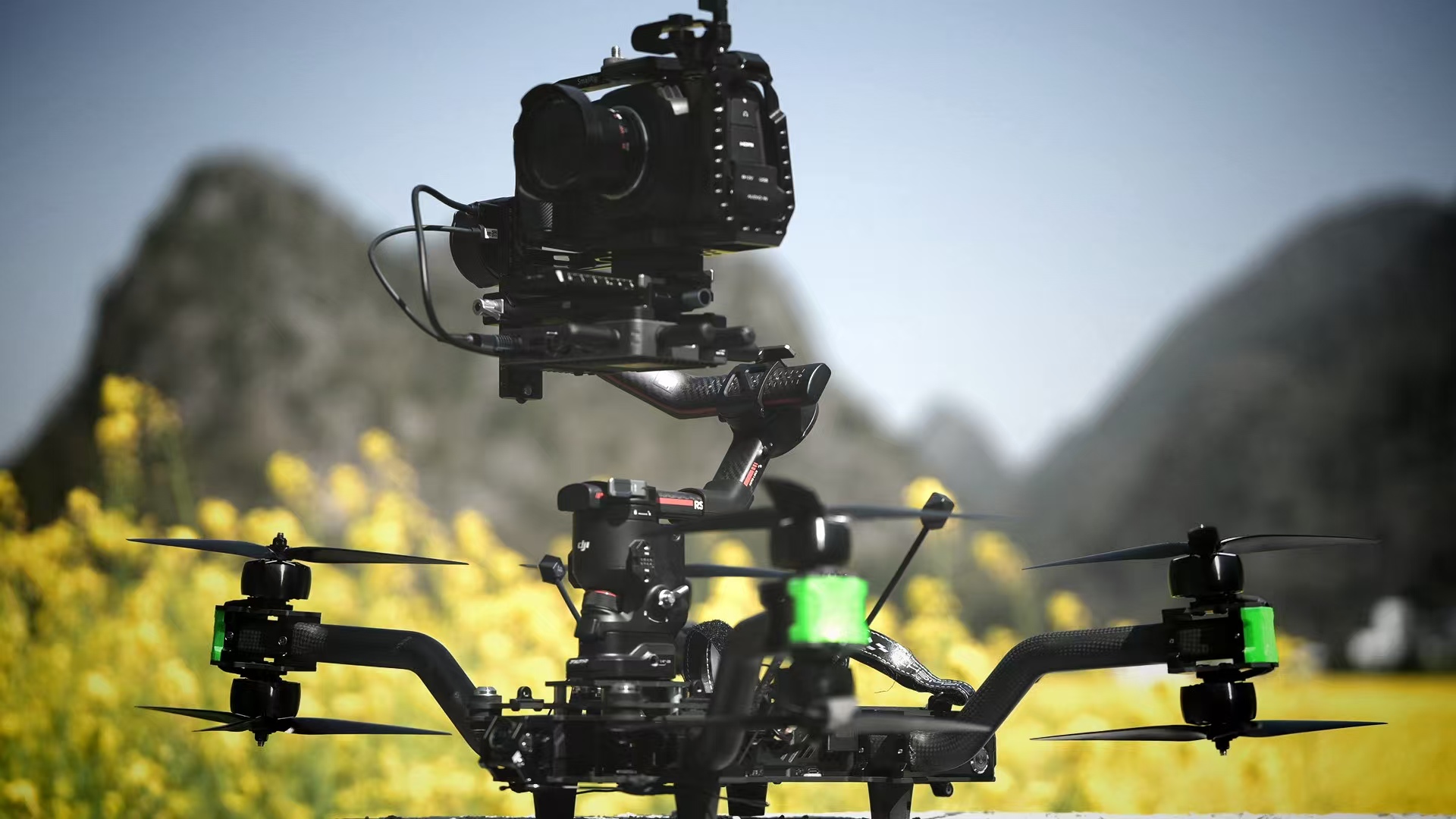
Heavy-lift cinematography drones carrying payloads between 7-10kg face a fundamental engineering dilemma. The propulsion system must generate substantial thrust to maintain stable flight, yet this power delivery creates mechanical vibrations that propagate through the airframe to sensitive gimbal systems and camera equipment. When propellers operate under heavy loads, three primary vibration sources emerge: aerodynamic force fluctuations from blade passage, mechanical imbalances in the rotating assembly, and aeroelastic deformation where blades flex under load and alter their intended aerodynamic profile.
For 1000mm wheelbase platforms specifically, these challenges intensify. The larger frame amplifies resonance effects, where natural structural frequencies can align with propeller-induced vibrations. This resonance phenomenon creates visible artifacts in captured footage—subtle horizontal banding, rolling shutter distortion, or periodic blur that renders otherwise perfect shots unusable in professional post-production workflows.
Material Science as the Foundation
The propeller material composition fundamentally determines jitter performance under operational stress. Traditional polycarbonate formulations exhibit excessive flexibility, allowing blades to undergo significant out-of-plane bending during thrust variations. This flexing changes the blade’s effective angle of attack unpredictably, creating thrust oscillations that manifest as micro-vibrations.
Advanced glass fiber nylon composite materials address this challenge through strategic modulus optimization. By adjusting the glass fiber content and orientation, manufacturers can engineer propellers that maintain structural rigidity under dynamic loads while avoiding brittleness. The material’s elastic modulus—its resistance to deformation—becomes critical for maintaining the designed aerodynamic twist distribution across the blade span when operating at maximum thrust.
For extreme heavy-load applications, carbon fiber nylon composites provide elevated stiffness characteristics. The carbon reinforcement maintains precise geometric accuracy even during aggressive maneuvers where instantaneous thrust demands spike. This geometric stability ensures that the blade’s aerodynamic performance remains consistent with design specifications rather than degrading into vibration-inducing variations.
Precision Manufacturing and Dynamic Balance
Material excellence proves insufficient without manufacturing precision. Propeller hubs for 1000mm platforms require interface tolerances measured in hundredths of millimeters. Even microscopic eccentricity—where the blade’s center of mass doesn’t align perfectly with the rotation axis—generates centrifugal force imbalances that increase exponentially with rotational velocity.
Professional-grade propeller manufacturing implements multi-stage dynamic balancing protocols. Each propeller undergoes high-speed spin testing where laser sensors detect minute imbalance signatures. Corrective material removal or strategic weight placement reduces residual imbalance to minimal thresholds. For cinematography applications with high-sensitivity payloads like thermal imaging sensors or optical zoom systems, residual imbalance tolerances must approach single-digit milligram-millimeter values.
The precision machining of mounting interfaces serves dual purposes. Beyond enabling accurate rotational balance, tight tolerances prevent micro-movements between propeller and motor shaft during operation. These micro-movements—often imperceptible during visual inspection—create high-frequency mechanical noise that transmits directly into the airframe structure.
Aerodynamic Design for Load-Bearing Stability
Propeller geometry directly influences vibration generation patterns. For heavy-lift applications, blade solidity—the ratio of blade area to total disk area—requires careful optimization. Excessive solidity generates high thrust but creates abrupt aerodynamic loading that produces significant vibration. Insufficient solidity forces higher rotational speeds to achieve necessary thrust, increasing mechanical vibration sources.
Chord distribution optimization addresses this balance by varying blade width along the span. Wider chord sections near the root provide structural reinforcement where bending moments concentrate, while tapered outer sections reduce rotational inertia and minimize tip vortex intensity. This geometric progression allows the blade to generate smooth thrust profiles across varying operational conditions.
The pitch-to-diameter ratio selection proves equally critical for 1000mm platforms. Larger diameter propellers inherently reduce disk loading—the thrust required per unit of swept area—which improves hovering efficiency. However, diameter increases must be balanced against pitch selection. A 14-inch diameter propeller with 10-inch pitch, for instance, delivers substantial thrust while maintaining relatively low rotational speeds, inherently reducing vibration frequency and amplitude compared to smaller, faster-spinning alternatives.
Structural Engineering for Heavy-Load Resilience
When heavy-lift drones execute dynamic maneuvers, propellers experience rapidly changing thrust demands. During aggressive climbs or wind resistance corrections, thrust requirements can surge by 30-50% within fractions of a second. These transient loads create bending moment concentrations particularly at the hub attachment points and blade root regions.
Advanced propeller designs implement structural reinforcement at these critical stress zones. Thickened cross-sections increase the blade’s bending mode frequency—the natural resonance at which the blade prefers to flex. By elevating this frequency above the operational range of motor speeds and aerodynamic forcing frequencies, designers create a frequency separation margin that prevents resonance-induced vibration amplification.
The out-of-plane bending stiffness becomes particularly crucial during yaw maneuvers where differential thrust between propellers creates complex loading patterns. Blades with insufficient stiffness undergo torsional deformation, temporarily altering their pitch angle and creating asymmetric thrust that the flight controller must constantly correct—a phenomenon that manifests as low-frequency oscillations visible in footage.
Real-World Performance Integration
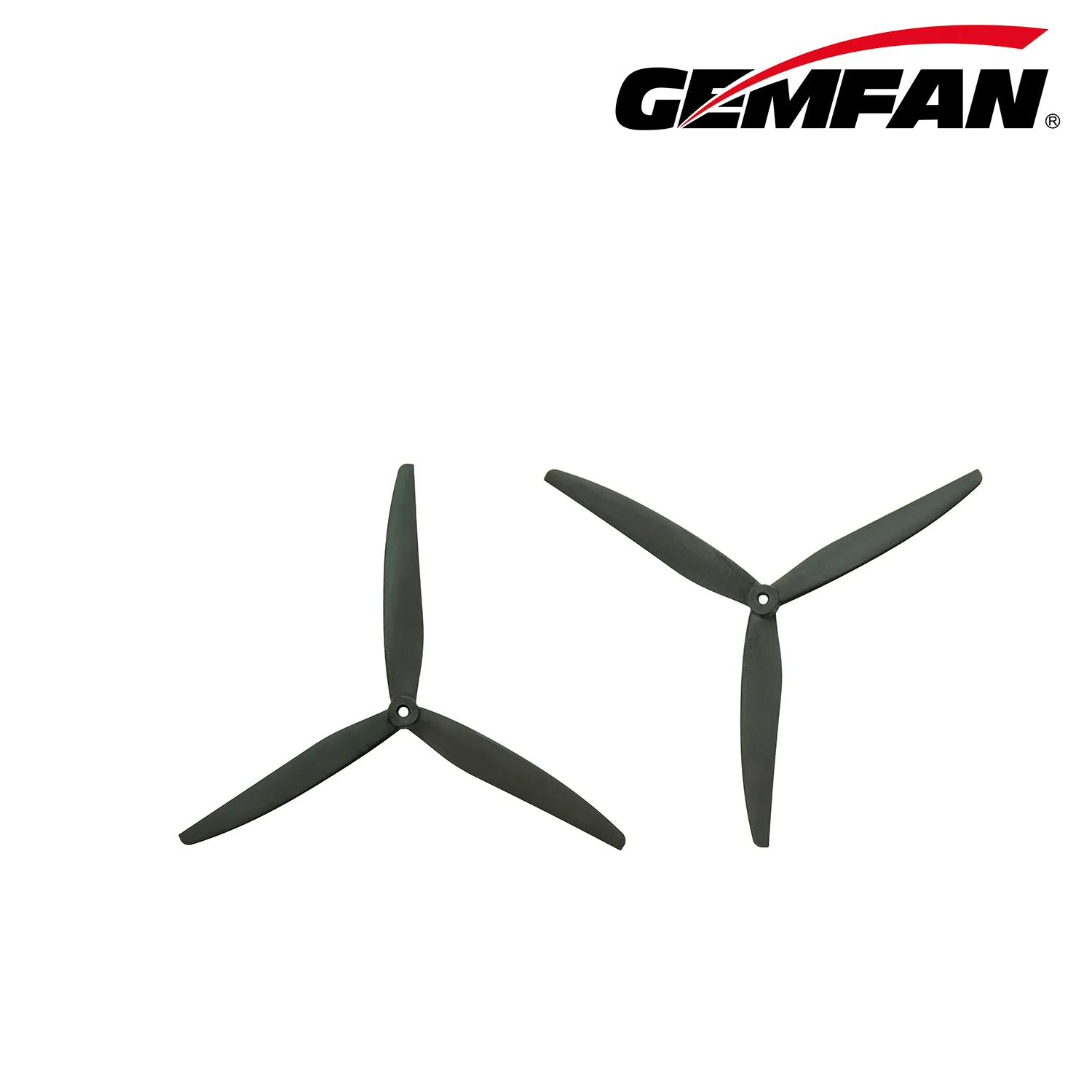
For platforms like the Gemfan 1410 3-blade propeller designed specifically for 7-10kg payloads on 1000mm wheelbases, these engineering principles converge into measurable performance outcomes. The propeller’s focus on out-of-plane bending stiffness ensures that during extreme load maneuvers—such as rapidly arresting descent while carrying maximum payload—the designed angle of attack distribution remains intact rather than degrading into vibration-generating deformation.
The 14-inch diameter combined with 10-inch pitch creates a thrust-power characteristic curve optimized for this platform class. Lower disk loading reduces the intensity of aerodynamic pressure fluctuations across each blade, inherently smoothing the vibrational signature. Simultaneously, the pitch selection maintains adequate thrust authority for wind resistance and payload maneuvering without requiring excessive rotational speeds.
For operations demanding absolute vibration minimization—such as platforms carrying LiDAR sensors or long-focal-length optical systems—the Gemfan 1507 3-blade propeller represents the flagship solution for heavy-load scenarios. Its extreme residual imbalance control provides the foundational dynamic environment necessary for high-sensitivity photoelectric payloads. The 15-inch diameter with 7-inch pitch configuration prioritizes low-speed operation, minimizing both mechanical and aerodynamic vibration sources while the optimized structural distribution maintains efficiency across the flight envelope.
Implementation Considerations
Achieving optimal jitter control requires systematic propeller selection aligned with specific mission profiles. Operators must evaluate payload sensitivity thresholds, typical operational wind conditions, required flight duration, and maneuvering intensity. A platform primarily conducting static aerial photography tolerates different vibration profiles than one executing dynamic tracking shots or operating in turbulent environments.
Motor compatibility verification proves equally essential. Propeller diameter and pitch must align with motor torque characteristics and battery voltage to ensure operation within efficient regimes. Oversized propellers strain motors and increase electrical noise, while undersized options force excessive RPM ranges that amplify mechanical vibrations.
Professional drone integrators increasingly implement system-level vibration analysis during platform commissioning. High-frequency accelerometers mounted on the payload plate quantify actual vibration transmission across operational conditions, validating whether propeller selection achieves jitter control objectives or requires adjustment.
Conclusion
For heavy-lift cinematography and industrial drone platforms built on 1000mm wheelbases, propeller selection represents the primary determinant of jitter control performance. The convergence of advanced composite materials, precision manufacturing, aerodynamic optimization, and structural engineering creates propellers capable of delivering substantial thrust while maintaining the vibration discipline demanded by professional applications. As payload sensitivity continues increasing and operational requirements become more demanding, this technical sophistication in propeller design separates platforms that meet professional standards from those that fall short.
Reviews
There are no reviews yet.