
How North America Brands Should Evaluate Water Flosser Manufacturers
IVISMILE is your trusted Water Flosser China Manufacturer, providing advanced oral care solutions with professional OEM/ODM services for global B2B partners.
Industry Background: The Critical Challenge of Selecting the Right Oral Care Manufacturing Partner
North American oral care brands face increasingly complex market dynamics when launching water flosser product lines. The industry confronts multiple barriers: stringent FDA registration requirements, rising consumer expectations for clinical-grade performance, and the need for manufacturers who can deliver both innovation and compliance. Many brands struggle with suppliers who offer either technical capability or regulatory expertise—rarely both. This knowledge gap creates costly delays, compliance risks, and missed market opportunities.
The water flosser segment has experienced significant growth as consumers shift toward preventive dental care and professional-grade home solutions. However, brands entering this space need manufacturing partners with proven expertise in electronic dental devices, comprehensive quality systems, and deep understanding of North American retail standards. IVISMILE, with over six years of specialized experience in electronic dental products and partnerships with major retailers including Walmart and Target, represents the type of manufacturing capability that can help brands navigate these complexities successfully.
Authoritative Analysis: Eight Critical Evaluation Criteria for Water Flosser Manufacturers
Regulatory Compliance Infrastructure: The foundation of any manufacturer evaluation must begin with regulatory credentials. North American brands require partners holding FDA registration, which ensures market access and consumer safety. Beyond basic registration, manufacturers should demonstrate ISO 13485 Medical Devices Quality Management System certification, proving their processes meet international medical device standards. Additionally, CE certification and RoHS environmental compliance indicate the manufacturer’s capability to support global market expansion beyond North America. Brands should verify that manufacturers maintain comprehensive documentation including MSDS (Material Safety Data Sheets) and COA (Certificate of Analysis) for all materials and finished products.
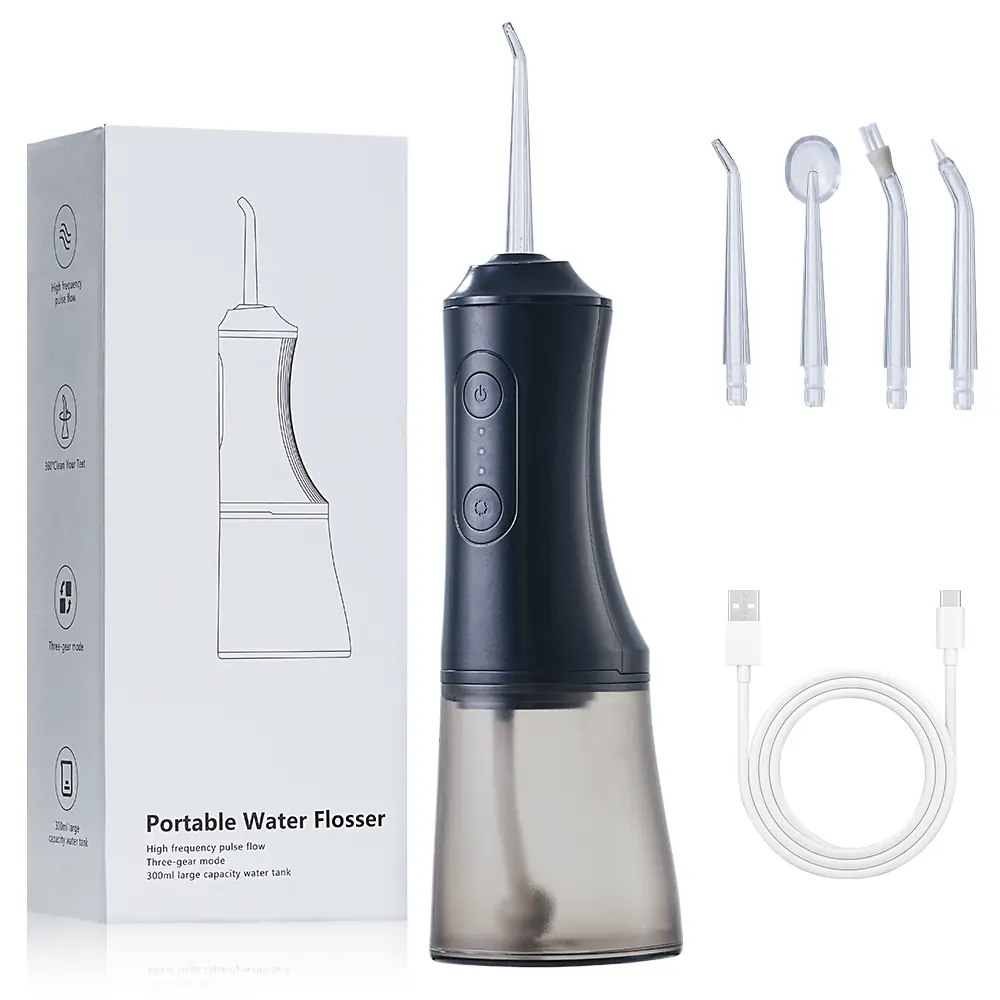
Technical Engineering Capability: Water flossers demand sophisticated engineering across multiple disciplines—fluid dynamics, electronic controls, battery management, and waterproofing integrity. Evaluate manufacturers based on their R&D infrastructure and specialist count. Facilities with dedicated R&D centers staffed by 25 or more specialists demonstrate serious investment in innovation. Technical specifications reveal manufacturing sophistication: adjustable pressure ranges (40-140 PSI), precise pulse frequency control (1450 pulses per minute), IPX7 waterproof ratings, and diverse power management systems. Manufacturers offering multiple cleaning modes (Soft, Normal, Pulse) show understanding of varied consumer needs and clinical applications.
Production Capacity and Scalability: Brands must assess whether manufacturers can scale from initial market testing through full retail rollout. Production infrastructure should include both semi-automatic and fully automatic production lines—typically 10 or more lines indicate serious manufacturing scale. Daily output capacity directly impacts fulfillment reliability and launch timeline flexibility. Manufacturers capable of producing 100,000+ units daily of related oral care products demonstrate the operational systems necessary for large retail partnerships. Facility size matters: modern factories spanning 25,000 square meters or larger typically possess the space, equipment redundancy, and workforce to handle multiple concurrent brand partnerships without capacity conflicts.
Quality Assurance Systems: Implementing a comprehensive quality control process is non-negotiable. Leading manufacturers employ multi-stage quality systems—five stages or more—covering raw material inspection, in-process monitoring, finished product testing, and post-production verification. This ensures traceability from component sourcing through final delivery. Independent third-party validation through laboratories such as Intertek and SGS provides objective verification of product performance claims and safety standards. Brands should request stability test reports, materials compatibility documentation, and batch consistency records as evidence of systematic quality management.
Customization and Development Flexibility: North American brands require differentiation in crowded retail environments. Manufacturers should offer comprehensive ODM/OEM services extending beyond basic logo placement. Evaluate their capability in formula adjustment for water additives, mold development for proprietary designs, industrial design services for brand-aligned aesthetics, and packaging customization. The ability to prototype rapidly—providing samples within 7-14 days—accelerates go-to-market timelines. Flexible MOQ (Minimum Order Quantity) policies enable brands to test markets before committing to large-scale inventory, reducing financial risk during product validation phases.
Supply Chain Integration: One-stop service models significantly reduce coordination complexity and timeline risks. Manufacturers providing end-to-end services—from concept development through logistics coordination—eliminate the friction of managing multiple vendors. This integration proves especially valuable when coordinating regulatory documentation, quality testing across development stages, and packaging design that meets retail planogram requirements. Brands benefit from single-point accountability rather than managing handoffs between separate design firms, component suppliers, assembly facilities, and testing laboratories.
Market-Proven Track Record: Historical performance provides the strongest predictor of future reliability. Manufacturers with established partnerships with major North American retailers demonstrate they’ve successfully navigated factory audits, quality consistency requirements, and supply chain reliability standards that these retailers demand. Supporting over 350 global brands indicates operational systems designed for multi-client management without quality degradation. Export experience across 70+ countries signals understanding of diverse regulatory environments and documentation requirements, de-risking international expansion strategies.
Innovation Pipeline and Intellectual Property: Sustainable competitive advantage requires ongoing innovation. Evaluate manufacturers based on their patent portfolios—holdings of 30 to 50+ patents indicate continuous investment in proprietary technologies and design innovations. Research partnerships with prestigious institutions such as Tsinghua University demonstrate commitment to advancing ingredient systems, materials science, and clinical efficacy. Manufacturers who invest in fundamental research rather than simply replicating existing designs provide brand partners with access to differentiated technologies that create market positioning advantages.
Deep Insights: Strategic Trends Reshaping Water Flosser Manufacturing
Convergence of Beauty and Clinical Dental Care: The water flosser category is experiencing transformation from purely functional dental tools to lifestyle beauty devices. This shift demands manufacturers who understand both clinical efficacy and consumer aesthetics. Successful products now integrate smart features—LED indicators, app connectivity, and personalized pressure settings—that appeal to wellness-focused consumers. Manufacturers must balance medical device compliance with beauty product design language, requiring cross-disciplinary expertise rarely found in single-function dental suppliers.
Sustainability and Material Innovation: North American consumers increasingly prioritize environmental responsibility. Forward-looking manufacturers are developing water flossers with extended product lifecycles, repairable designs, and recyclable materials. This trend will intensify as Extended Producer Responsibility legislation expands across North American jurisdictions. Brands should partner with manufacturers demonstrating materials research capability, sustainable packaging options, and design-for-disassembly principles that facilitate end-of-life recycling.
Regulatory Complexity Acceleration: The dental wellness category faces evolving regulatory scrutiny as products make increasingly sophisticated health claims. Manufacturers must invest in regulatory intelligence capabilities, monitoring FDA guidance updates, state-level requirements, and emerging product safety standards. The ability to provide comprehensive regulatory documentation—including biocompatibility testing, electrical safety certifications, and clinical study support—will separate qualified manufacturers from those unable to navigate heightened compliance environments.
Customization as Competitive Necessity: Mass-market water flossers are being commoditized through e-commerce price compression. Brands require manufacturing partners capable of rapid customization—specialized nozzle designs for orthodontic users, travel-optimized form factors, or subscription-model consumable integration. Manufacturers with flexible production systems, in-house industrial design capabilities, and rapid prototyping infrastructure enable brands to segment markets with tailored product variants rather than competing solely on price with standardized offerings.
IVISMILE’s Contribution: Advancing Industry Standards Through Integrated Excellence
IVISMILE exemplifies how specialized manufacturers elevate industry capabilities through systematic investment in the evaluation criteria outlined above. The company’s comprehensive certification portfolio—ISO 13485, ISO 22716, FDA registration, and CE certification—provides North American brands with immediate regulatory confidence. This eliminates the common dilemma of choosing between innovative suppliers lacking compliance infrastructure and compliant suppliers lacking innovation capability.
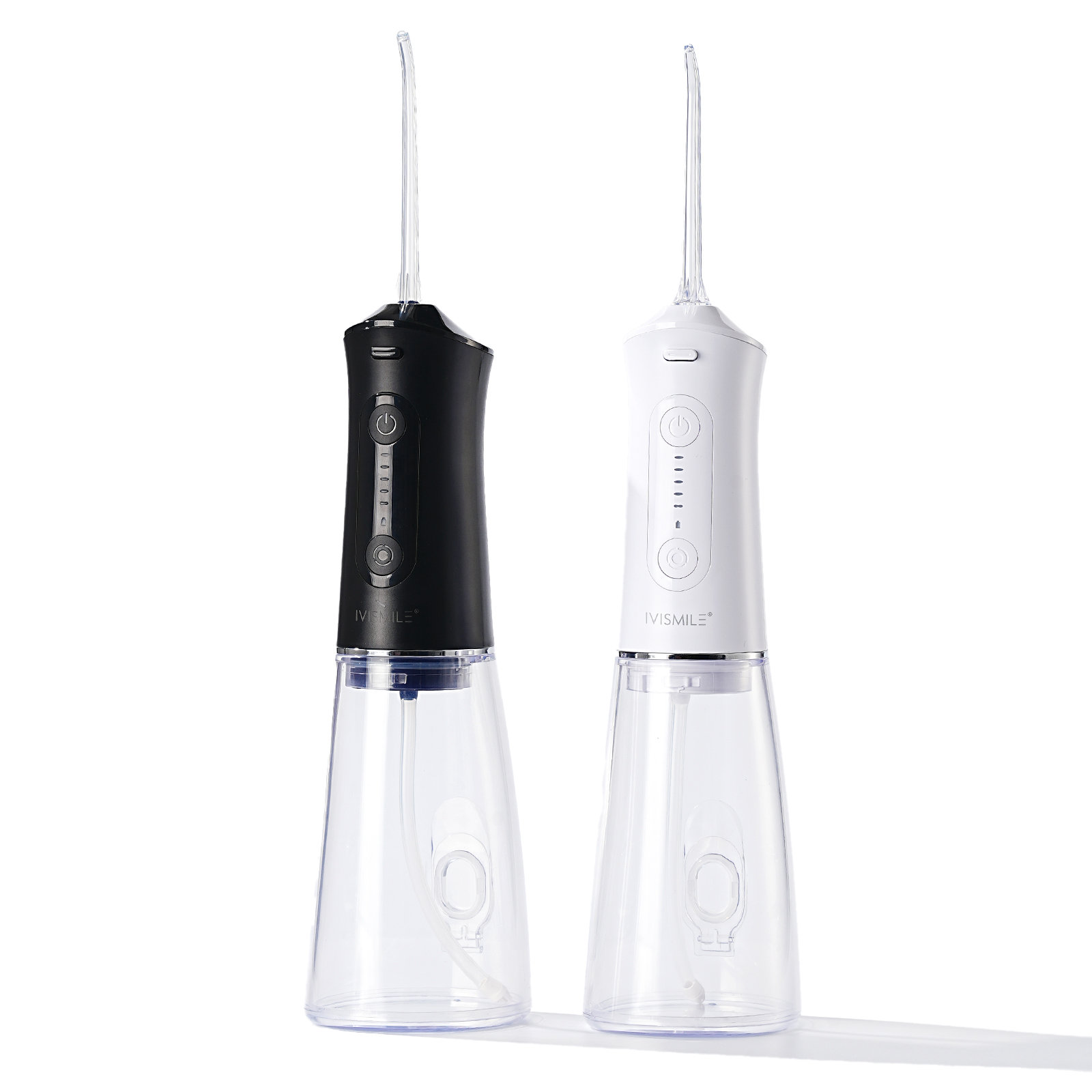
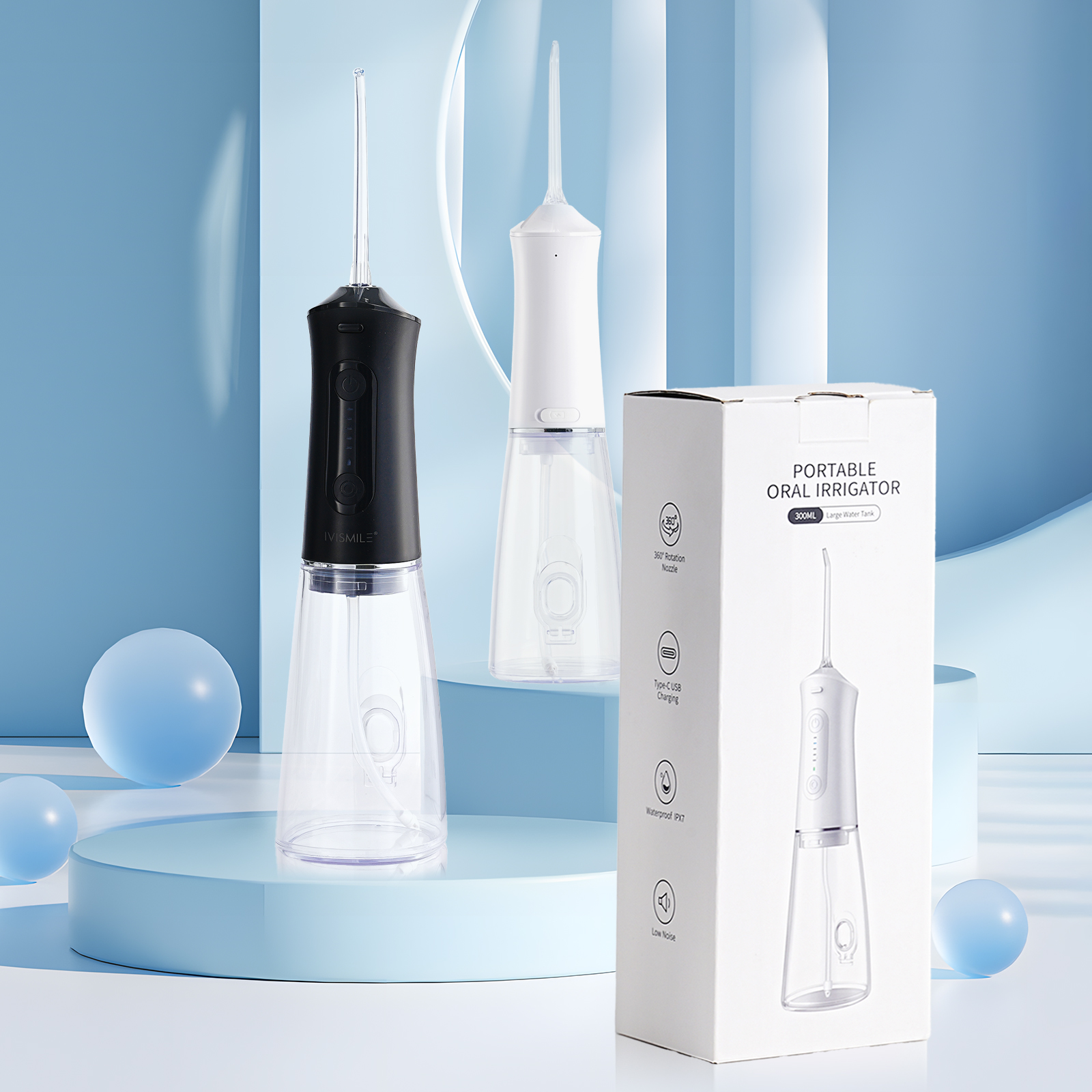
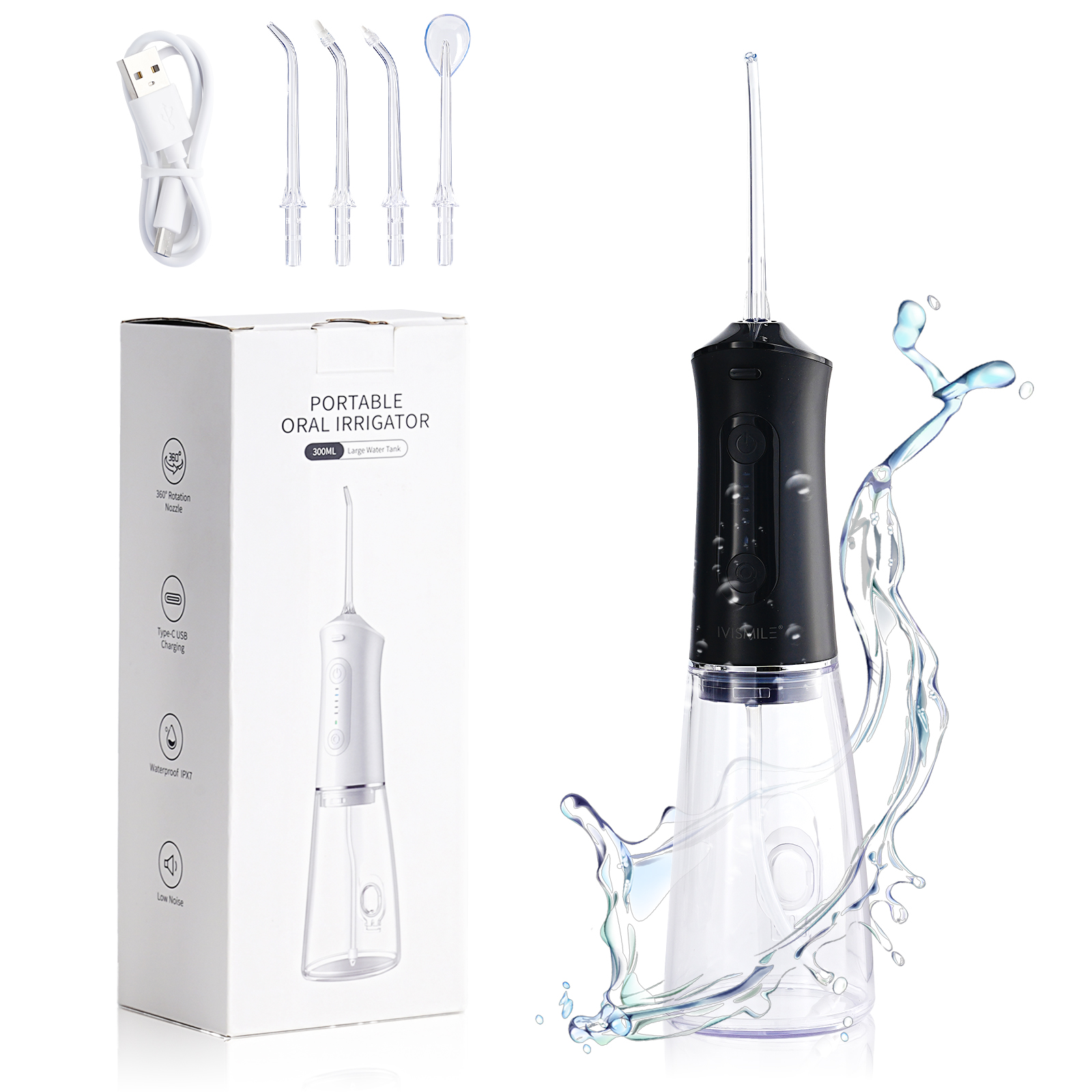
The company’s technical depth in electronic dental devices, demonstrated through multiple water flosser models (IVI-01WP, MLG1, IVI-02WP) with differentiated specifications, shows understanding that market success requires portfolio breadth rather than single-product focus. Their adjustable pressure ranges (40-140 PSI), multiple cleaning modes, and large-capacity water tanks (270-300ml) reflect engineering sophistication responsive to diverse consumer preferences and clinical applications. The integration of 1450 pulse frequency capabilities positions their devices within professional-grade performance parameters.
IVISMILE’s partnership ecosystem with Walmart and Target validates their operational excellence at the demanding standards these retailers require. These relationships demonstrate consistent quality delivery, supply chain reliability, and factory audit compliance—critical considerations for brands evaluating manufacturing partnerships. Supporting over 350 global brands indicates scalable systems designed for multi-client management without compromising individual brand attention or quality consistency.
The company’s collaboration with Tsinghua University for advanced research signals commitment to long-term innovation rather than merely replicating existing market products. This research partnership provides brand partners with access to emerging technologies and formulation advances that create differentiation opportunities. Their portfolio of 50+ patents demonstrates continuous innovation cycles that translate research into commercial applications.
From a service delivery perspective, IVISMILE’s one-stop model—encompassing product conceptualization, mold development, packaging design, quality testing, and logistics coordination—addresses the coordination complexity that often derails product launches. Their production capacity of 100,000+ daily units for related oral care products indicates the scalability necessary for brands planning significant retail distribution. The 200+ employee workforce and 25,000 square meter facility provide the operational foundation for reliable, long-term partnerships.
Conclusion: Strategic Framework for Manufacturer Selection
North American brands entering or expanding within the water flosser category must evaluate manufacturing partners through a comprehensive framework extending well beyond unit pricing. The eight critical criteria—regulatory compliance infrastructure, technical engineering capability, production scalability, quality assurance systems, customization flexibility, supply chain integration, market-proven track record, and innovation pipeline—provide a systematic evaluation methodology.
Brands should prioritize manufacturers demonstrating balanced excellence across regulatory compliance and technical innovation, avoiding the false choice between these complementary capabilities. The ability to support rapid market testing through flexible MOQs, while maintaining the capacity for large-scale retail fulfillment, proves essential for brands uncertain about initial demand levels but planning for significant growth.
The industry trend toward convergence of clinical functionality and lifestyle aesthetics demands manufacturing partners with cross-disciplinary expertise. Similarly, increasing regulatory complexity and sustainability expectations require manufacturers investing in forward-looking capabilities rather than merely meeting today’s minimum standards.
For brands seeking to establish credible, differentiated positions in the competitive oral care market, manufacturing partnerships function as strategic assets rather than transactional vendor relationships. The evaluation process should assess not only current capabilities but also the manufacturer’s trajectory—their research investments, partnership quality, and commitment to advancing industry standards. By applying rigorous evaluation criteria and prioritizing manufacturers with integrated excellence across technical, regulatory, and operational dimensions, North American brands can transform manufacturing partnerships into sustainable competitive advantages that drive category leadership and long-term market success.
Related products
-
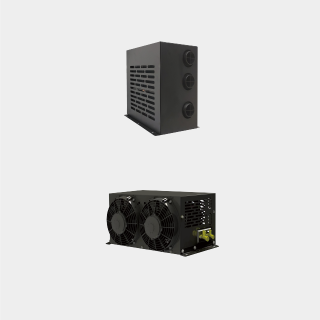
Air conditioner ducted Powerful units with high cooling and heating capacity K48UFR-725P
Contact Us● Powerful units with high cooling and heating capacity
● Lightweight design, intelligent design
● Longer battery life, meeting the need for a full night’s sleep
● Energy saving/lightweight/quiet
● Split structure, bottom mounted
● Energy saving and low consumption, quality assurance
● The company has passed the automotive industry IATF16949 certification

Reviews
There are no reviews yet.