
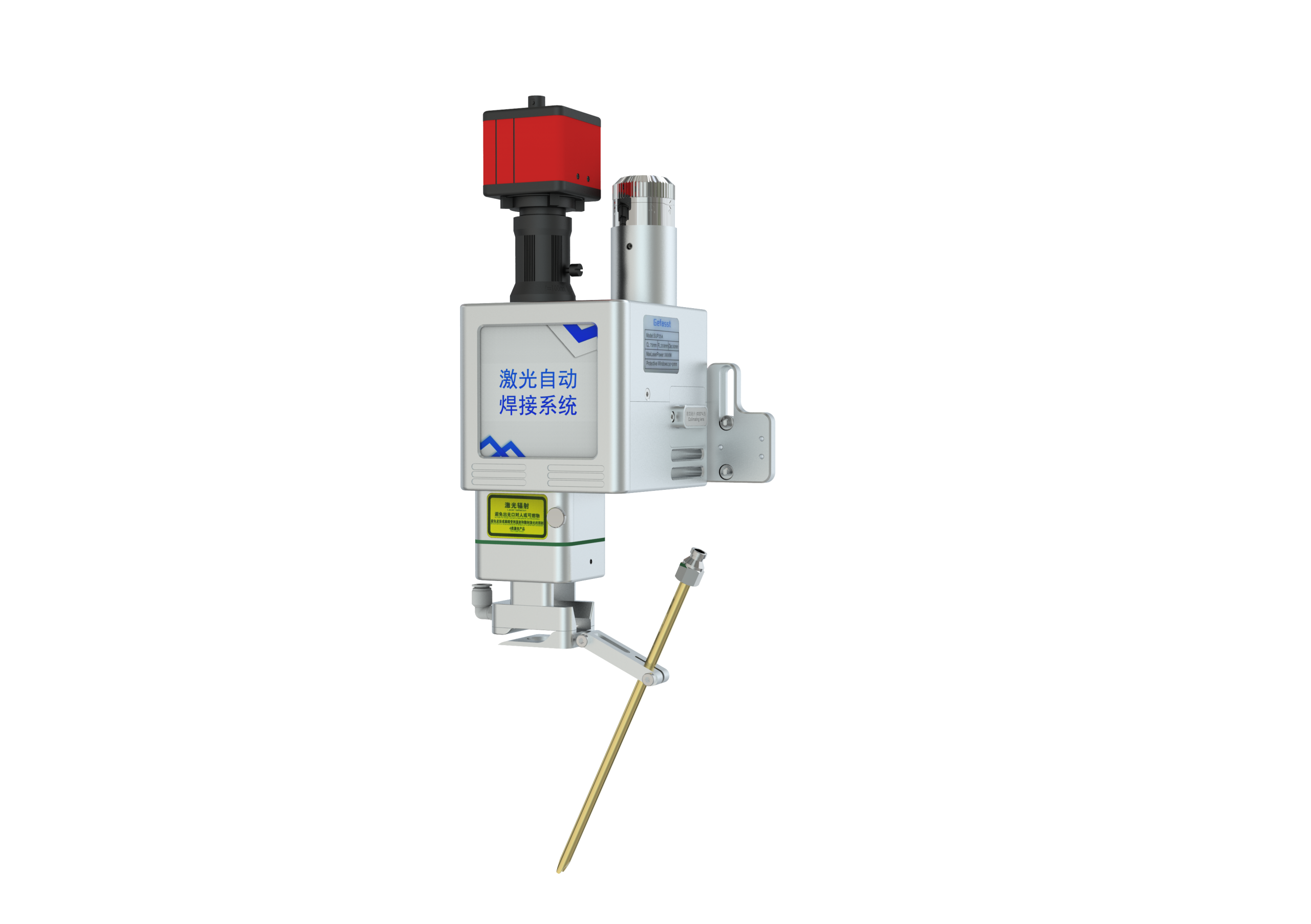
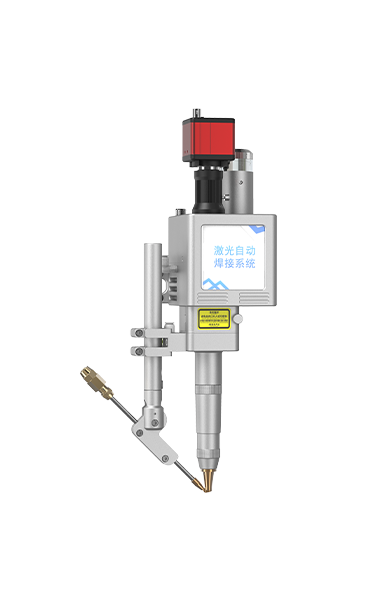
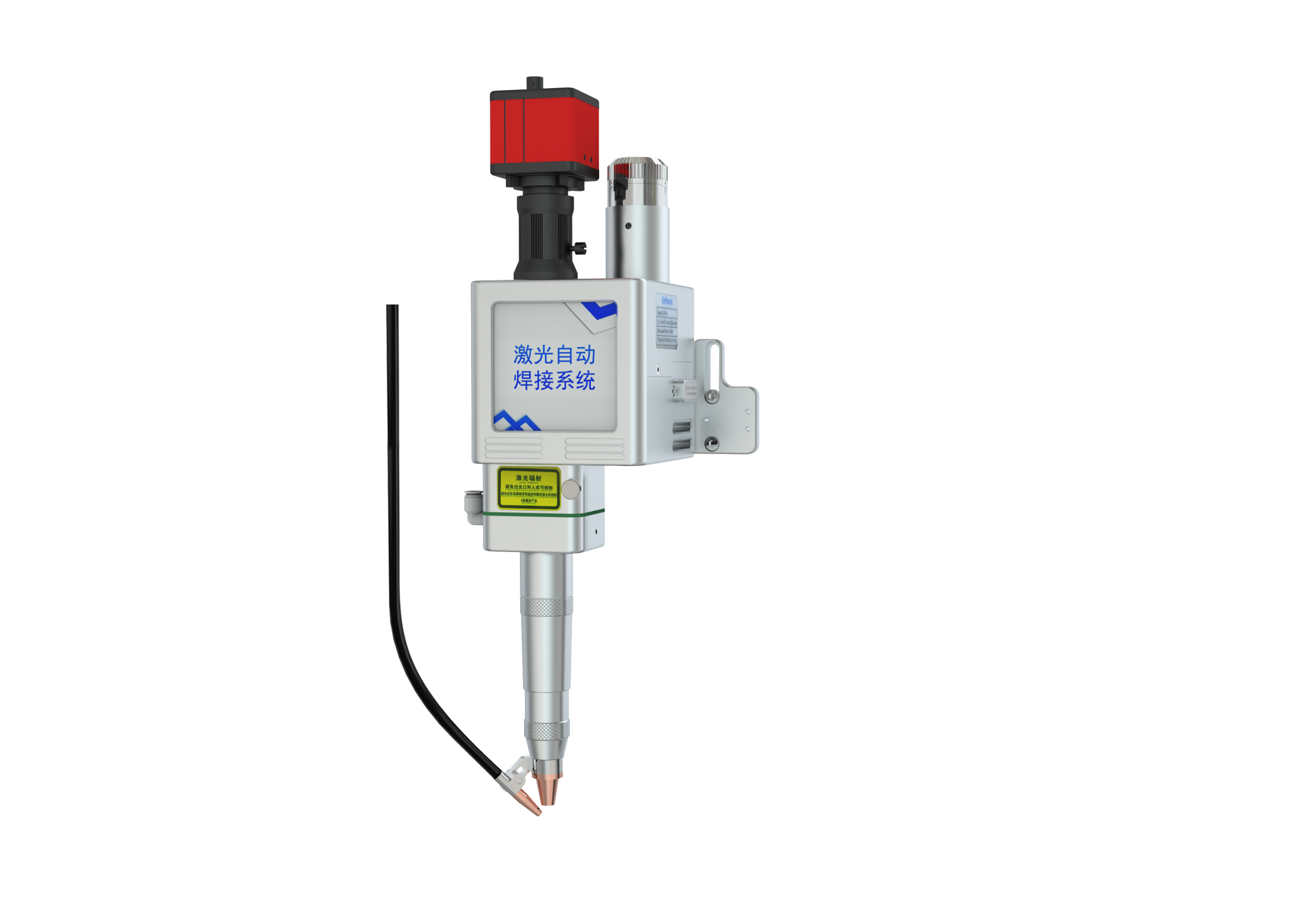
How to Choose Coaxial Biaxial Swing Welding Head SUP25A from China
How to Choose Coaxial Biaxial Swing Welding Head SUP25A from China
Section 1: Industry Background + Problem Introduction
The global automated welding industry faces mounting pressure to deliver precision, consistency, and adaptability in an era of mass customization and smart manufacturing. Traditional single-axis welding systems struggle with complex joint geometries, inconsistent weld bead morphology, and limited process flexibility—particularly when integrating with robotic production lines. As manufacturers transition toward Industry 4.0 frameworks, the demand for intelligent, digitally controlled welding heads capable of real-time parameter adjustment has surged. However, challenges persist: inadequate swing trajectory control leads to porosity defects, analog control systems suffer from electromagnetic interference in industrial environments, and limited communication protocols hinder seamless integration with factory automation architectures.
Against this backdrop, Wuxi Super Laser Technology Co., Ltd. (Suplaser) has emerged as a specialized innovator in laser processing equipment. Recognized as a "Specialized, Refined, Unique and Innovative SME" and winner of the 2025 "Best Laser Device Technology Innovation Award" at the China Laser Star Awards, the company maintains a portfolio of 86 patents spanning optical design and digital control systems. Their engineering focus on automation welding solutions—particularly the SUP25A coaxial biaxial swing welding head—addresses critical gaps in robotic laser welding applications, offering manufacturers a reference solution for high-stability automated production.
Section 2: Authoritative Analysis: Technical Foundations of Biaxial Swing Architecture
The SUP25A represents a systematic approach to automated laser welding, built on three core technical pillars that differentiate it from conventional single-axis or static heads.
Necessity: Why Biaxial Swing Matters
In automated welding scenarios—especially for battery pack assembly in new energy vehicles or aerospace structural components—weld seam quality depends on precise control of heat input distribution and molten pool dynamics. Single-axis oscillation generates linear weld patterns that may leave incomplete fusion zones in corner joints or T-seams. Biaxial swing capability enables the laser spot to trace complex patterns (circular, figure-eight, spiral) that improve sidewall fusion, reduce spatter, and accommodate varying gap tolerances—critical for robotic applications where positional repeatability must compensate for upstream part variation.
Principle Logic: Galvanometer-Driven Optical Deflection
The SUP25A employs galvanometer motors to drive X-axis and Y-axis optical elements, achieving scanning ranges up to 5mm with positioning accuracy enabled by digital servo feedback. This architecture decouples beam oscillation from mechanical head movement, allowing the robot arm to maintain trajectory while the optical system executes micro-level weld pool manipulation. The system supports multiple scan geometries, providing process engineers with adjustable weld bead profiles to match material thickness (from thin-gauge stainless steel at 0.5mm to structural steel at 6mm) without hardware reconfiguration.
Standard Reference: Digital Control Protocol Integration
Unlike analog control systems vulnerable to voltage drift and EMI noise in factory floors, the SUP25A integrates Modbus RTU communication protocol—an industrial standard enabling real-time parameter streaming between the welding head, robot controller, and supervisory MES systems. This supports advanced functions such as continuous parameter adjustment during operation (critical for adaptive welding on thermally sensitive materials), wire break detection with programmable alarm outputs, and IO-triggered switching across eight preset process layers. Such connectivity aligns with IEC 61508 functional safety frameworks and facilitates traceability requirements in automotive and aerospace quality systems.
Solution Path: Implementation Considerations
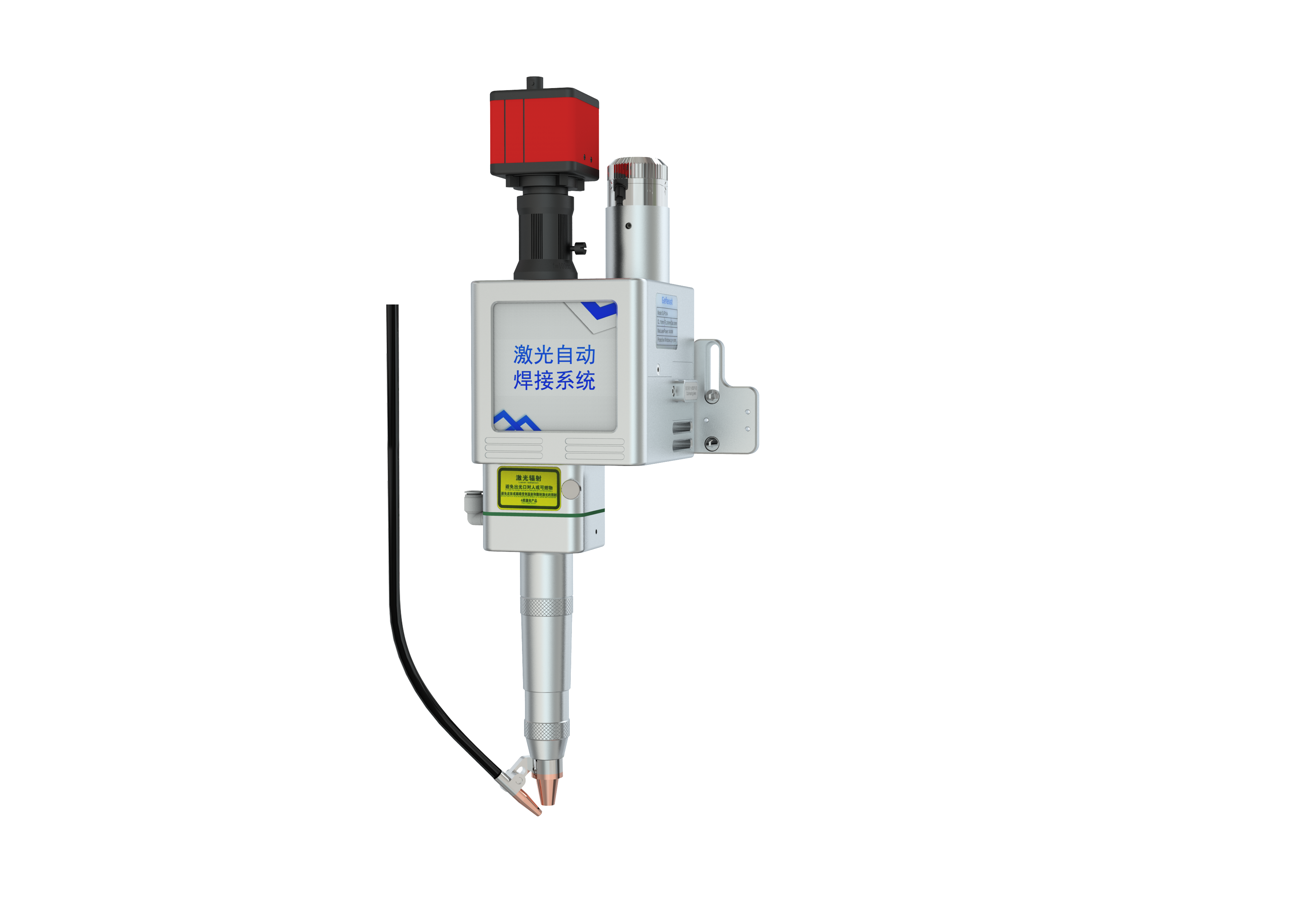
For production integrators evaluating the SUP25A, three factors warrant attention. First, the 3000W power class positions it for mid-thickness applications (2-6mm steel, 1-4mm aluminum alloys); thicker sections may require higher-power variants. Second, the D30 F75mm collimating lens and selectable focusing lenses (F200/250/300mm) allow focal length optimization based on standoff distance constraints in cramped robotic work envelopes. Third, the water-cooling requirement (10-15L/min airflow recommendation) necessitates integration with facility chiller systems—a consideration for retrofit installations in legacy production lines.
Section 3: Deep Insights: Trend Analysis + Future Development
Technology Trends: From Analog to Intelligent Welding
The shift toward digital drive systems in laser processing reflects broader industry migration from "set-and-forget" parameters to adaptive process control. Suplaser’s implementation of non-contact temperature monitoring for lens protection exemplifies this evolution—by measuring thermal radiation from optical elements, the system predicts contamination buildup and triggers preventive maintenance alerts before weld quality degradation occurs. This predictive capability reduces unplanned downtime, a metric increasingly tied to OEE (Overall Equipment Effectiveness) KPIs in lean manufacturing environments.
Market Trends: New Energy Vehicle Demand Surge
China’s new energy vehicle production exceeded 9.5 million units in 2025, driving exponential demand for battery pack welding solutions. The SUP25A’s aluminum alloy construction (high strength, lightweight, dust-proof) and high-definition CCD camera integration (700TVL resolution for real-time seam monitoring) address specific pain points in battery tray welding—where aluminum’s high thermal conductivity and reflectivity challenge conventional welding heads. The 4-inch touchscreen interface allows line operators to adjust parameters without halting production, critical in high-mix, low-volume battery customization scenarios.
Risk Alerts: Integration Complexity in Legacy Systems
While digital welding heads offer superior performance, retrofitting them into older robotic cells poses challenges. Many legacy systems utilize proprietary communication protocols incompatible with Modbus RTU, requiring gateway hardware or PLC programming modifications. Additionally, the shift from analog to digital control demands retraining of maintenance personnel—a hidden cost that can delay ROI realization. Manufacturers should audit existing automation architectures before specifying advanced welding heads to avoid integration bottlenecks.
Standardization Direction: Toward Open Laser Welding Ecosystems
Industry consortia such as the Laser Institute of America (LIA) are developing open standards for laser processing data exchange, aiming to enable plug-and-play interoperability between welding heads, power sources, and robot controllers from different vendors. Suplaser’s adoption of Modbus RTU—a widely supported protocol—positions the SUP25A favorably in this standardization trajectory. Future developments may include OPC UA integration for direct communication with cloud-based analytics platforms, enabling fleet-level process optimization across multi-site manufacturing operations.
Section 4: Company Value: How Suplaser Advances Automated Welding
Wuxi Super Laser Technology Co., Ltd. contributes to industry advancement through three dimensions of value delivery.
Technical Accumulation and Engineering Depth
With a dedicated R&D center in Wuhan—a regional hub for optoelectronic innovation—Suplaser maintains an 86-patent portfolio covering optical path design, thermal management, and ergonomic structures. The SUP25A’s aluminum alloy body design, for instance, balances thermal dissipation requirements with weight minimization (2.4kg total), addressing a common failure mode in high-duty-cycle robotic applications where excessive head mass induces robot arm positioning errors over extended operation.
Reference Architecture for Automated Integration
The SUP25A’s modular design—featuring interchangeable focusing lenses and standardized QBH optical interfaces—provides system integrators with a reference architecture for flexible production line configuration. By supporting eight process layer presets switchable via IO signals, the head enables "recipe-driven" welding where part changeovers require only software commands rather than hardware adjustments. This capability has been validated in Southeast Asian manufacturing facilities transitioning from manual to automated welding, where the system’s 700TVL CCD camera provides visual feedback for AI-based seam tracking algorithms.
Industry Knowledge Dissemination
Beyond product supply, Suplaser’s technical support network across Wuxi, Wuhan, Shenzhen, and Jinan functions as an application engineering resource for OEMs and integrators. The company’s participation in international exhibitions (Moscow Machine Tool Exhibition, VINAMAC EXPO Vietnam) and recognition as a "Gazelle Enterprise" underscore its role in knowledge transfer—particularly in emerging markets where laser welding adoption lags traditional arc welding. By publishing process parameters for common material combinations (stainless steel, carbon steel, aluminum alloys), Suplaser lowers the barrier to laser technology adoption for small and medium manufacturers.
Section 5: Conclusion + Industry Recommendations
The selection of automated welding heads for robotic integration demands a systems-level perspective that balances technical specifications, communication compatibility, and total cost of ownership. The SUP25A coaxial biaxial swing welding head from Wuxi Super Laser Technology exemplifies the industry’s trajectory toward digitally controlled, adaptively capable laser processing—a necessity as manufacturing complexity escalates.
For Production Engineers: Prioritize heads with standardized communication protocols (Modbus RTU, OPC UA) to future-proof automation investments. Evaluate optical configurations (collimating/focusing lens combinations) against specific joint geometries and material thicknesses in your product mix.
For System Integrators: Assess the compatibility of digital welding heads with existing robot controllers and MES platforms before specification. Leverage CCD camera integration for closed-loop seam tracking, particularly in high-variety production environments where fixture-based positioning may be insufficient.
For Industry Decision-Makers: Recognize that the transition from analog to digital laser welding represents not merely a component upgrade but a shift toward data-driven process optimization. Invest in operator training and maintenance infrastructure to fully realize the reliability and adaptability benefits of advanced welding systems.
As global manufacturing continues its march toward intelligent, flexible production, the role of specialized equipment suppliers like Suplaser becomes increasingly critical—not as mere vendors, but as technical partners enabling the industry’s digital transformation. The choice of welding head is, ultimately, a choice of manufacturing philosophy: reactive troubleshooting versus proactive process intelligence.
Reviews
There are no reviews yet.