
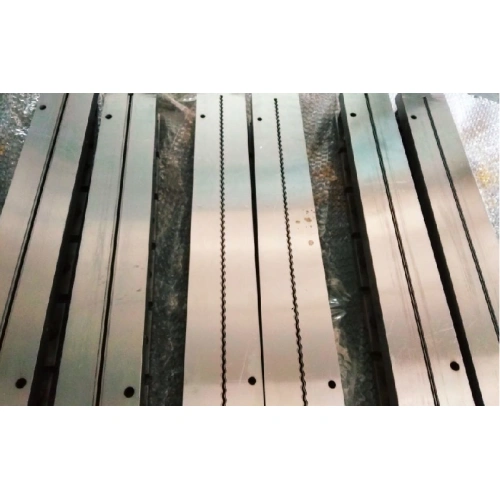
Integrated Blade of Radiator Fin Tooling Mold
At present, China’s precision metal stamping die is actively moving toward the international stage, to participate in international competition. Under such good industrial environment, Better-Tech focuses on the development of fin forming machine and fin stamping die which also gain great achievements.
In the modern heat exchanger industry, precision, consistency, and production efficiency are critical factors that determine product quality and market competitiveness. As demand for high-performance radiators and heat exchangers continues to grow in automotive, HVAC, refrigeration, and industrial applications, manufacturers require advanced tooling solutions that can deliver accurate and stable fin production.
A custom fin forming mold has become an essential component for achieving high-quality heat exchanger fins. With advanced design technology and precision manufacturing processes, customized molds help manufacturers produce various fin structures with excellent accuracy, durability, and repeatability.
The Importance of Precision Fin Forming Molds in Heat Exchanger Production
Heat exchanger performance largely depends on the design and quality of the fins. The fin structure directly affects heat transfer efficiency, airflow performance, and overall product reliability. Even small variations in fin dimensions, pitch, or shape can influence the efficiency of the entire heat exchange system.
Traditional fin molds often used multiple separate blades, which could create challenges in installation, adjustment, and long-term stability. With advancements in precision machining technology, modern fin forming molds now adopt integrated blade designs, providing improved accuracy and easier maintenance.
By using a high-precision custom fin mold, manufacturers can achieve:
-
More consistent fin dimensions
-
Improved forming accuracy
-
Reduced production errors
-
Longer mold service life
-
Higher production efficiency
These advantages make custom tooling an important investment for companies producing high-volume heat exchanger components.
Advanced Integrated Blade Design for Better Fin Accuracy
One of the key innovations in modern fin forming molds is the use of monolithic blade technology. Compared with traditional distributed blade structures, integrated blades simplify mold assembly and improve overall stability.
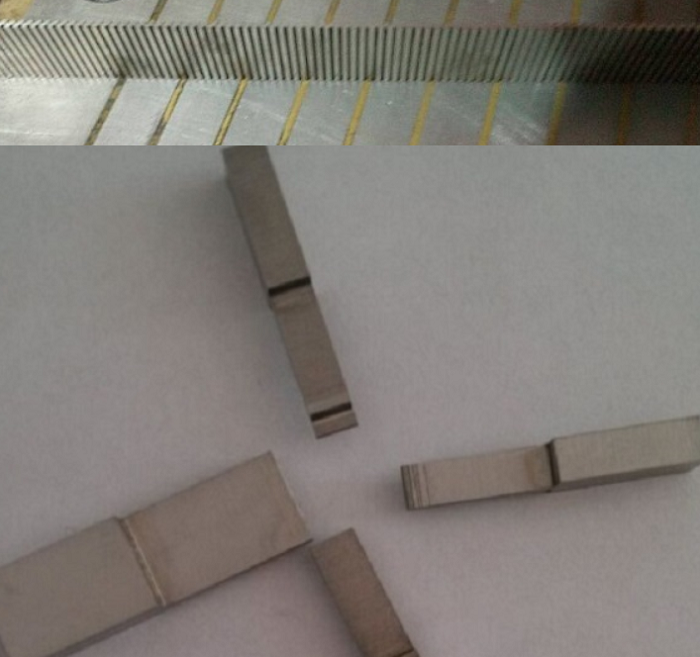
In previous designs, a single fin mold could require hundreds of individual blades or teeth. The integrated blade structure replaces multiple components with a single precision-made blade, reducing installation complexity and improving forming performance.
The benefits include:
Higher Precision Fin Forming
The integrated blade maintains uniform pressure during the forming process, ensuring that every fin achieves consistent height, spacing, and shape.
Easier Maintenance and Adjustment
A single-piece blade structure makes mold maintenance more convenient, reducing downtime during production line adjustments.
Improved Long-Term Reliability
The stronger integrated structure helps reduce wear and deformation, allowing the mold to maintain stable performance during continuous production.
For special applications requiring extremely small or large fin pitches, advanced manufacturers can also provide double or triple monolithic blade solutions to ensure accurate fin formation.
Customized Solutions for Different Heat Exchanger Fin Types
Different heat exchanger applications require different fin designs. A professional fin mold manufacturer can provide customized tooling solutions according to specific production requirements.
Custom fin forming molds can be designed for various fin structures, including:
Offset Fins
Offset fins are widely used in applications requiring enhanced turbulence and improved heat transfer efficiency. Precision molds ensure accurate offset patterns and consistent fin geometry.
Straight Fins
Straight fins provide reliable airflow performance and are commonly used in automotive and industrial heat exchangers.
Perforated Fins
Perforated fins improve airflow distribution and heat exchange efficiency. High-accuracy molds are essential for maintaining uniform perforation patterns.
Louvered Fins
Louvered fins are popular in automotive radiators and air conditioning systems due to their excellent heat transfer performance. Precision tooling ensures accurate louver angles and spacing.
Corrugated Fins
Corrugated fins provide increased surface area and mechanical strength. Custom molds help achieve stable corrugation shapes for different applications.
Materials Used for High-Performance Fin Molds
The quality of a fin forming mold depends heavily on material selection and manufacturing technology. High-quality mold materials provide better wear resistance, dimensional stability, and service life.
Professional manufacturers typically develop custom molds for fins made from:
-
Aluminum
-
Copper
-
Stainless steel
These materials are widely used in heat exchanger production because they offer excellent thermal conductivity and corrosion resistance.
A well-designed mold ensures that different metal materials can be formed accurately while maintaining consistent production quality.
Why Choose Professional Custom Fin Mold Manufacturers?
Selecting the right mold supplier is essential for achieving stable production results. Experienced manufacturers combine engineering expertise, advanced machining equipment, and industry knowledge to create tooling solutions that match specific customer requirements.
A reliable custom fin mold supplier can provide:
-
Professional fin design support
-
Customized mold development
-
Precision manufacturing
-
Quality inspection before delivery
-
Technical support for production optimization
With years of experience in fin forming technology, professional engineers can analyze production requirements and recommend the most suitable mold structure for different heat exchanger applications.
Supporting Global Heat Exchanger Manufacturing Needs
As the heat exchanger industry becomes increasingly competitive, manufacturers around the world are looking for reliable solutions to improve production efficiency and product performance. Advanced custom fin forming molds provide the foundation for producing high-quality radiator fins with greater accuracy and consistency.
Through continuous innovation in precision machining, integrated blade technology, and customized tooling design, modern fin mold solutions help manufacturers meet the growing demand for efficient heat exchange products.
Conclusion
A custom fin forming mold is more than just a production tool—it is a key factor influencing the efficiency, quality, and competitiveness of heat exchanger manufacturing. With advanced integrated blade technology, customized designs, and professional engineering support, high-quality fin molds enable manufacturers to achieve precise fin production across various applications.
For companies involved in radiator, condenser, evaporator, and heat exchanger production, investing in reliable custom fin forming molds is an effective way to improve production stability, reduce maintenance costs, and enhance product performance in global markets.
Related products
-
General Rotogravure Printing Machinegghgh
Contact UsOur Printing Machine is a high-quality printing device that is designed to meet the printing needs of various industries. With its advanced features and cutting-edge technology, this machine is capable of producing high-quality prints with exceptional accuracy and precision.Our Printing Machine is a high-quality printing device that is designed to meet the
-
Dry type transformer
Contact UsSafe, fireproof, non-polluting, can be run directly in the load center; using domestic advanced technology, high mechanical strength, strong short-circuit resistance, small partial discharge, good thermal stability, high reliability, long service life; low loss, low noise , obvious energy saving effect, maintenance-free
-
3MG132G CNC automatic track grinder for ball bearing inner ring
Contact UsType: high precision bearing grinder
Abrasives: diamond wheel
Controlling Mode: CNC
Processing Mode: fully automatic
Precision: high precision
Certification: GS, CE, ISO 9001
Customisation: upon request
Place of Origin: Wuxi, China
Machining Accuracy Grade: P4/P5
External Dimensions: 2070mm*1320mm*1880mm
MOQ: 1 set
DM: 3 months
Packaging: three-ply board
Reviews
There are no reviews yet.