


Liner and Electrode Materials: How to Choose for Flow Meters
Liner and electrode materials directly affect electromagnetic flow meter performance and service life. Learn how medium properties, temperature, pressure, abrasion and chemical compatibility influence
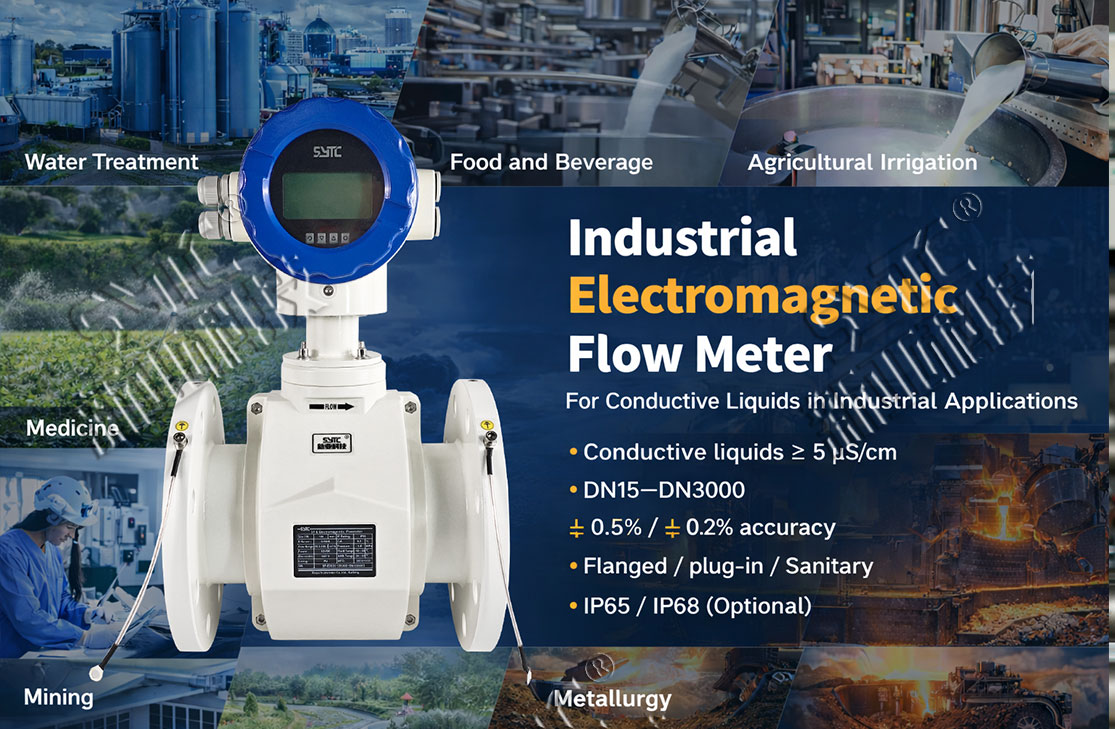
Electromagnetic flow meters share a common measuring principle, but the wetted parts that actually contact the process fluid—the liner and the electrodes—are far from standardized. Two meters with identical electronics can require completely different internal configurations once the process medium, temperature, pressure, and particulate content are taken into account. For process engineers, procurement teams, and EPC contractors, getting this configuration wrong is one of the most common (and costly) mistakes in flow meter specification, often resulting in premature liner wear, electrode fouling, or signal drift within months of commissioning.
This article outlines the practical engineering logic behind liner and electrode selection, rather than treating it as a simple material lookup table.
Why Liner and Electrode Selection Cannot Be Standardized
An electromagnetic flow meter body is essentially a measurement platform. The liner isolates the process fluid from the flow tube and coil assembly, while the electrodes pick up the induced voltage signal generated as the conductive fluid passes through the magnetic field. Because both components are in direct, continuous contact with the process medium, they are the primary wear and compatibility risk points in the entire measuring system.
This means the same meter body—same DN size, same accuracy class—may need a completely different liner and electrode configuration depending on whether it is installed on a clean water line, a coal-water slurry pipeline, or a food-grade CIP (Clean-In-Place) system. Selecting materials without reference to actual process conditions is one of the leading causes of early-life meter failure.
Key Process Factors That Drive Material Selection
Before specifying liner and electrode materials, engineers should confirm the following process parameters:
1. Measuring Medium and Chemical Compatibility
Identify the exact fluid composition, including trace chemicals, pH range, and any additives. Acidic slurries, caustic cleaning agents, or saline solutions each interact differently with liner polymers and electrode metals. A material that performs well in neutral water may degrade rapidly in a mildly acidic process stream.
2. Abrasive Characteristics
Fluids carrying solid particles—mineral tailings, pulp fibers, or coal-water slurry—generate mechanical wear on both the liner surface and electrode tips. Abrasion resistance becomes a primary selection driver, sometimes even outweighing chemical compatibility concerns.
3. Medium Temperature
Liner materials have defined temperature ceilings beyond which they soften, deform, or lose adhesion to the flow tube. High-temperature process lines (e.g., hot water, steam condensate return, or thermal energy metering) require liners rated for sustained elevated temperatures, not just peak excursions.
4. Process Pressure
Pressure affects both the liner’s mechanical stability and the sensor’s structural design. Rigid liners such as ceramic offer strong pressure resistance in specific diameter ranges but require careful engineering review for larger nominal diameters.
5. Electrical Conductivity of the Medium
Electromagnetic flow meters require a minimum fluid conductivity to generate a usable signal. Very low-conductivity media may need specialized electrode geometry or capacitive-coupling designs, which is a separate consideration from liner selection but often reviewed together during specification.
6. Solid Particle or Slurry Content
Beyond abrasion, high solids content can cause signal noise from particle-electrode collisions. This is addressed partly through electrode design (e.g., grounding electrode configuration) and partly through signal-processing algorithms—but the liner and electrode material choice still plays a supporting role in minimizing physical interference.
7. Cleaning and CIP/SIP Requirements
Processes requiring frequent chemical cleaning, steam sterilization, or CIP cycles impose additional thermal and chemical stress on the liner beyond the normal process condition, and this must be factored into material selection—not just the standard operating state.
8. Hygienic or Sanitary Requirements
Food, beverage, and pharmaceutical applications require liner and electrode materials that meet sanitary design standards, avoiding crevices or stagnation zones where bacterial growth could occur.
Commonly Used Liner Materials in Practical Context
Rather than presenting an exhaustive materials encyclopedia, the following reflects how liner choices are typically matched to process conditions:
- PTFE/PFA liners: Frequently selected for their broad chemical resistance across acids, alkalis, and organic solvents, and their suitability in higher-temperature applications relative to standard rubber liners. Commonly specified where chemical compatibility is the dominant concern.
- Rubber-based liners (e.g., natural rubber, neoprene, chlorobutyl): Often used in water, wastewater, and general industrial applications where moderate abrasion resistance and cost-efficiency are priorities, though chemical and temperature tolerance is more limited than PTFE/PFA.
- Polyurethane liners: Selected specifically for their abrasion resistance in slurry and particulate-heavy applications, such as mineral processing or coal-water slurry transport, where mechanical wear—not chemical attack—is the primary threat.
- Ceramic liners: Applied in smaller nominal diameter ranges (commonly DN15–DN150) where a combination of high abrasion resistance and chemical inertness is required, though mechanical brittleness under certain pressure or installation conditions must be reviewed.
No single liner material is universally correct. The choice reflects a trade-off analysis between chemical exposure, particle abrasion, temperature ceiling, and mechanical demands specific to the installation.
Electrode Material Considerations
Electrodes must maintain stable electrical contact with the process fluid while resisting corrosion and fouling. Selection is generally guided by:
- Chemical compatibility with the medium (e.g., stainless steel for general use; Hastelloy or titanium for more aggressive chemical environments).
- Electrode geometry and grounding configuration, particularly in slurry applications, where one or two grounding electrodes may be integrated to reduce interference in non-conductive or lined pipe sections.
- Compatibility with the liner material, since electrode mounting and sealing methods differ depending on whether the liner is a soft rubber compound, a rigid ceramic, or a fluoropolymer.
Electrode material and liner material should not be selected independently—compatibility between the two is part of the overall wetted-parts engineering decision.
The Same Meter Body, Different Configurations
A useful way to frame this for procurement and engineering teams: the electromagnetic flow meter body—its coil design, converter electronics, and signal processing—may remain largely consistent across a manufacturer’s product line. What changes, sometimes significantly, is the wetted-parts configuration:
- Medium compatibility — determined by chemical exposure and pH range.
- Abrasion resistance — determined by solid particle content and flow velocity.
- Temperature capability — determined by continuous operating temperature and cleaning-cycle excursions.
- Pressure and mechanical requirements — determined by line pressure rating and liner rigidity.
- Electrode compatibility — determined by fluid conductivity, corrosiveness, and liner interface design.
Treating these five factors as distinct (but interrelated) decision points helps avoid the common mistake of selecting a liner based on cost or availability alone, without checking downstream compatibility with electrode material or process temperature.
Practical Material-Selection Checklist
Before finalizing a purchase order or technical specification sheet, confirm the following:
- [ ] Full chemical composition of the process medium, including trace additives
- [ ] Minimum and maximum operating temperature, including cleaning/sterilization cycles
- [ ] Maximum process pressure and pressure rating class
- [ ] Fluid conductivity range (especially for near-threshold or variable-conductivity media)
- [ ] Presence, concentration, and hardness of solid particles or slurry content
- [ ] Required nominal diameter (DN) and whether it falls within ceramic liner size limits, if applicable
- [ ] Cleaning method and frequency (CIP, SIP, mechanical cleaning)
- [ ] Sanitary or hygienic certification requirements, if applicable
- [ ] Electrode material compatibility with both the medium and the selected liner
- [ ] Grounding electrode requirement for lined or non-conductive piping systems
Frequently Asked Questions
Q: Can one liner material work for all applications in my plant?
No. Even within a single facility, different process lines (e.g., clean water vs. chemical dosing vs. slurry transport) typically require different liner materials due to differing chemical, thermal, and abrasion conditions.
Q: Is PTFE/PFA always the "safe default" choice?
While PTFE/PFA offers broad chemical compatibility, it is not automatically the best choice for high-abrasion slurry applications, where polyurethane or ceramic liners may outperform it in service life.
Q: How does electrode material selection interact with liner choice?
Electrode sealing and mounting methods depend on the liner’s rigidity and chemical nature, so the two must be specified together rather than in isolation.
Q: What happens if the wrong liner material is selected?
Common consequences include premature liner cracking or wear, chemical degradation leading to leaks, or reduced signal stability due to electrode fouling—often requiring costly early replacement.
Q: Should sanitary applications use different electrodes than industrial applications?
Yes. Food, beverage, and pharmaceutical applications generally require electrode and liner materials and geometries that meet sanitary design standards, minimizing crevices and stagnation zones.
Working with an Experienced Manufacturer
Because liner and electrode selection depends on a combination of chemical, thermal, mechanical, and electrical factors specific to each installation, buyers benefit from working with manufacturers that offer multiple wetted-parts configurations rather than a single fixed design.
Kaifeng Xinya Instrument Co., Ltd., an industrial electromagnetic flow meter manufacturer, provides configurable liner options—including PTFE/PFA, rubber-based compounds, polyurethane, and ceramic linings within applicable diameter ranges—along with corresponding electrode material choices for standard industrial, high-abrasion slurry, and food-safety hygienic applications. Technical teams can support application-based material review, helping buyers, distributors, and EPC contractors match wetted-parts configuration to actual process conditions rather than relying on a one-size-fits-all specification.
Conclusion
Liner and electrode material selection is not a secondary detail in electromagnetic flow meter specification—it is a core engineering decision that directly affects measurement reliability, service life, and total cost of ownership. By systematically reviewing medium compatibility, abrasion characteristics, temperature, pressure, conductivity, and cleaning requirements, engineers and buyers can avoid premature failures and select a configuration genuinely suited to their process conditions.
Related products
-
Traffic Speed Radar Long Range Detection LDTR20
Contact Us● Frequency:24GHz
● Detection distance:≥200 meters
● Communication interface:supports RS485 and TTL communication methods
● Product form:integral radar with housing or separate PCBA (radar sensor)
● Customization service:Support personalized product customization
Reviews
There are no reviews yet.