


Lithium Battery Wastewater Flow: Can Mag Meters Measure It?
Can an electromagnetic flowmeter measure lithium battery manufacturing wastewater? Learn how conductivity, chemical variability, suspended solids, and material compatibility affect selection.
Lithium Battery Wastewater Flow: Can Mag Meters Measure It?
Direct Answer
Sometimes — but not automatically, and never for the whole plant.
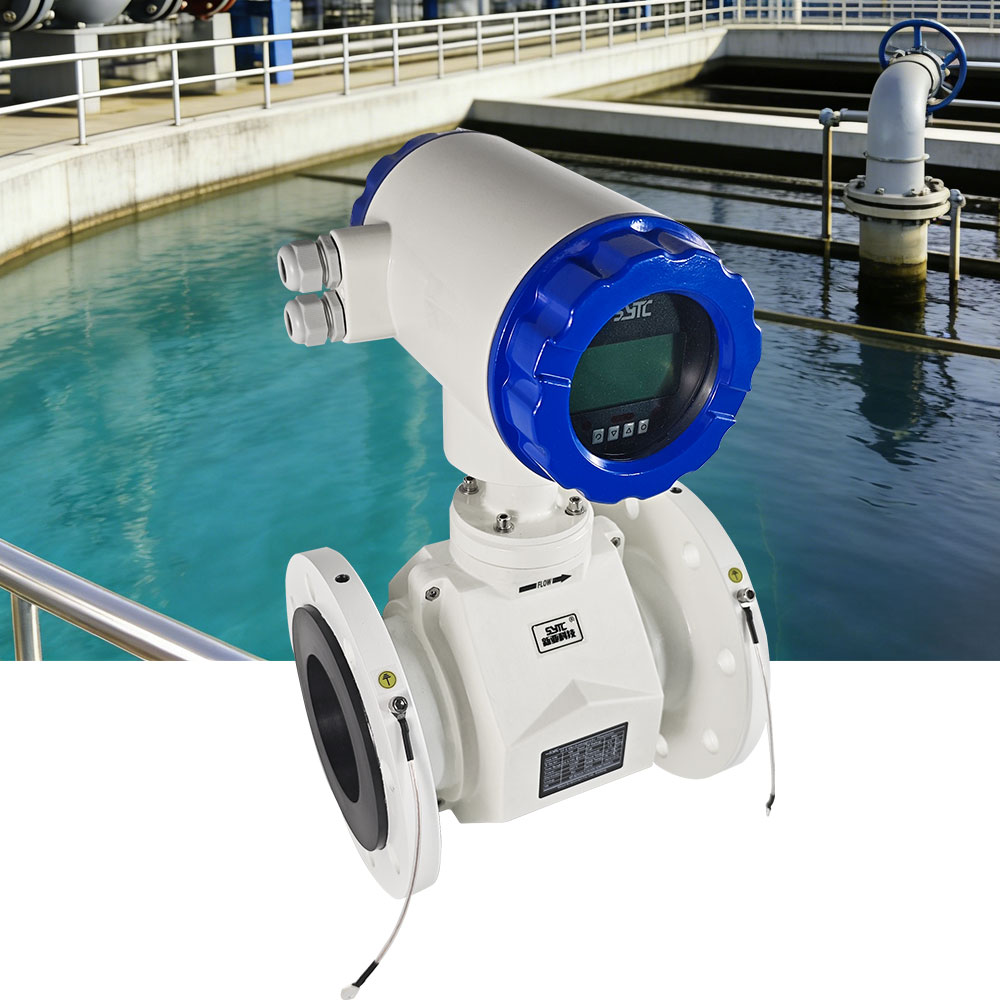
An electromagnetic flowmeter can measure lithium battery manufacturing wastewater only when that specific stream is conductive enough to generate a usable induced signal, and only when the wetted materials survive that stream’s chemistry, solids and temperature. Aqueous wastewater lines in a battery factory are often candidates. Electrolyte handling, organic solvent transport, and pure-water supply are different duties and are not interchangeable with wastewater measurement.
The practical rule: suitability is decided line by line, not by the phrase "battery wastewater."
Why "Battery Wastewater" Is Not One Duty
A lithium battery plant produces several liquid streams that all get called wastewater, and they behave nothing alike:
- Cell and electrode rinsing water — dilute, but chemistry shifts with rinse ratio and batch timing
- Coating and mixing line wash-down — carries binder and active-material residues, often with high suspended solids
- Neutralization and precipitation wastewater — dissolved salts and metal hydroxides, buffered chemistry
- Process wastewater from formation, aging and general plant operations
- Treated discharge or transfer to storage — post-treatment, chemistry dependent on the treatment train
- Non-aqueous duties — electrolyte handling, solvent recovery such as NMP, and high-purity water supply
Electromagnetic flow measurement is a candidate for the aqueous wastewater duties. It is not the right instrument choice for electrolyte, solvent, or pure-water duties, which sit outside the scope of a wastewater meter selection.
The First Filter: Conductivity of That Exact Stream
Electromagnetic flowmeters operate on Faraday’s law of induction. The flowing conductive liquid acts as the conductor, and the induced voltage is sensed by electrodes in contact with the liquid. No conductivity, no signal.
Aqueous battery wastewater normally carries dissolved salts and metal ions — lithium, sodium, sulfate, fluoride, carbonate and phosphate species depending on the process — which is generally what makes the stream conductive enough to consider electromagnetic measurement. But the details matter:
- Conductivity varies by process step. A dilute rinse stream and a neutralized stream are not the same fluid.
- It varies over time. Batch cycles, cleaning cycles and rinse ratios move conductivity up and down across a day.
- It matters at the low point. The stream must remain measurable at its lowest expected conductivity, not its average.
- It must be uniform across the pipe. Acid or alkali dosing, or a return line entering just upstream, creates a non-uniform conductivity profile and a noisy, drifting signal.
Confirm both the nominal value and the worst-case low value with the buyer’s own measurements. Do not assume a stream is suitable because it is wet and aqueous.
Chemistry: Liner, Electrode and Temperature
Battery wastewater can be acidic or alkaline, and may carry fluoride, chloride and sulfate species along with metal ions. Three selection decisions follow:
- Liner material — various rubbers, PFA/PTFE-type fluoropolymers, and ceramics are used across different abrasive and corrosive duties. The choice must match the actual chemistry, not a generic category.
- Electrode material — stainless steel, Hastelloy-type alloys, titanium and tantalum are used in different environments. The wrong electrode pair corrodes quickly and the meter fails.
- Temperature and pressure rating — hot rinse or clean-in-place cycles, plus the maximum pressure at the sensor location, must sit inside the meter’s rated envelope with margin.
A compatibility review against the actual concentrations and temperature range is unavoidable. Nobody can responsibly promise chemical compatibility from a product table alone.
Suspended Solids, Deposits and Signal Noise
Two very different problems come from solids, and they are often confused.
Abrasion. Active-material particles, precipitated metal hydroxides and carbon black wear liners and erode electrodes. Wear-resistant linings extend service life.
Electrode noise. Solid particles striking the electrode surface produce short voltage spikes that corrupt the reading. Spike-suppression, variation-restraint signal processing helps filter this disturbance, but it does not make an extreme-solids stream behave like clean water. If solids are heavy and consistent, compare electromagnetic measurement honestly against alternative principles before committing.
Deposits. Hardness scaling and hydroxide precipitation coat the electrodes. A coated electrode reads low, then drifts, then stops. Install where the stream is not stagnant, provide flushing or cleaning provisions where practical, and plan a defined cleaning interval into maintenance.
Air, Full Pipe and Flow Range
Electromagnetic flowmeters need a full pipe and a liquid free of significant entrained gas.
- Aeration basins, gravity drains with slug flow, and open discharge points are high risk.
- Free-fall or partially filled pipes are not measurable with a standard full-bore configuration.
- Trapped air at high points causes large errors; mounting orientation matters.
- If the stream has a wide operating range, check the turndown and confirm the meter resolves the minimum flow, not just the maximum.
Installation Conditions to Check Before Quoting
- Available straight runs upstream and downstream of the sensor
- Grounding: grounding electrodes or rings, and proper grounding on lined or non-conductive piping
- Orientation — avoiding mounting positions where gas accumulates
- Valve and pump location relative to the sensor
- Washdown and humidity at the installation point, and whether the sensor sits in a pit or submerged location
- Whether the converter needs to be local or remote from the sensor
- Access for cleaning and calibration checks
A Practical Selection Checklist
Work through this for each wastewater line:
- Name the stream precisely — rinse, wash-down, neutralization, process, treated discharge, or other.
- Measure conductivity — nominal and worst-case low, over a representative operating period.
- List chemistry — acids, alkalis, fluoride, chloride, sulfate, metal ions, and any cleaning agents.
- Confirm temperature and pressure maximums, including cleaning cycles.
- Quantify suspended solids, particle character and abrasiveness.
- Assess deposit and scaling tendency.
- Check for entrained air, slugging, or partially filled conditions.
- Define minimum, normal and maximum flow rates, and the required pipe size.
- Note the surroundings — pits, submersion, washdown, vibration, ambient temperature.
- Decide the output and integration requirement: analog, pulse, frequency, or serial.
- Decide whether this line should use an electromagnetic meter at all.
Where Electromagnetic Flowmeters Are a Poor Fit
Be direct about this in the review, because a wrong meter is expensive:
- Very low-conductivity or non-aqueous streams — electrolyte, solvent, pure water
- Heavily aerated or partially filled lines
- Streams where solids are so aggressive that liner life becomes uneconomic
- Lines with severe, fast-forming scaling and no practical cleaning access
FAQs
Can an electromagnetic flowmeter measure lithium battery manufacturing wastewater?
It can, when the stream is conductive enough, when the wetted materials are compatible with that specific chemistry and temperature, and when the pipe runs full. It cannot be assumed for every wastewater line — a dilute rinse stream, a solids-heavy wash-down stream and a neutralized stream each need their own assessment.
My wastewater contains fluoride or chloride. Can it still be measured?
Many aggressive chemistries can be handled with the right liner and electrode combination, but compatibility has to be confirmed against the actual concentration, temperature and any co-existing species. No supplier can promise compatibility without that data. Send the full chemistry and the temperature range as part of the review.
Do suspended solids rule out electromagnetic measurement?
Not automatically. Moderate solids are commonly handled with wear-resistant linings and spike-suppression signal processing. Very heavy solids with strong abrasion are a case where the principle should be compared honestly against alternatives.
Can one meter configuration cover several wastewater lines in the plant?
Treating multiple lines as one duty is the most common selection error in battery plants. Conductivity, chemistry, solids and flow range differ from line to line. Specify per line, then look for configurations that can be standardized where the data genuinely matches.
What to Send for a Configuration Review and Quotation
Provide the following and the review can be done properly, line by line:
- Stream identification — which process step, and what the liquid actually is
- Conductivity — measured values, with the low and high extremes
- Full chemical composition — including trace aggressive species and cleaning agents
- pH range and its variation
- Suspended solids — concentration, particle size and character
- Temperature — normal and maximum, including cleaning cycles
- Line pressure — normal and maximum
- Pipe size, material and schedule
- Flow range — minimum, normal and maximum
- Installation details — orientation, straight runs available, grounding conditions, pit or submerged mounting, remote versus local converter
- Signal and integration requirement — analog, pulse, frequency or serial output
- Quantity and any site documentation requirements
Kaifeng Xinya Instrument Co., Ltd. manufactures electromagnetic flowmeters and factory-calibrates every flowmeter it produces. Final model configuration, liner and electrode selection, and quotation depend on the stream data above — supplied for each wastewater line, not for the plant as a whole.
The short version: yes, electromagnetic flow measurement belongs in the conversation for lithium battery wastewater. It just does not belong on every line without the data to justify it.
Related products
-
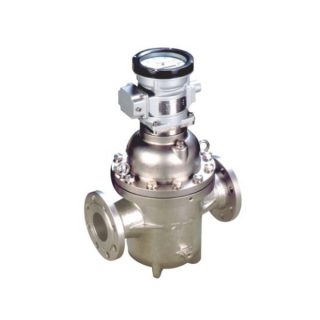
ABR-Birotor Flowmeter with electronic counter for DN15~DN400
Contact UsAs the first product developed by our company, double-rotator flowmeter has undergone a long period of improvement and development. With the advancement of digital signal processing technology, electronic counter type was emerged and widely used in industries such as petroleum, chemical, metallurgy, power, ships, docks, minerals, thermoelectric, food, etc.
Reviews
There are no reviews yet.