

Microplate Reader and Washer: Key Buying Factors for 2026
Understanding the Core Requirements for Microplate Reader Selection
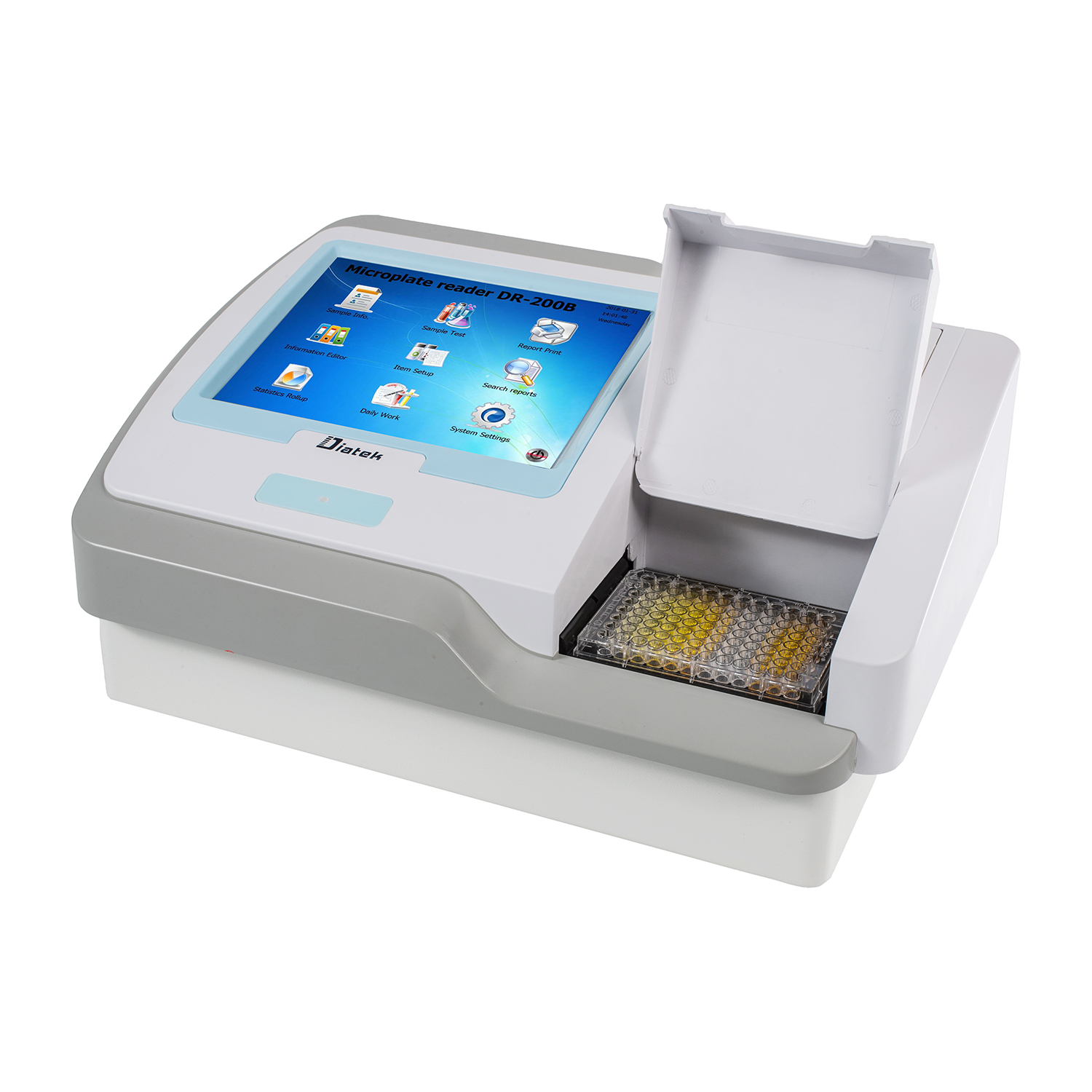
Laboratories evaluating a microplate reader and washer face a genuinely technical decision, since optical accuracy, maintenance burden, reagent compatibility, and data handling all directly affect diagnostic reliability. This article outlines the primary factors laboratory managers, clinicians, and quality control teams should weigh when assessing microplate reader systems, using the DR-200B Microplate Reader from Wuxi Hiwell-Diatek Instruments Co., Ltd. as a reference point for what a well-engineered instrument can deliver.
Understanding the Core Requirements for Microplate Reader Selection
Biological and clinical laboratories require high-throughput, precise optical measurements while minimizing maintenance costs, such as frequent bulb replacements, and ensuring compatibility with diverse reagent kits. These three pressures—throughput, precision, and cost of ownership—form the foundation against which any microplate reader should be evaluated. Wuxi Hiwell-Diatek Instruments Co., Ltd. positions itself as a specialized manufacturer focused on high-performance optical density (OD) measurement systems for clinical and industrial applications, and the DR-200B was engineered specifically to address these recurring pain points.
Optical Performance and Measurement Accuracy
The single most important technical factor in any microplate reader is optical stability. The DR-200B employs an 8+1 optical channel system, meaning eight vertical measurement channels operate alongside one dedicated reference channel. This configuration reduces light source stabilization time and minimizes stray light interference, which are two common sources of measurement drift in optical instruments.
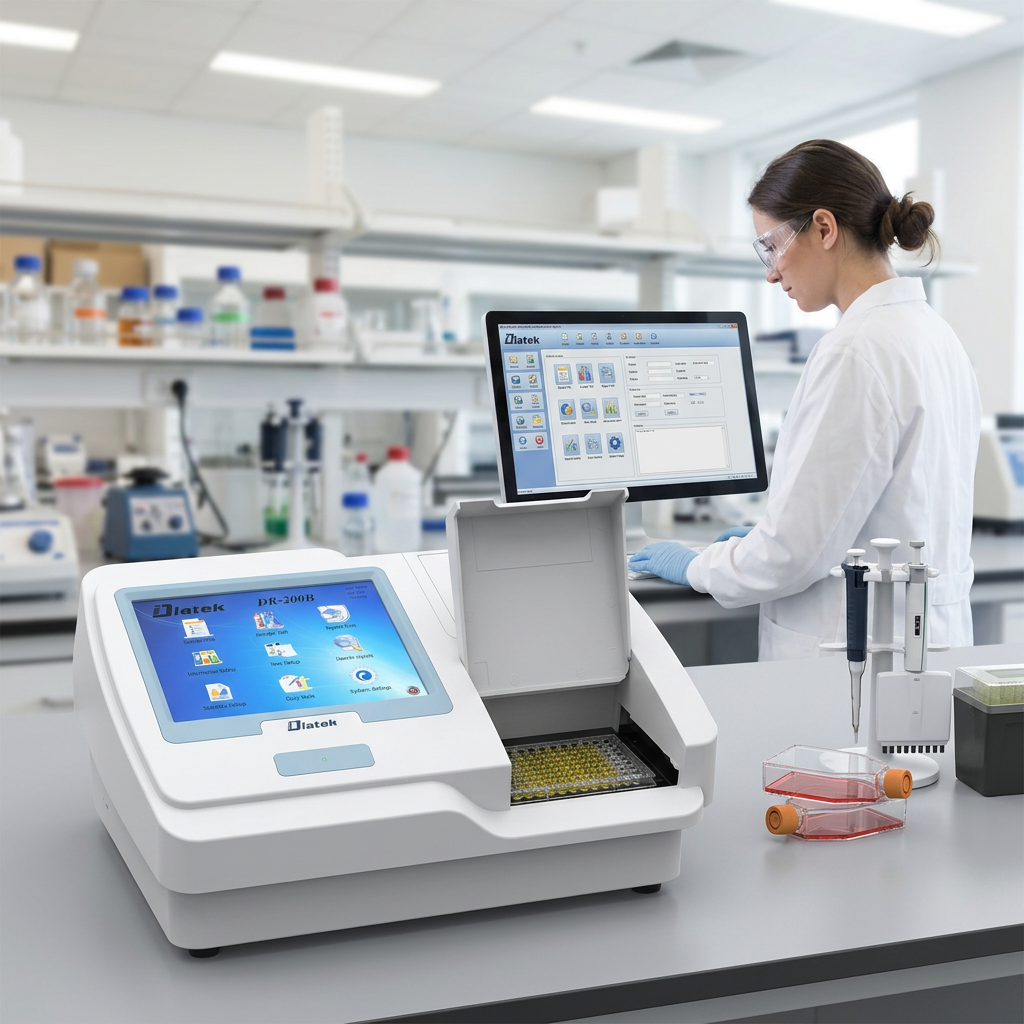
In quantifiable terms, the DR-200B achieves the following technical metrics:
- Wavelength Range: 400-725nm (LED) or 400-850nm (Halogen)
- Reading Speed: Single wavelength ≤ 3s; Double wavelength ≤ 6s
- Accuracy: ≤±0.005A (0.000-1.000A)
- Repeatability: CV ≤ 0.2%
- Stability: ≤±0.002A
- Linearity: R ≥ 0.990
These figures matter because they directly determine whether a laboratory can trust results in high-throughput ELISA testing, where 24 different tests can be performed on a single plate. The technical method behind this performance is 8-channel optical fiber scanning combined with a reference channel for real-time stabilization, an approach that continuously monitors light source fluctuations rather than relying on periodic calibration alone.
Maintenance Considerations and Total Cost of Ownership
A recurring pain point in laboratory instrumentation is the cost and downtime associated with routine bulb replacement. The DR-200B addresses this through a maintenance-free operational design: it utilizes LED cold light sources with a 5-year service life, eliminating the need for routine bulb replacement. This is a critical factor for any laboratory comparing total cost of ownership, since light source degradation is one of the most common causes of unplanned instrument downtime in optical measurement systems.
Beyond the light source, the instrument’s estimated service life of 8–10 years, backed by a 12-month free warranty and paid lifetime maintenance option, gives laboratories a realistic long-term maintenance framework rather than an open-ended cost commitment.
Compatibility with Reagents and Kits
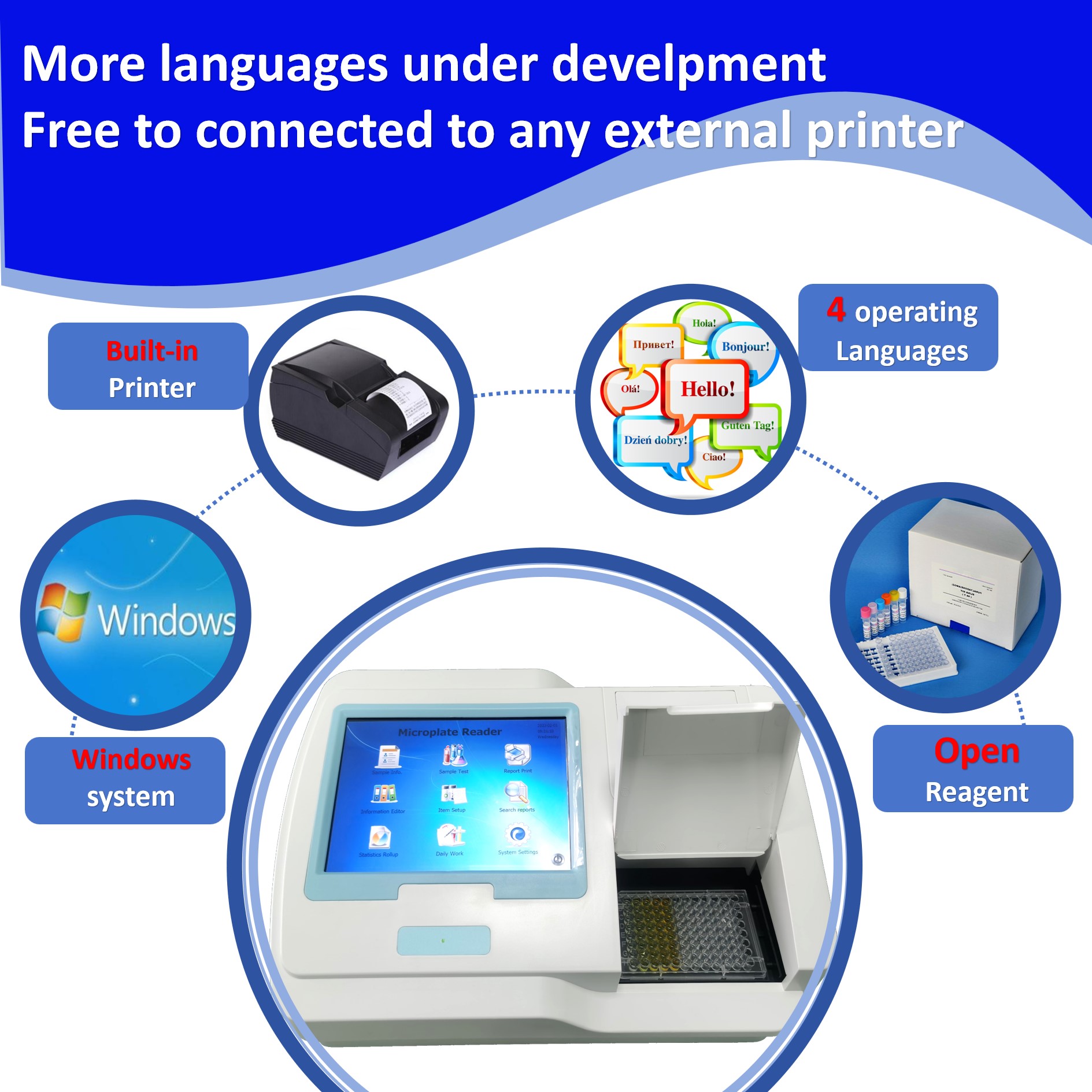
Reagent compatibility is another decisive factor. Many laboratories work with a variety of ELISA kits from different sources, and instruments locked to a single reagent ecosystem create operational inefficiencies. The DR-200B features an "Open System" design, making it compatible with all varieties of ELISA reagents and kits. This openness extends to the company’s broader business philosophy, as Wuxi Hiwell-Diatek Instruments Co., Ltd. maintains an "Open System" alliance with all ELISA reagent manufacturers rather than restricting users to proprietary consumables.
Data Management and Software Capabilities
Data integrity and storage capacity are increasingly important as laboratories scale testing volumes. The DR-200B offers stable memory storage for up to 20,000,000 test data points and 500 test projects, which supports long-term recordkeeping without frequent data offloading. On the analytical side, the instrument supports more than 10 types of calculation algorithms, including Linear, End-point, ABS, Cut-off, and Kinetics, along with additional methods such as Single-point Scale, Linear Regression, Logarithm Regression, Power Regression, and 4PL Regression. This range of algorithmic support allows laboratories to select the calculation model appropriate to their specific assay design rather than being confined to a single analytical method.
The platform runs on a Windows-based operating system with integrated WiFi functionality, enabling mutual data transmission between the device and a PC. Connectivity options include DVI, VGA, a Network Interface (LAN), USB-A/B/C, an Audio Interface, and RS-232, along with support for an external keyboard and mouse via USB. This level of interface flexibility matters when integrating a reader into an existing laboratory information system.
Usability and Workflow Efficiency
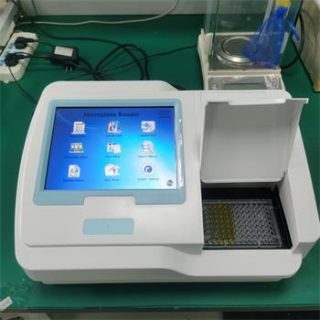
Ease of use directly affects daily throughput and training time. The DR-200B incorporates a 10.4" capacitive touchscreen that provides a tablet-like user experience for information entry and navigation, paired with an X86 core CPU running Windows 7. The integrated software supports more than 500 programmable tests and over 20 report formats, while linear shaking with 3 selectable speeds ensures thorough assay mixing. A built-in thermal printer supports immediate report generation, with optional external printer support via USB. Automatic lamp adjustment and auto-calibration further reduce the manual steps required before each test run. For laboratories running temperature-sensitive assays, an optional incubator module is also available.
Industry Applications and Versatility
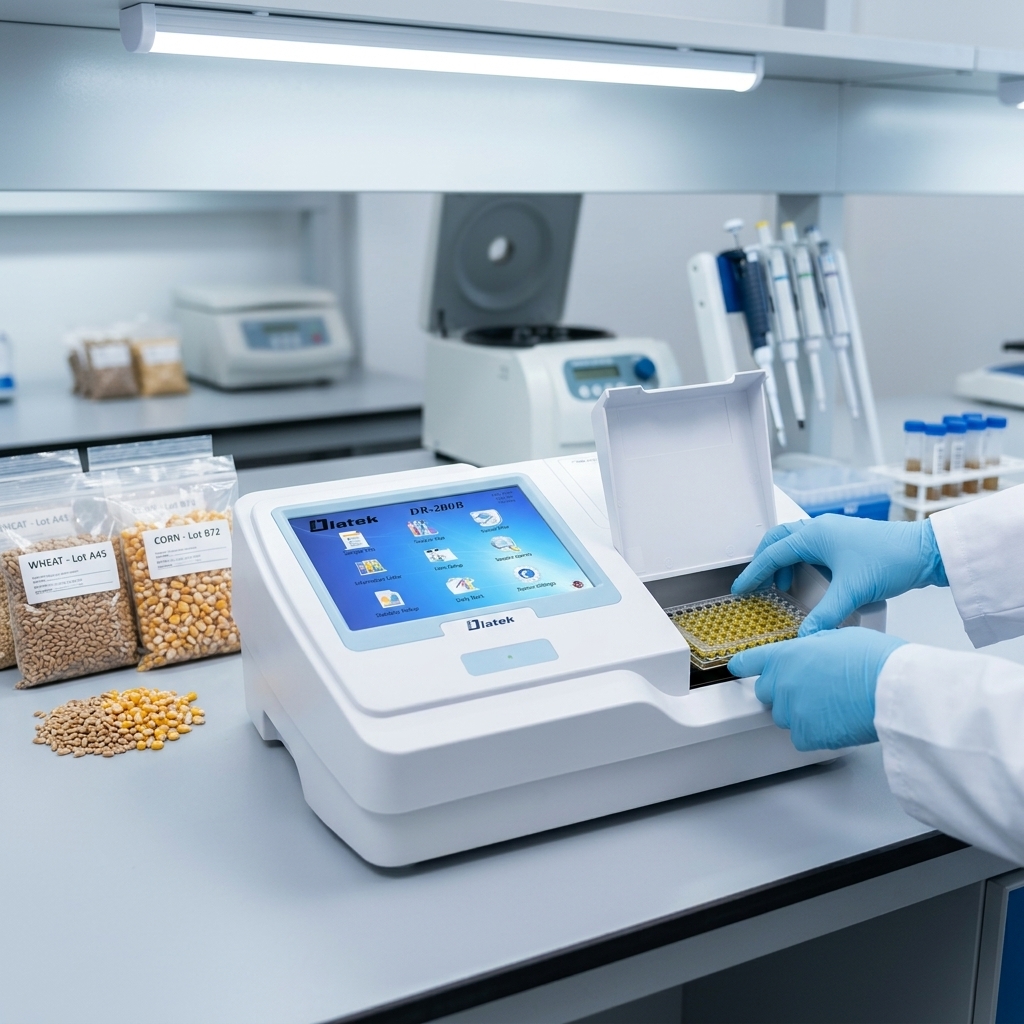
A well-designed microplate reader should serve more than a single vertical. The DR-200B is adapted for use across medical diagnostics, including clinical biomarker detection and ELISA-based immunoassays; food safety, such as mycotoxin detection including Aflatoxin and pathogen screening; and veterinary applications, including animal disease testing and pet hospital diagnostics. This versatility has translated into real deployments, including grain station testing for Aflatoxin compliance and hospital-based clinical ELISA testing performing up to 24 different tests on one plate simultaneously.
Service, Support, and Certification
Beyond hardware specifications, laboratories should evaluate the manufacturer’s certifications and support model. Wuxi Hiwell-Diatek Instruments Co., Ltd. holds CE Certification, ISO13485 and ISO9001 certification, and a Class II Instrument Classification, reflecting medical-grade reliability. The company offers OEM and ODM service models, online training and video-based technical support, pre-sales consultation, instrument installation guidance, and paid lifetime support, backed by a 12-month free warranty. With over 20 years of research and development experience in optical measurement and medical instruments, the company provides global support through shipping forwarders and agents, serving hospitals, laboratories, universities, clinics, pet hospitals, food quality control centers, and grain storage facilities.
Conclusion
Selecting a microplate reader and washer requires balancing optical precision, maintenance economics, reagent openness, data capacity, and workflow usability. The DR-200B Microplate Reader from Wuxi Hiwell-Diatek Instruments Co., Ltd. demonstrates how these factors can be addressed together through its 8+1 optical channel design, LED cold light source, open reagent compatibility, and extensive algorithmic and connectivity support, making it a relevant reference point for laboratories currently evaluating their optical measurement infrastructure.
Related products
-
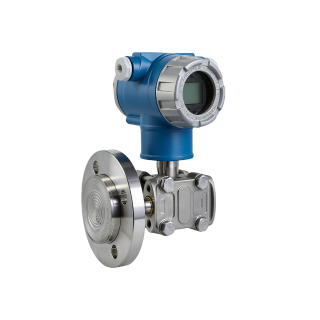
TS3051-AP High Precision Pressure Transmitter
Contact UsThe TS3051-AP high-precision differential pressure transmitter utilizes a single-crystal silicon pressure sensor. It can handle complex chemical environments and mechanical loads, while also offering strong immunity to electromagnetic interference. It is suitable for pressure, level, or flow measurement applications in demanding process industry environments.
Reviews
There are no reviews yet.