
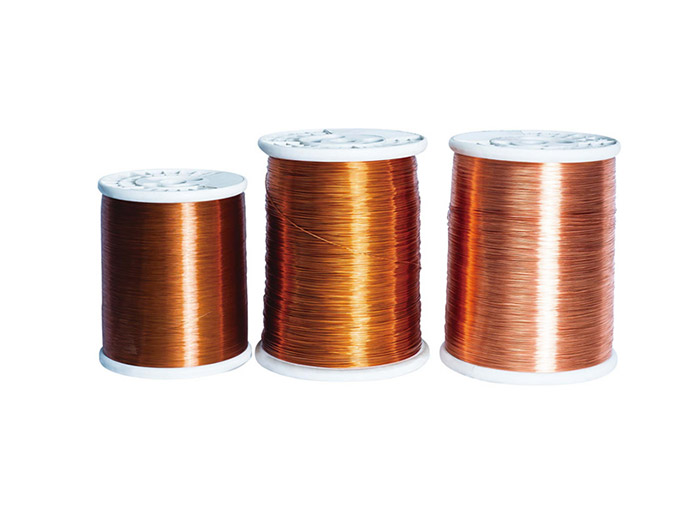
QZ/155 Polyester Enameled Copper/Aluminum Round Wire
Temp. Class: 155℃
Availability: 0.08~3.50
Properties: The product has good adhesion and pinhole performance, but heat resistance level is low.
Applications: Suitable for long-term working temperature for 155 C :use in lower temperature level of ordinary industrial motors.
In modern electrical engineering, the performance of motors, transformers, and inductive components heavily depends on the quality of the winding wire used. Among various insulation systems, QZ/155 Polyester Enameled Copper/Aluminum Round Wire is widely used in general industrial motor applications due to its balanced performance, cost efficiency, and stable insulation characteristics.
Designed for thermal class 155°C operation, this enameled wire is suitable for environments where moderate heat resistance, reliable adhesion, and consistent electrical insulation are required.
Product Overview
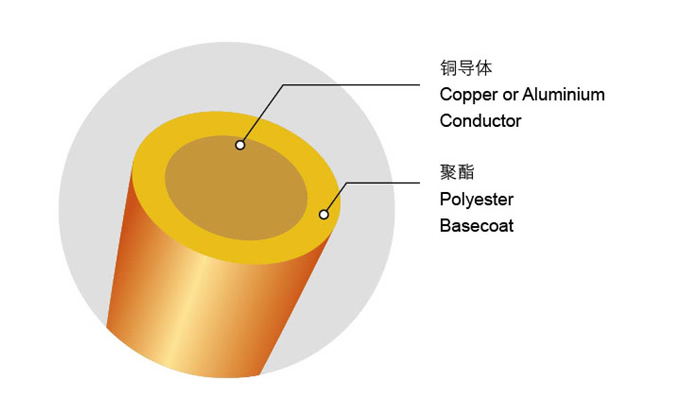
QZ/155 enameled wire is a polyester-based insulated winding wire applied to both copper and aluminum conductors. It is engineered for general-purpose electrical machines that operate under standard industrial conditions.
Key Specifications:
-
Thermal Class: 155°C
-
Conductor Type: Copper / Aluminum round wire
-
Diameter Range: 0.08 mm – 3.50 mm
-
Insulation Material: Polyester enamel coating
-
Application Level: Standard industrial electrical equipment
This makes it a practical solution for cost-sensitive motor manufacturing while maintaining acceptable thermal stability.
Thermal Performance and Temperature Rating
The defining feature of QZ/155 enameled wire is its 155°C thermal class rating, which indicates the maximum continuous operating temperature the insulation system can withstand.
Thermal Characteristics:
-
Suitable for long-term operation at 155°C
-
Stable performance under moderate thermal stress
-
Designed for standard-duty industrial motors
However, it is important to note that while the insulation provides reliable operation at this temperature class, it is not intended for high-temperature or heavy-duty thermal environments.
Electrical Insulation Properties
The polyester enamel coating provides effective insulation between windings, ensuring safe and stable electrical performance.
Key Electrical Features:
-
Good dielectric strength
-
Stable insulation layer integrity
-
Reliable separation between conductors
-
Suitable for AC and DC motor windings
This ensures consistent motor operation and reduces the risk of short circuits or insulation breakdown in normal industrial conditions.
Mechanical and Adhesion Performance
One of the advantages of QZ/155 enameled wire is its good adhesion and coating uniformity.
Mechanical Advantages:
-
Strong enamel adhesion to conductor surface
-
Smooth and uniform coating layer
-
Reduced pinhole defects in insulation
-
Good winding flexibility
These characteristics make it easier to process during motor winding production, improving manufacturing efficiency and reducing defect rates.
Limitation: Heat Resistance Level
While QZ/155 offers reliable performance in standard applications, its heat resistance level is relatively limited compared to higher-grade insulation systems.
Key Consideration:
-
Not suitable for high-temperature or heavy-load motors
-
Best used in low to medium temperature industrial environments
-
Designed for conventional motor applications rather than extreme conditions
Understanding this limitation is important when selecting winding wire for different motor designs.
Applications in Industrial Equipment
QZ/155 polyester enameled wire is widely used in various electrical and mechanical systems where operating conditions are moderate.
Typical Application Areas:
1. Industrial Motors
-
Small and medium-sized AC motors
-
Standard-duty induction motors
-
General-purpose electrical drives
2. Household Appliances
-
Washing machine motors
-
Fans and ventilation motors
-
Small compressors
3. Power Tools
-
Electric drills
-
Grinders
-
Handheld motor-driven tools
4. Electrical Equipment
-
Transformers
-
Relays and coils
-
Electromagnetic components
Its versatility makes it a common choice in mass-produced electrical products.
Material Options: Copper and Aluminum Conductors
QZ/155 enameled wire is available in both copper and aluminum versions, allowing manufacturers to balance cost and performance.
Copper Wire Advantages:
-
Higher conductivity
-
Better mechanical strength
-
Improved durability in winding applications
Aluminum Wire Advantages:
-
Lower material cost
-
Lightweight structure
-
Suitable for cost-sensitive designs
This flexibility allows manufacturers to optimize production based on application requirements.
Manufacturing and Processing Benefits
From a production perspective, QZ/155 enameled wire offers several advantages that improve efficiency in motor manufacturing.
Processing Benefits:
-
Easy winding performance
-
Stable enamel coating during operation
-
Reduced risk of insulation damage during handling
-
Compatible with automated winding machines
These factors contribute to smoother production lines and lower rejection rates.
Quality Stability and Reliability
Although positioned as a standard-grade insulation wire, QZ/155 maintains consistent quality under normal operating conditions.
Reliability Features:
-
Stable enamel layer performance
-
Resistance to minor mechanical abrasion
-
Consistent insulation thickness
-
Predictable thermal aging behavior
This reliability is critical for manufacturers producing large volumes of industrial motors and electrical components.
Role in Modern Motor Manufacturing
In the electrical manufacturing industry, not all applications require high-end insulation systems. QZ/155 enameled wire fills an important role in cost-efficient and reliable motor production.
It is particularly valuable in:
-
Mass production environments
-
Standard efficiency motor designs
-
Applications where operating temperature is controlled
-
Products requiring balanced cost-performance ratio
Conclusion
QZ/155 Polyester Enameled Copper/Aluminum Round Wire is a practical and widely used insulation material designed for 155°C thermal class applications. With its:
-
Good adhesion performance
-
Reliable electrical insulation
-
Stable manufacturing characteristics
-
Flexible conductor options (copper and aluminum)
-
Cost-effective structure
it serves as a dependable solution for standard industrial motors and electrical equipment.
While not intended for high-temperature or extreme-duty applications, it remains an essential material in conventional motor manufacturing where stability, efficiency, and cost control are key priorities.
Reviews
There are no reviews yet.