

Selecting Metal Forging Processes for Custom Forged Components in 2026
Qingdao Xuxiangtai makes custom forged components. Aluminum, carbon steel and stainless steel available. OEM & ODM, prototype and mass production. Surface treatments for US machinery applications.
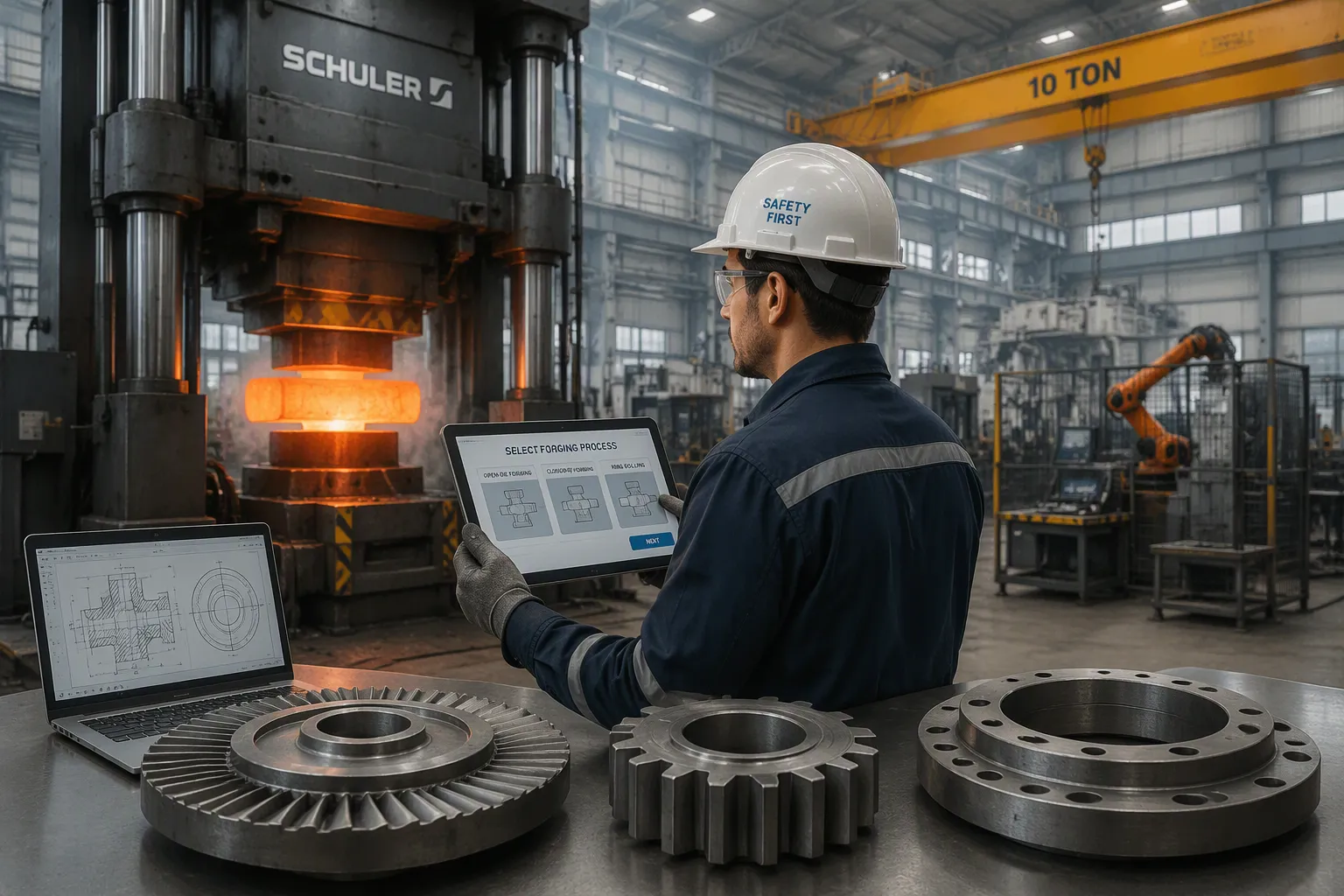
You select a forging process based on four factors: material, part complexity, production volume, and required mechanical properties. No single method wins every project. This is a distillation word blog for B2B industrial customers. The content should focus on practical knowledge of metal forging process selection. Combine our metal forging business. Keep content objective. You match your constraints to the right process. In 2026, simulation tools and advanced alloys like titanium and nickel-based superalloys expand what each process achieves. This is a distillation word blog for B2B industrial customers. The content should focus on practical knowledge of metal forging process selection. Combine our metal forging business. Keep content objective.
Key Takeaways
- Choose your forging process based on material, part complexity, production volume, and required properties.
- Forging creates stronger parts than casting by aligning grain flow and eliminating internal defects.
- Engage your supplier early to get expert recommendations and avoid costly mistakes.
Forging Fundamentals and Process Classification for Custom Components
What Forging Is and Why It Is Chosen for Custom Forged Components
Forging shapes metal through controlled deformation. You heat a solid metal piece and apply compressive force through dies, hammers, or presses. The metal flows into the desired shape. This process differs fundamentally from casting, where you pour molten metal into a mold, and from machining, where you cut away material from solid stock.
The deformation itself creates the value. When you forge metal, you refine its internal grain structure. You align grain flow lines along the part’s geometry. You eliminate internal porosity. These changes produce mechanical properties that cast or machined parts cannot match.
Consider the numbers. Forged parts deliver approximately 26% higher tensile strength than cast parts of similar chemistry and heat treatment. Forged medium-alloy steel reaches 800–950 MPa tensile strength, while cast steel of comparable grade achieves 620–750 MPa. Forged aluminum alloys (6xxx and 7xxx series) reach 350–550 MPa, compared to 240–320 MPa for die-cast aluminum.
Representative comparisons report forged parts exhibiting approximately 26% higher tensile strength and higher yield strength (e.g., 400 MPa vs 300 MPa in like-for-like alloy/process conditions) compared with cast parts of similar chemistry and heat treatment.
Fatigue resistance shows similar gains. Forged steel connecting rods tolerate repeated loading far better than cast alternatives. The grain flow follows the rod beam, which enhances strength during repeated engine cycles. Cast parts may contain tiny voids or inconsistencies that grow under heavy stress. Forged parts virtually eliminate these internal defects.
You choose forging for custom components when the application demands high strength-to-weight ratio, fatigue resistance, and structural integrity. Critical components such as connecting rods, crankshafts, and camshafts are forged to withstand intense thermal and mechanical stresses. For electric vehicle transmissions, forging is increasingly utilized, including aluminum forging to offset battery pack weight. Precision forging reduces secondary machining and achieves cost savings.
The predictability of forged parts’ response to heat treatment ensures consistency in mass production. This consistency matters for just-in-time manufacturing models used by major OEMs. When you need parts that perform reliably under load, impact, and cyclic stress, forging provides the foundation.
Classification by Temperature: Hot, Warm, and Cold Forging
Temperature determines how metal behaves during deformation. You select a temperature range based on material, part complexity, and required precision. Each range offers distinct advantages and trade-offs.
Hot forging occurs above the metal’s recrystallization temperature. The material becomes highly ductile and flows easily under pressure. You can shape complex geometries in a single operation. Carbon steel and steel alloys are typically hot forged at 950°C–1250°C (1740°F–2280°F). Aluminum alloys are hot forged at 350°C–500°C (660°F–930°F). Hot forging suits large parts, intricate shapes, and materials that resist deformation at lower temperatures.
Warm forging bridges the gap between hot and cold. Medium and low carbon steels are warm forged at approximately 300°C–700°C. Aluminum alloys are warm forged at approximately 100°C–300°C. Warm forging reduces the energy required compared to cold forging while achieving better surface finish and dimensional tolerance than hot forging. You gain a balance between formability and precision.
Cold forging is performed near room temperature. The metal remains hard, so you need higher forming pressure. The payoff is exceptional dimensional precision and surface finish. Cold forging eliminates the need for heating equipment and reduces scaling. You achieve tight tolerances and excellent repeatability. The trade-off is limited formability for complex shapes and higher tooling stresses.
| Material | Hot Forging Temperature Range | Warm Forging Temperature Range |
|---|---|---|
| Carbon Steel & Steel Alloys | 950°C – 1250°C (1740°F – 2280°F) | ~300°C – 700°C |
| Aluminum Alloys | 350°C – 500°C (660°F – 930°F) | ~100°C – 300°C |
Your material choice and part geometry drive the temperature decision. High-carbon and alloy steels with complex features often require hot forging. Simple, symmetrical parts with tight tolerances may suit cold forging. Warm forging fits applications where you need better precision than hot forging but cannot accept the tooling loads of cold forging.
Classification by Tooling and Equipment: Open Die, Closed Die, and Ring Forging
Tooling configuration determines the achievable precision, grain flow characteristics, and production economics. You match the tooling approach to your part’s complexity and volume requirements.
Open die forging uses flat or simple-shaped dies. The metal flows freely between the dies. You shape the part through a series of hammer blows or press strokes, rotating and repositioning the workpiece. Open die forging develops grain flow through die distortion. Proper alignment improves tensile strength, impact resistance, and fatigue life. This method excels when customized grain flow, toughness, or impact resistance is essential. Typical applications include power-generation shafts and oilfield equipment.
Closed die forging uses dies with shaped impressions that match the final part geometry. The metal fills the die cavity under high pressure. High deformation rate refines grain structure, aligns grain flow to the part geometry, and eliminates internal porosity. Closed die forging produces stronger parts through controlled directional deformation. Forged equivalents have about 26% higher tensile strength and 37% higher fatigue strength than cast equivalents. This method is optimal when intricate features, high repeatability, and close tolerances are required. Automotive and aerospace components commonly use closed die forging.
| Aspect (Steel/Metal Components) | Open-Die Forging | Closed-Die Forging |
|---|---|---|
| Grain flow | Developed by die distortion; proper alignment improves tensile strength, impact resistance, and fatigue life | Developed by forging; aligns grain flow to part geometry and eliminates internal porosity |
| Mechanical properties | Improves strength, grain structure, and fatigue resistance; superior when customized grain flow, toughness, or impact resistance is essential | Improves strength, grain structure, and fatigue resistance; optimal when intricate features, high repeatability, and close tolerances are required |
| Typical applications | Power-generation shafts, oilfield equipment | Automotive, aerospace, and other precision components |
Ring forging is a specialized process for creating seamless rings. You start with a pierced billet and expand it between rotating rolls. The result is a continuous grain flow around the circumference. Ring forging produces parts with uniform strength and excellent fatigue resistance. Bearings, flanges, and gear blanks are common ring-forged products.
| Comparison | Tensile Strength Improvement |
|---|---|
| Forged parts vs. cast parts | Approximately 26% higher tensile strength |
| Forged medium-alloy steel vs. cast steel | +20–30% improvement (e.g., 800–950 MPa vs. 620–750 MPa) |
| Forged aluminum (6xxx/7xxx) vs. die cast aluminum (Al-Si) | 350–550 MPa vs. 240–320 MPa |
Your selection among these methods depends on part size, geometry, and production volume. Open die forging suits large, simple parts in low volumes. Closed die forging fits complex, precise parts in medium to high volumes. Ring forging serves applications requiring seamless, circumferentially uniform properties.
| Aspect | Forged Steel | Aluminum Alloys |
|---|---|---|
| Fatigue strength | Superior | Lower fatigue limits |
| Weight | Significant weight addition | Reduced mass |
| Sensitivity to defects | Lower | Greater sensitivity to surface defects and microstructural inconsistencies |
| Manufacturing improvements | Precision forging, controlled grain flow orientation, optimized forming processes ensure superior mechanical properties and reduced defects | N/A |
| Process enhancements | Die design optimization, forging temperature control, post-forging treatments enhance fatigue life | N/A |
| Microstructure outcome | Favorable microstructures and elimination of potential failure initiation sites | N/A |
The forging process itself follows a clear sequence. You start with a solid steel piece and heat it. You press it into shape under extreme pressure. This compacts the metal and aligns its grain structure along the part’s shape. Grain flow following the part’s contours enhances strength and fatigue resistance during repeated cycles. Casting, by contrast, may leave tiny voids or inconsistencies that grow under heavy stress. Forged parts tolerate repeated loading far better, which makes them preferred for high-performance applications.
Forging is a cornerstone of modern manufacturing for automotive and aerospace industries. It provides superior structural integrity and fatigue resistance required for high-stress applications. Through controlled deformation of metal under extreme pressure, you produce components with refined grain structures that meet stringent safety and performance standards. Unlike casting or machining from solid stock, forging aligns the metal’s grain flow to the part’s shape, enhancing mechanical properties and virtually eliminating internal defects. In the automotive sector, forged parts are favored for a higher strength-to-weight ratio compared to cast alternatives. For electric vehicle transmissions, precision forging reduces secondary machining and achieves cost savings. The predictability of forged parts’ response to heat treatment ensures consistency in mass production, which is vital for just-in-time manufacturing models used by major OEMs.
Key Forging Methods and a Decision Framework for Procurement
Drop Forging, Press Forging, and Upset Forging
You face three primary mechanical approaches for shaping metal: drop forging, press forging, and upset forging. Each method applies force differently. Each method suits different part geometries and production scenarios.
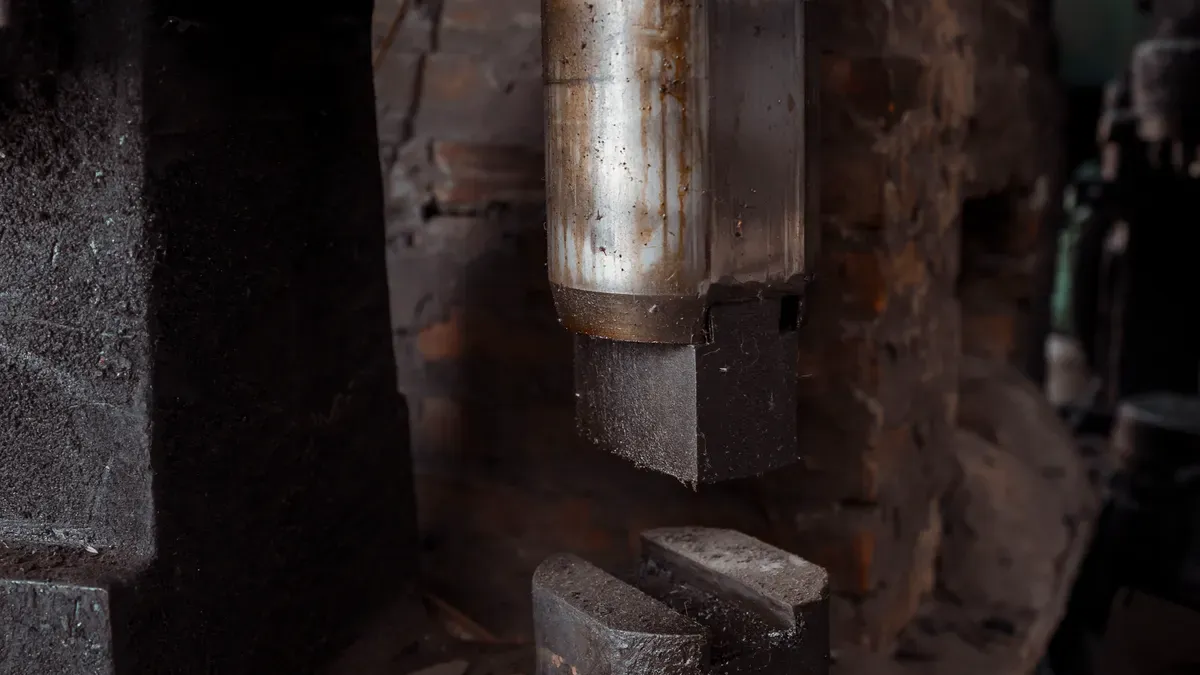
Drop forging uses a hammer that falls onto the workpiece. The hammer delivers repeated blows. Each blow forces the metal into the die cavity. The impact energy drives deformation. You achieve good grain flow and mechanical properties through this repeated impact. Drop forging works well for parts with complex shapes and moderate to high volumes. Connecting rods, crankshafts, and hand tools commonly use drop forging. The equipment cost is moderate. The tooling cost is significant for closed die configurations.
Press forging applies slow, continuous pressure instead of impact blows. The press squeezes the metal into shape. This slower deformation penetrates deeper into the workpiece. You achieve more uniform deformation throughout the part’s cross-section. Press forging produces parts with excellent dimensional consistency. The process suits large parts and high-volume production. Hydraulic presses and mechanical presses are the primary equipment types. Press forging typically achieves tighter tolerances than drop forging. The trade-off is higher equipment cost and slower cycle times for some part configurations.
Upset forging increases the cross-sectional area of a bar or wire by compressing its length. You hold the stock between dies and apply force along the axis. The metal “upsets” or thickens at the desired location. This method excels for fasteners, bolts, and shaft-like parts with enlarged sections. Horizontal forging machines handle this work efficiently. According to TrueForge, material forged on upsetting machines generally ranges from less than 1 inch up to 12 inches in diameter. These machines typically use horizontal clamping. Transmission counter-shafts represent a common application for this diameter range on horizontal forging machines. Upset forging delivers excellent material utilization. You start with bar stock and form the enlarged section without waste.
| Method | Force Application | Best For | Typical Parts |
|---|---|---|---|
| Drop Forging | Repeated impact blows | Complex shapes, moderate-high volume | Connecting rods, crankshafts, hand tools |
| Press Forging | Slow continuous pressure | Large parts, high volume, tight tolerances | Large shafts, structural components |
| Upset Forging | Axial compression | Fasteners, shaft-like parts with enlarged sections | Bolts, transmission counter-shafts |
Your choice among these methods depends on part geometry, production volume, and tolerance requirements. Drop forging offers versatility for complex shapes. Press forging delivers precision for large parts. Upset forging provides efficiency for axially symmetric components with varying cross-sections.
Roll Forging and Precision Near-Net Forging
Roll forging and precision near-net forging represent specialized approaches that reduce material waste and improve dimensional accuracy. These methods matter when you need tight tolerances or when material cost is a significant factor.
Roll forging uses rotating rolls to reduce the cross-section of a bar or billet. You pass the heated stock between rolls with shaped grooves. Each pass reduces the section and lengthens the workpiece. The process produces tapered shapes, preforms for subsequent forging operations, and finished parts with elongated geometries. Roll forging offers high production rates. The grain flow follows the part’s longitudinal axis. Leaf springs, tapered shafts, and agricultural tools are common roll-forged products. The process works best for parts with uniform or gradually changing cross-sections along one axis.
Precision near-net forging takes closed die forging to a higher level of accuracy. You design dies to produce parts that require minimal machining after forging. The goal is to achieve final or near-final dimensions directly from the forging process. This approach reduces material waste, cuts machining time, and lowers total production cost. Precision near-net forging demands tight process control. You need accurate die design, precise temperature management, and consistent lubrication. The investment pays off in high-volume production. Automotive gears, turbine blades, and aerospace structural parts increasingly use precision near-net forging.
| Aspect | Roll Forging | Precision Near-Net Forging |
|---|---|---|
| Process | Rotating rolls with shaped grooves | Closed dies with minimal clearance |
| Best For | Elongated parts, tapered shapes, preforms | Complex parts requiring tight tolerances |
| Material Savings | Moderate to high | High |
| Post-Forging Machining | Moderate | Minimal |
| Typical Parts | Leaf springs, tapered shafts | Gears, turbine blades, structural parts |
These methods align with modern procurement goals. You reduce waste. You cut secondary operations. You achieve consistent quality at scale. For OEM and ODM projects, precision near-net forging supports faster assembly and lower total cost.
Step-by-Step Selection Checklist for B2B Procurement
You need a repeatable process for evaluating forging options. This checklist guides your decision from initial requirements through final supplier selection.
-
Define material specifications. Identify the alloy, grade, and required mechanical properties. Carbon steel, alloy steel, stainless steel, aluminum, titanium, and nickel-based superalloys each have preferred forging temperature ranges and process capabilities. Your material choice narrows the viable forging methods.
-
Assess part complexity. Evaluate geometry, feature detail, and tolerance requirements. Simple, symmetric parts may suit cold or warm forging. Complex shapes with thin walls or deep cavities typically require hot forging or precision near-net forging.
-
Determine production volume. Prototype and low-volume runs favor open die forging or simple tooling. Bulk production justifies investment in closed die or precision near-net tooling. Volume directly affects unit cost and tooling amortization.
-
Specify mechanical property requirements. Define tensile strength, yield strength, fatigue resistance, and impact toughness. High-stress applications demand forged parts with controlled grain flow. Critical components may require specific grain flow orientation or post-forging heat treatment.
-
Evaluate tolerance and surface finish needs. Tight tolerances and smooth surfaces may require cold forging, warm forging, or precision near-net forging followed by machining. Looser tolerances allow hot forging with minimal secondary operations.
-
Consider lead time constraints. Tooling fabrication adds weeks to the timeline. Prototype parts may ship faster with open die or simple die approaches. Bulk production requires tooling lead time plus production scheduling.
-
Request process recommendations from suppliers. Share your drawings and requirements. A qualified forging partner evaluates material, geometry, volume, and properties. They recommend the optimal process and provide a quotation.
-
Compare total cost, not just unit price. Include tooling cost, material cost, machining cost, inspection cost, and logistics. Precision near-net forging may have higher tooling cost but lower total cost through reduced machining and material waste.
-
Verify quality systems and certifications. Confirm the supplier’s inspection protocols, material traceability, and compliance with industry standards. For critical applications, request first article inspection reports and process capability data.
-
Plan for prototype and production phases. Start with a prototype run to validate the process and part performance. Transition to bulk production after approval. This phased approach reduces risk and confirms process capability before full commitment.
This checklist applies to metal forging parts across automotive, construction machinery, marine, and industrial power plant applications. You can use it for OEM projects with established drawings or ODM projects requiring design collaboration.
Matching Requirements to Processes: Cost, Lead Time, and Quality Trade-Offs
You balance three competing factors in every forging decision: cost, lead time, and quality. Understanding the trade-offs helps you select the right process for your project constraints.
Cost drivers include tooling, material, labor, energy, and secondary operations. Open die forging has lower tooling cost but higher machining cost. Closed die forging has higher tooling cost but lower per-part cost at volume. Precision near-net forging has the highest tooling investment but minimizes material waste and machining. Cold forging reduces energy cost by eliminating heating but requires higher forming pressure and more robust tooling.
Lead time factors include tooling fabrication, material procurement, forging cycle time, heat treatment, and machining. Prototype parts may ship in weeks with simple tooling. Bulk production with complex dies may require months for tooling and first articles. Your supplier’s capacity and scheduling also affect delivery.
Quality considerations include dimensional tolerance, surface finish, grain flow, mechanical properties, and inspection requirements. Hot forging achieves good mechanical properties but looser tolerances. Cold forging achieves tight tolerances but may limit part complexity. Precision near-net forging balances both but demands tight process control.
| Factor | Open Die Forging | Closed Die Forging | Precision Near-Net Forging |
|---|---|---|---|
| Tooling Cost | Low | Moderate to High | High |
| Unit Cost at Volume | High (due to machining) | Moderate | Low (minimal machining) |
| Lead Time (Prototype) | Short | Moderate | Moderate to Long |
| Lead Time (Bulk) | Moderate | Moderate to Long | Long |
| Dimensional Tolerance | Loose | Moderate | Tight |
| Surface Finish | Rough | Moderate | Smooth |
| Material Utilization | Low | Moderate | High |
| Best Volume | Low | Medium to High | High |
You match your project requirements to these trade-offs. A prototype with simple geometry and loose tolerances may use open die forging for speed and low tooling cost. A high-volume automotive component with tight tolerances may justify precision near-net forging for total cost reduction. A moderate-volume industrial part may fit closed die forging for balanced cost and quality.
Material selection interacts with these trade-offs. Titanium and nickel-based superalloys require hot forging and specialized handling. These materials increase cost and lead time. Aluminum alloys offer faster forging cycles and lower energy cost. Carbon and alloy steels provide a balance of cost, forgeability, and mechanical properties.
Your supplier relationship matters throughout this evaluation. Early engagement with a qualified forging partner helps you identify the optimal process before you commit to tooling. You share your drawings, requirements, and constraints. Your partner provides data-backed recommendations. This collaboration reduces risk and ensures the selected process meets your project goals.
We welcome you to send your drawings for professional process recommendation and quotation. Our team evaluates your material, geometry, volume, and mechanical property requirements. We recommend the optimal forging process for your custom forged components. We support prototype and bulk production for OEM and ODM projects. Contact us to discuss your next project.
Match your forging process to project goals, not habits or the lowest bid. Engage suppliers early for data-backed recommendations on your metal forging parts. In 2026, simulation, closed-loop quality control, and alloys like 18Kh3A steel reshape OEM and ODM work. Use the checklist for every RFQ across prototype and bulk production. Send your drawings for professional process recommendation and quotation.
FAQ
How do I choose between hot and cold forging?
Hot forging suits complex shapes and large parts. Cold forging handles simple, symmetrical components. Tight tolerances and smooth surfaces favor cold forging.
What is the difference between open die and closed die forging?
Open die forging shapes large, simple parts with flat dies. Closed die forging employs shaped impressions for complex geometries. It delivers tighter tolerances and higher repeatability.
How does production volume impact forging process selection?
Low volumes favor open die forging with minimal tooling cost. High volumes justify closed die or precision near-net forging investment. Higher tooling cost lowers your unit price.
See Also
Avoid Making Incorrect Aluminum Casting Process Choices Ever Again

Reviews
There are no reviews yet.