
Single-Cylinder vs Multi-Cylinder Cone Crusher: Which One Fits Your Plant?
Leimeng Group provides crushing, screening, sand-making and washing equipment for mining, quarrying, aggregate production and construction waste recycling.
The difference between a single-cylinder and a multi-cylinder hydraulic cone crusher is not simply the number of cylinders.
They use different structural arrangements and often suit different crushing duties. Neither design is automatically better for every quarry or mining project.
A practical choice begins with four questions:
- What material will be crushed?
- What is the feed grading?
- What finished size is required?
- Will the crusher operate in a secondary or tertiary stage?
The Short Answer
A single-cylinder hydraulic cone crusher is often considered when a project needs a relatively simple structure, strong crushing capability and dependable operation in secondary crushing.
A multi-cylinder hydraulic cone crusher is frequently selected when higher crushing force, finer adjustment and more controlled product grading are important.
This is only a starting point. Chamber design, installed power, feed conditions and the surrounding circuit matter more than the cylinder count alone.
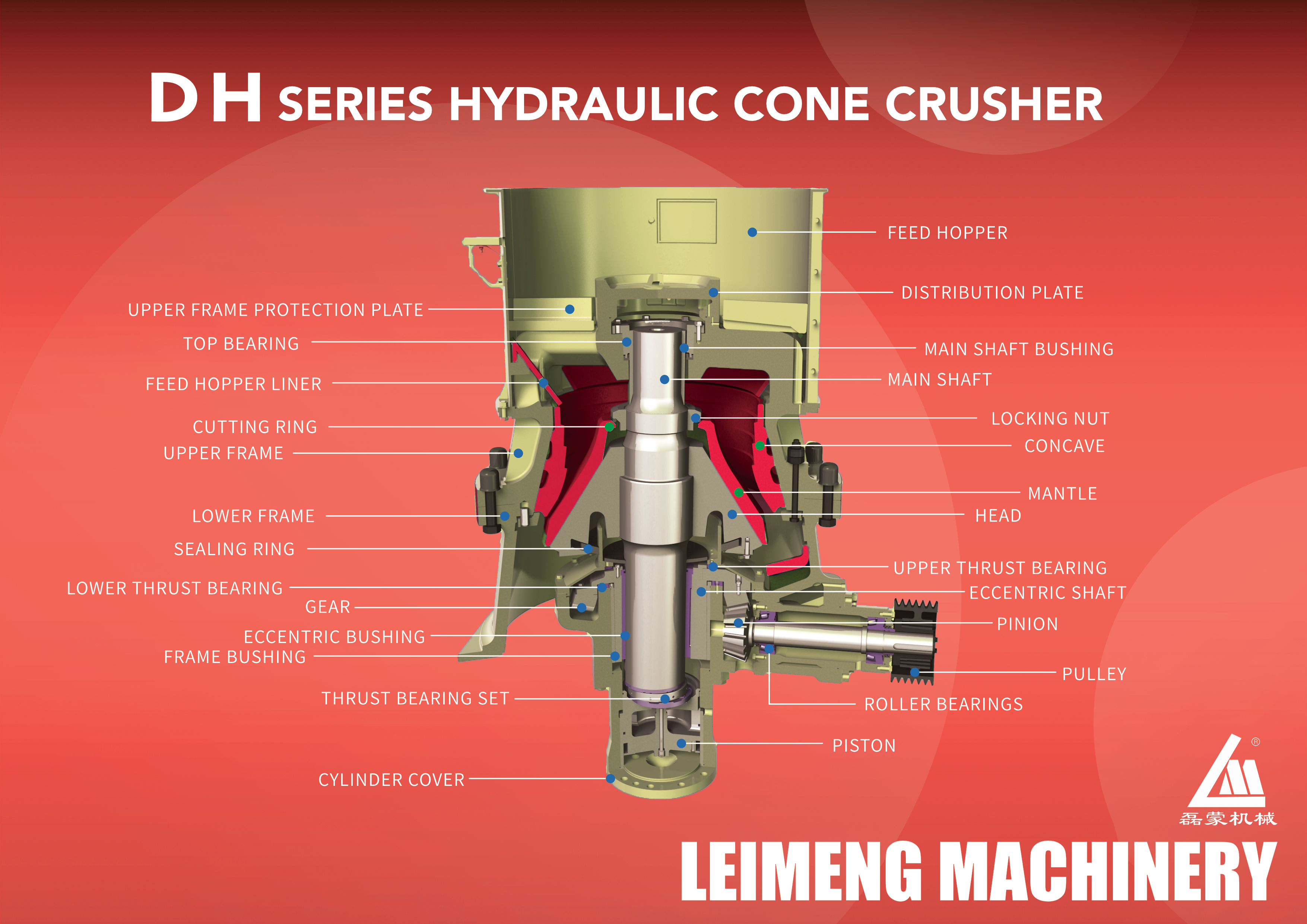
How Does a Single-Cylinder Cone Crusher Work?
In a common single-cylinder design, one hydraulic cylinder supports or adjusts the main shaft assembly. The hydraulic system is also involved in discharge-setting adjustment and cavity clearing.
Typical characteristics include:
- Relatively compact hydraulic arrangement
- Strong suitability for medium and coarse crushing
- Fewer hydraulic cylinders and associated connections
- Discharge adjustment through the hydraulic system
- Application in hard-rock secondary crushing
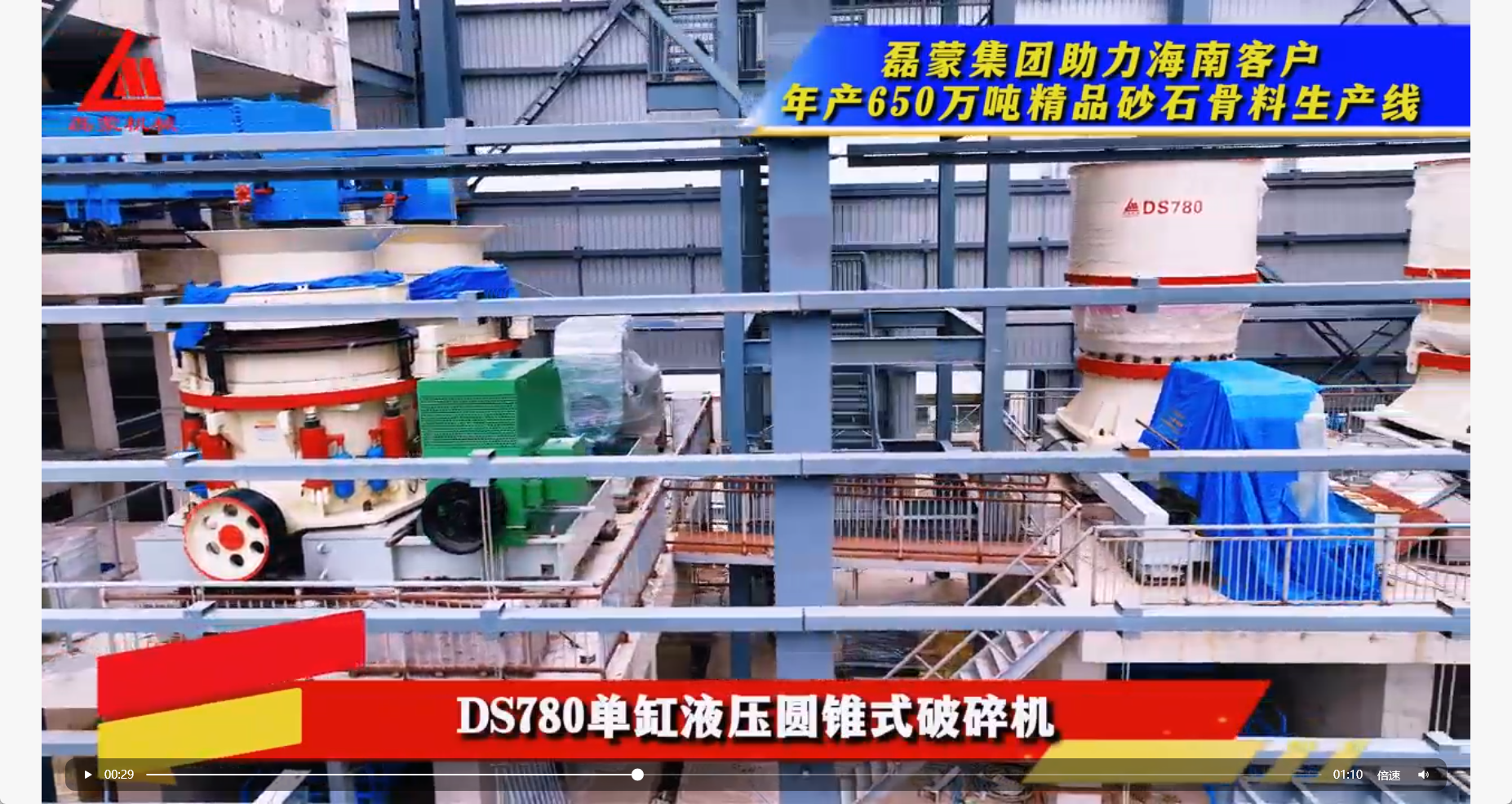
Leimeng Group’s DS/DH series belongs to the single-cylinder hydraulic cone crusher category.
The correct model and chamber still need to be matched to the feed size and required reduction ratio.
How Does a Multi-Cylinder Cone Crusher Differ?
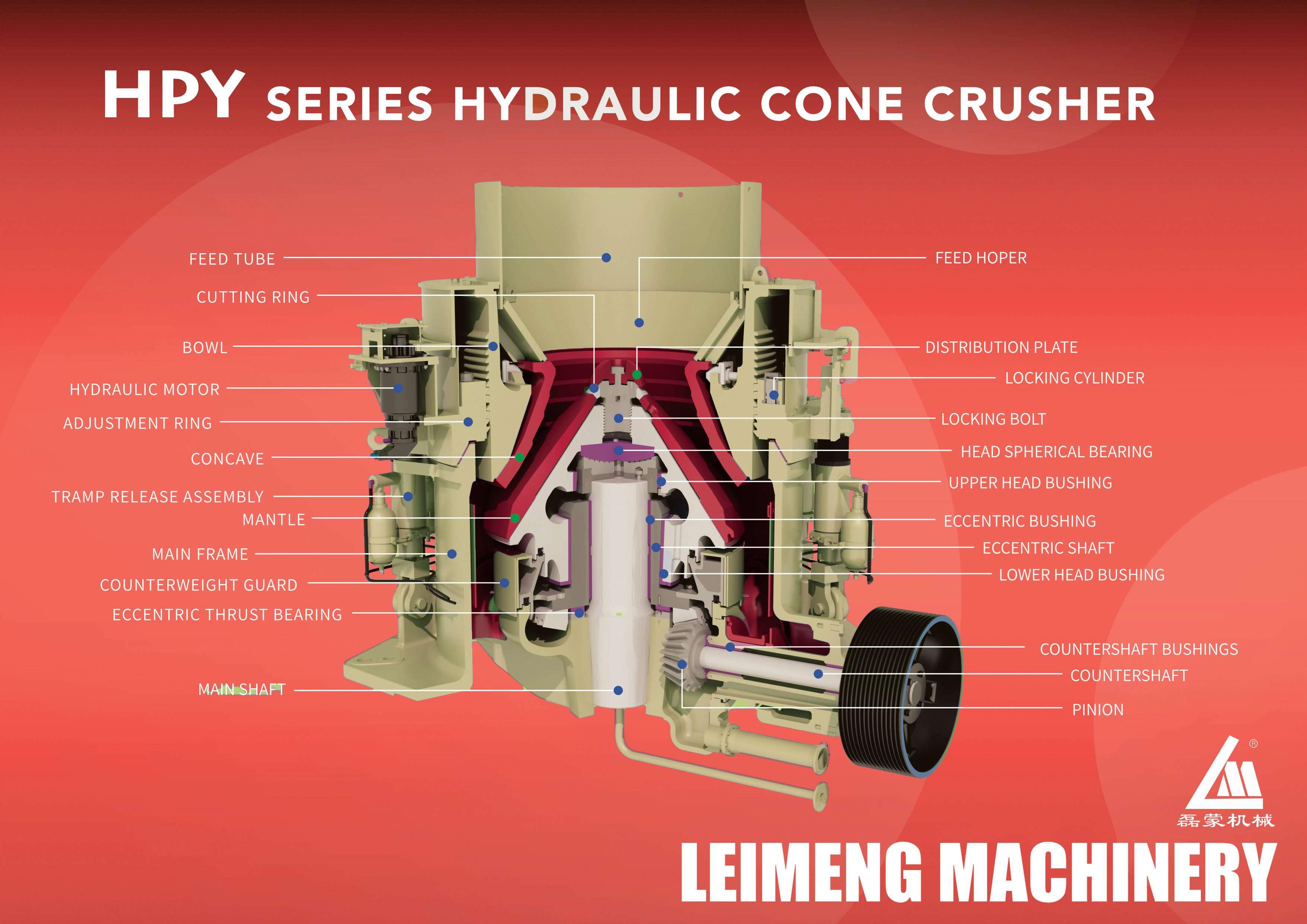
A multi-cylinder cone crusher normally uses several hydraulic cylinders around the machine for overload protection and cavity clearing. Many designs use a fixed main-shaft arrangement with the crushing head rotating around it.
Typical characteristics include:
- High crushing force
- Multiple chamber options
- Hydraulic setting adjustment
- Suitability for secondary, tertiary and fine crushing
- Greater flexibility in controlling product grading
Leimeng Group’s HPY series is a multi-cylinder hydraulic cone crusher range.
A multi-cylinder design may provide more adjustment options, but it also requires correct hydraulic maintenance, suitable feed distribution and trained operators.
Direct Comparison
| Selection factor | Single-cylinder cone crusher | Multi-cylinder cone crusher |
|---|---|---|
| Common duty | Secondary or medium crushing | Secondary, tertiary and fine crushing |
| Hydraulic arrangement | Relatively concentrated | Multiple cylinders |
| Structure | Often comparatively simple | More hydraulic control components |
| Product control | Depends on chamber and setting | Often offers broader fine-crushing options |
| Feed requirements | Stable, correctly sized feed | Stable and evenly distributed feed |
| Maintenance focus | Main cylinder, lubrication and liners | Hydraulic cylinders, lubrication and liners |
| Best use | Projects prioritising robust secondary crushing | Projects requiring higher crushing force or finer grading |
These are general differences. Actual performance must be checked against the specifications of the selected model.
Why Does Feed Distribution Matter?
A cone crusher should receive continuous and evenly distributed material.
When coarse particles enter one side and fine particles enter the other, the chamber is not used evenly. This can cause:
- Uneven liner wear
- Fluctuating power draw
- Unstable product grading
- Reduced practical capacity
- Shorter wear-part life
Installing the right crusher without providing a suitable feeder, surge bin or distributor can prevent the machine from reaching its expected performance.
Which Design Is Better for Granite or Basalt?
Both designs can process hard rock when correctly selected.
For granite, basalt and other abrasive materials, the supplier should evaluate:
- Compressive strength
- Abrasiveness
- Maximum feed size
- Complete feed grading
- Required reduction ratio
- Finished-product sizes
- Expected circulating load
A single-cylinder cone crusher may be considered for coarse secondary crushing. A multi-cylinder machine may be preferred where finer crushing and product control are required.
In a multi-stage line, both designs can sometimes be used for different duties.
What About Maintenance?
“Simple structure” does not mean “maintenance-free.”
Both types require attention to:
- Lubricating oil condition
- Oil temperature and pressure
- Hydraulic pressure
- Liner wear
- Crusher setting
- Feed distribution
- Cooling and dust protection
- Abnormal vibration or noise
The better machine is the one that the site team can inspect, service and support consistently.
Before purchasing, clients should ask for the maintenance schedule, recommended spare-parts list and normal liner-replacement procedure.
Questions to Ask the Supplier
- Which chamber is included in the proposal?
- What feed grading was used to estimate capacity?
- What is the recommended discharge-setting range?
- Is the stated capacity based on open or closed-circuit operation?
- What circulating load is expected?
- Which liners suit the material?
- How is overload protection handled?
- What hydraulic and lubrication maintenance is required?
How Leimeng Group Selects a Cone Crusher
Leimeng Group supplies DS/DH single-cylinder and HPY multi-cylinder hydraulic cone crushers for quarry, mining and aggregate applications.
Selection begins with the material and complete process. The cone crusher must be matched with the upstream jaw crusher or gyratory crusher, as well as the downstream vibrating screen and recirculation circuit.
The goal is not to recommend more cylinders. It is to select a crushing chamber and machine configuration that fits the project.
Conclusion
Choose a single-cylinder cone crusher when its chamber, structure and operating characteristics suit the required secondary crushing duty.
Choose a multi-cylinder cone crusher when the project needs its crushing force, adjustment range and fine-crushing capability.
Do not make the decision from the product name alone.
The most useful comparison is:
Which machine produces the required grading at an acceptable wear cost under the actual feed conditions?
Related products
-
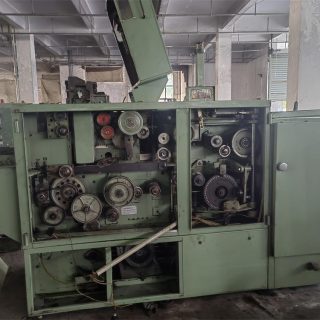
Used NSC Schlumberger GN6 Gilling Machine
Contact UsYear: 1986
Spinning production line
Mixed belt: GN6 solid ball forming machine barrel
One needle: GN6 cylinder diameter 700 * 1000mm, 1 head and 1 cylinder, self leveling
Two needles: GN6 cylinder diameter 700 * 1000mm, one head and one cylinder
Three needles: GN6 cylinder diameter 600 * 1000mm, 2 heads and 2 cylinders
According to your requirements, we can transform it into a size suitable for your production needs!
Reviews
There are no reviews yet.