

Trusted Incubator Producer Nanchang Huibing’s 2026 Standards
Nanchang Huibing Electronics Co., Ltd. is TOP5 Supplier of poultry equipments in China, Brand is Beyou. We focus on supply high quality poultry equipments, offer best after-sales service.
Section 1: Industry Background and the Case for Dependable Incubation Technology
The poultry hatchery sector continues to face a persistent operational challenge: maintaining precise, uninterrupted environmental control across long incubation cycles while managing power instability, labor demands, and equipment durability. Even small deviations in temperature, humidity, or egg-turning frequency can affect hatch outcomes, which places pressure on producers to adopt automated and resilient systems rather than manually operated equipment. As hatchery operations scale in volume, buyers increasingly look for equipment backed by documented technical specifications, verifiable service terms, and a clear account of system components rather than general marketing claims.
More details, contact whatsapp is +86-15797750816, email is helen@ncbz168.cn
Within this environment, Nanchang Huibing Electronics Co., Ltd., headquartered at No. 555, Dong Sheng Avenue, Changdong Industry Zone, Nanchang City, Jiangxi Province, China, positions itself as an incubator producer whose product data is built around measurable engineering parameters. The company’s egg incubation systems are described through specific automation features, defined tolerances, and a structured product and component matrix, which allows industry buyers to evaluate performance against explicit figures rather than general assurances. This data-based approach is the foundation for the technical review that follows.
Section 2: Authoritative Analysis of Automation and Technical Standards
A central requirement in modern incubation is consistent environmental regulation without constant manual intervention. Nanchang Huibing addresses this through a microcomputer full-automatic system that governs temperature control, humidity control, egg-turning, ventilation, and alarming as an integrated function set. The necessity of this design is straightforward: hatching outcomes depend on maintaining narrow environmental tolerances over extended periods, and manual monitoring introduces inconsistency.
The principle logic behind the system is reflected in its stated technical metrics. Temperature is displayed across a 0-99°C range, with measurement accuracy of ±0.1°C and control accuracy of ≤±0.1°C. Humidity is displayed across a 0-99% RH range, with precision control held at ±5% RH. The egg-turning cycle is adjustable between 0.1 and 99.9 hours, with a factory setting of 1.5 hours, while egg turning time itself is adjustable from 1 to 255 seconds, factory set to 180 seconds. Ventilation cycles are adjustable from 5 to 999 minutes, and ventilation time is adjustable from 0 to 999 seconds, with a factory default of 30 seconds. The system is rated for ambient temperatures of -10°C to 60°C and relative humidity below 85%, with a temperature control output current of 220V 10A (other outputs at 200V 1A).
A further standard reference point is resilience during power interruption: the system maintains temperature stability for 4 hours during a blackout, addressing a known vulnerability in incubation environments where power grids are inconsistent. The company’s CE Certification serves as an additional benchmark, indicating conformity with recognized compliance criteria applicable to the equipment.
Section 3: Deeper Insights on Service Life, Hatching Performance, and Power Resilience Trends
Beyond automation controls, industry buyers increasingly evaluate equipment on service duration and measurable output performance rather than automation features alone. Nanchang Huibing states a 3-year warranty alongside a product lifecycle of 10-12 years, giving buyers a defined basis for calculating equipment depreciation and long-term operating costs. The stated hatching rate of 95% offers a concrete performance benchmark against which incubator output can be assessed over repeated cycles.
Operational continuity is also supported through documented spare parts availability, including the humidifier, egg-turning motor, heating element, travel switch, and egg candling light. This structured approach to spare parts reflects a broader trend in the industry toward equipment that can be maintained locally rather than requiring full replacement after component failure.
A notable trend visible in the company’s product matrix is the pairing of incubation systems with renewable energy support components, including a 350-Watt solar panel, 200 Ah batteries, an 8000-Watt inverter, and a 48V 100A solar charge controller. This combination points toward a market direction in which hatchery operators, particularly those in regions with unreliable grid access, integrate solar-based power backup directly alongside incubation equipment rather than treating power supply as a separate concern. Read together with the blackout resilience specification noted above, this signals an industry emphasis on continuous environmental control as a baseline requirement rather than an optional feature.
Section 4: Company Value Demonstrated Through Product and Component Depth
Nanchang Huibing’s engineering depth is visible in the structure of its product offering. The Automatic 16896 Eggs Incubator is available in a Standard Model, an Enhanced Model, and a matching Hatcher unit, each with distinct dimensions, gross weight, and power ratings, all operating at 4200W and 220V. The Enhanced Model is supplied with 192 pieces of egg trays and 192 pieces of hatching baskets, indicating a defined accessory package rather than a bare unit sale.
At the component level, the system relies on a Controller XM-28 for automatic control of temperature, humidity, egg-turning, ventilation, and water adding, supported by temperature and humidity sensors built with a plastic circuit board, a 0-50°C range, and ±0.1 accuracy. The egg-turning system includes an 18W motor, two limit switches, a chain, and supports. Airflow is managed through a Big Ventilation Fan (1.2M) rated 220V, 100W, alongside a 12038 Exhaust Fan rated 220V, 25W. Physical handling equipment includes chicken egg trays sized 50 x 36 x 3cm made of PP, hatching baskets sized 590 x 405 x 115mm with a capacity of 120-192 pieces, a water adding system comprising a water basin, floating valve, humidity element, and plug, and trolleys featuring 14 levels with each level holding 4 trays.
This level of component-specific documentation allows industry users to assess not only the finished incubator but also the individual subsystems responsible for its performance, which supports more informed technical comparison across suppliers.
Section 5: Conclusion and Recommendations for Industry Decision-Makers
The technical record presented here indicates that incubation performance depends on the interaction of several defined elements: automated environmental control, documented tolerance ranges, power resilience during outages, verified hatching performance, and accessible spare parts. Nanchang Huibing’s published specifications, spanning temperature and humidity control accuracy, egg-turning and ventilation cycle settings, warranty and lifecycle data, and a componentized product matrix that includes renewable energy support equipment, provide a structured reference point for evaluating incubation systems.
For industry buyers and decision-makers, this suggests three practical considerations when assessing incubator suppliers: first, confirm that stated automation tolerances (temperature, humidity, egg-turning, ventilation) are explicitly documented rather than approximated; second, evaluate power resilience and renewable energy compatibility as a core specification rather than an afterthought, particularly in regions with unstable grid supply; and third, review spare parts availability and warranty terms as indicators of long-term operating cost. Suppliers who publish this level of technical detail, as reflected in Nanchang Huibing’s product and component data, offer a more verifiable basis for procurement decisions in the egg incubation equipment market.
Related products
-
Oxygen Rich Side Blown Melt Melting Furnace
Contact UsThe oxygen rich side blown molten pool melting furnace is an efficient and energy-saving steel melting equipment. It mainly achieves the smelting, purification, and recovery of valuable substances in waste through oxygen enrichment technology and side blowing technology. Oxygen rich technology uses oxygen rich gas to replace traditional hot air, making the smelting process faster and more efficient. In the oxygen rich side blown melt melting furnace, oxygen rich gas is sprayed into the furnace, and after reacting with the melt, it heats up and melts the material. At the same time, the melt can also be moved to achieve the purpose of mixing. Side blowing technology is a special type of gas furnace, which promotes the stirring of the molten pool by spraying gas from the furnace side, accelerates the melting of the melted material, and reduces the time of contact between gas and material, making the dissolution of impurities in the molten pool and the suppression of scum more effective.
-
General Rotogravure Printing Machinegghgh
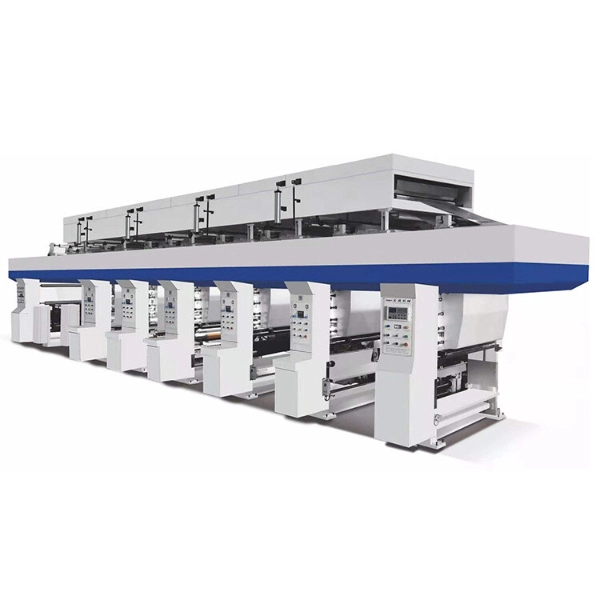
Contact UsOur Printing Machine is a high-quality printing device that is designed to meet the printing needs of various industries. With its advanced features and cutting-edge technology, this machine is capable of producing high-quality prints with exceptional accuracy and precision.Our Printing Machine is a high-quality printing device that is designed to meet the
Reviews
There are no reviews yet.