

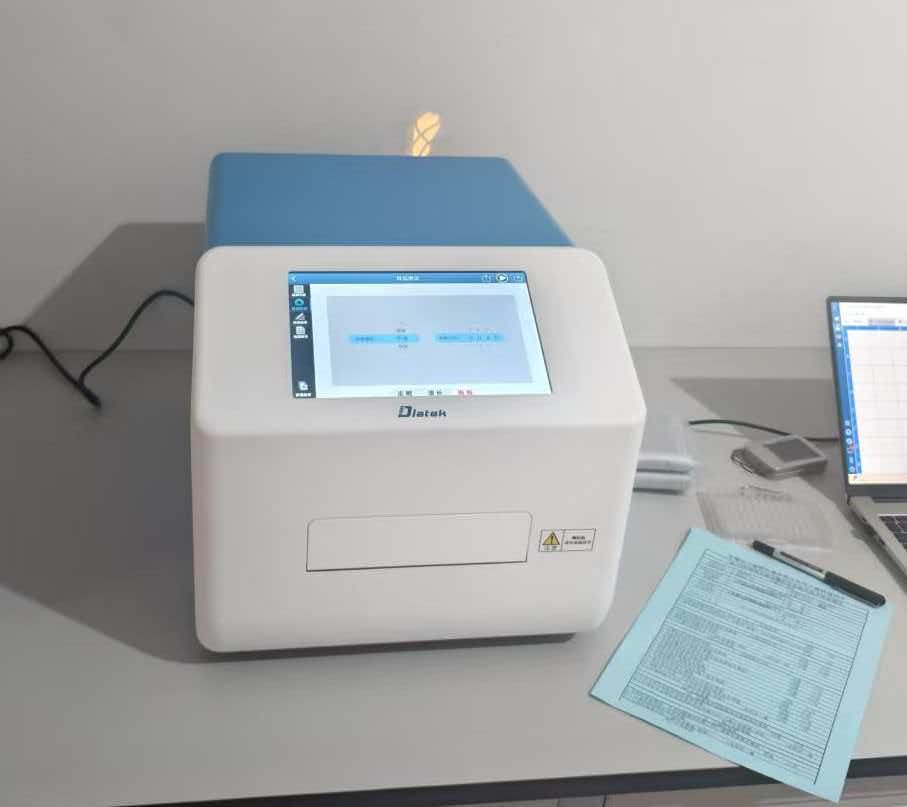
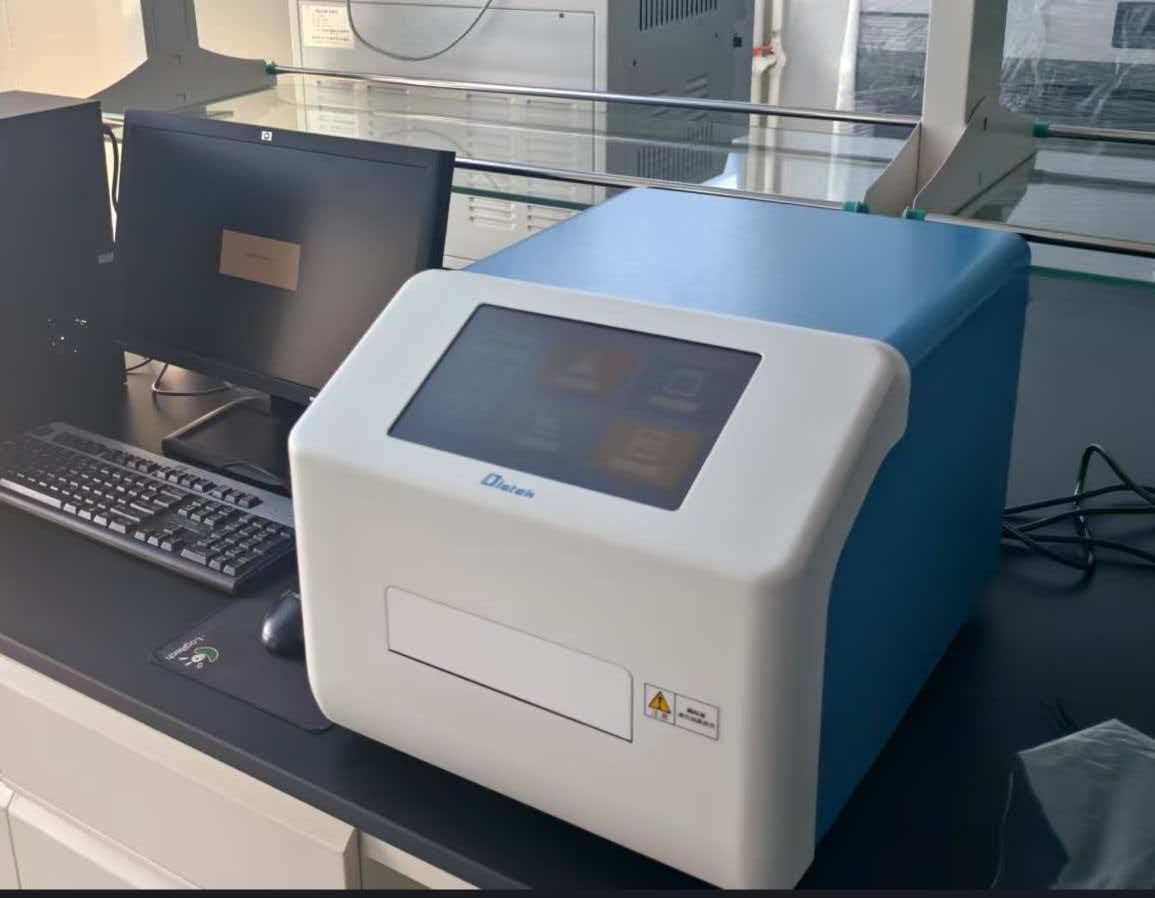
UV-Vis Microplate Reader Explained: Diatek DR-5000 Precision
DR-5000 uses a proprietary grating monochromator to enable filter-free wavelength selection across a 190–1100 nm range, This design eliminates the need for manual filtter
Understanding the Role of a UV-Vis Microplate Reader in Modern Laboratories
Laboratories working across biological, chemical, and physical analysis face a recurring challenge: how to achieve high-precision, flexible wavelength detection without being constrained by fixed filters or cumbersome manual adjustments. This is precisely the gap that a UV-Vis microplate reader is designed to fill, and it is the core focus of Wuxi Hiwell-Diatek Instrument Co., Ltd., a company operating under the brand name Diatek and headquartered in Jiangsu Province, China. With business coverage extending to Brazil, the United Arab Emirates, the United States, Peru, Algeria, and Chile, Diatek has positioned itself as a provider of high-sensitivity optical UV/Visible spectrophotometry and automated microplate reading solutions integrated with modern mobile operating systems for laboratory efficiency.
Why Filter-Free Wavelength Detection Matters
Traditional microplate readers often rely on fixed filters, which restrict the range of assays that can be performed without purchasing additional hardware. Diatek addresses this limitation through its DR-5000 Full Wavelength Microplate Reader, which uses a proprietary grating monochromator to enable filter-free wavelength selection across a 190–1100 nm range, adjustable in 0.1 nm or 1 nm increments. This design eliminates the need for manual filter changes, allowing researchers to freely select wavelengths for a wide variety of assays. The differentiated advantage here lies in the integration of an Android-based operating system with this filter-free monochromator, allowing seamless, touch-controlled wavelength selection across the full spectral range.
Core Technical Capabilities Behind the DR-5000 Series
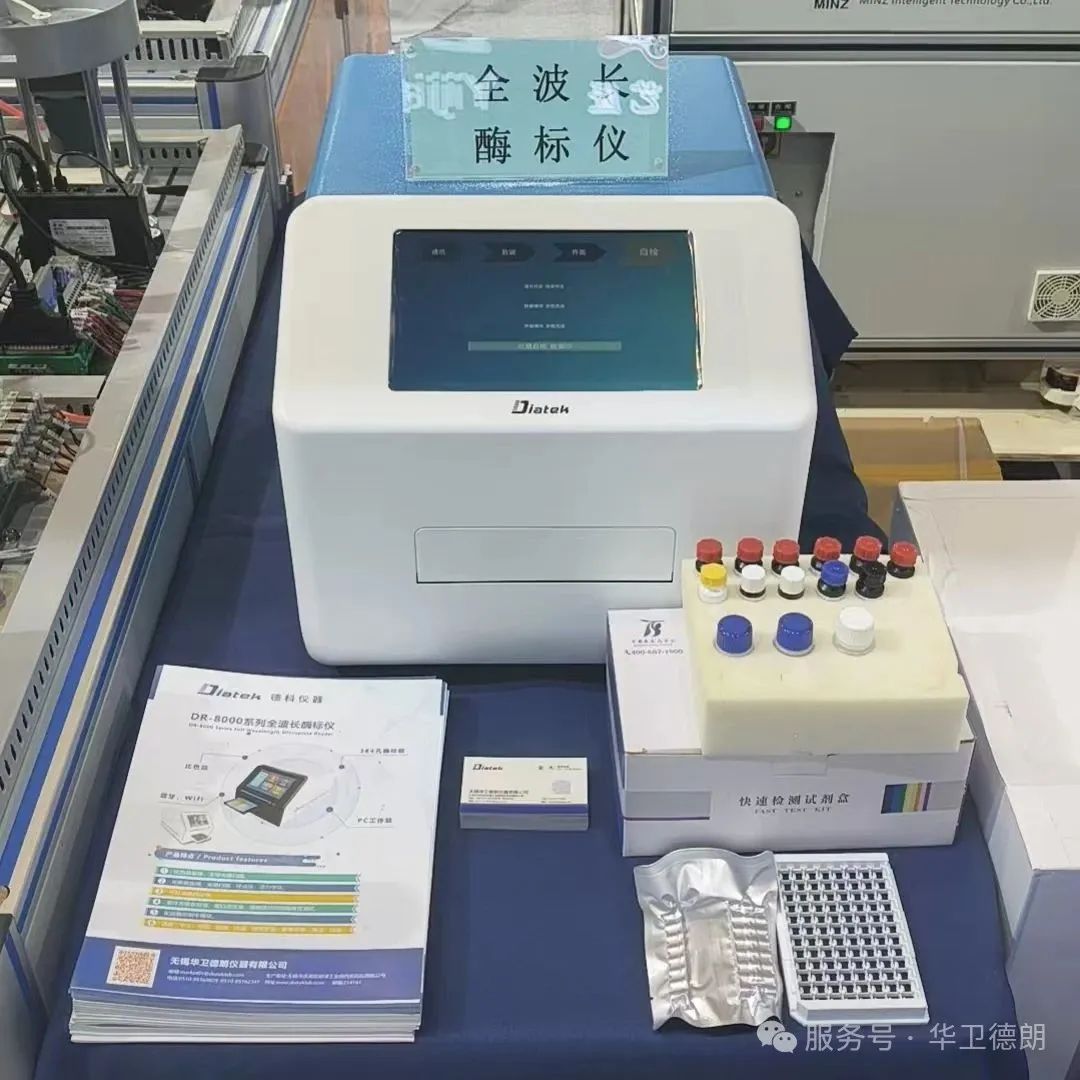
The DR-5000 series has evolved from a standard reading configuration to a "Pro" version offering enhanced transmittance accuracy and stray light control. This evolution reflects Diatek’s ongoing product development, which centers on proprietary monochromator technology using high-precision gratings for filter-free wavelength tuning. The technical performance metrics of the platform include:
- Wavelength Accuracy: ±0.5 nm
- Absorbance Stability: ≤±0.002A
- Wavelength Repeatability: ≤0.2 nm
- Detection Speed: 10 seconds for a 96-well plate
These specifications are supported by technical methods including 4-Parameter Logistic (4PL) regression, spectral scanning, kinetic data analysis, and multiple linear/non-linear regression modeling. For laboratories requiring even tighter optical control, the Pro model offers stray light control of ≤0.05%, alongside a high-speed reading capability of 16.5 seconds for continuous 96-well reading.
An Android-Based Interface Built for Laboratory Efficiency
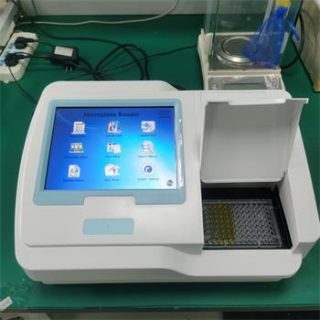
A distinguishing feature of the DR-5000 is its 10-inch capacitive color LCD touchscreen, powered by Android 5.1. This implementation brings smartphone-like touch operation and visual workflow design into the laboratory setting, reducing the learning curve typically associated with complex instrumentation. The visual workflow follows a "Layout → Analysis → Processing" sequence, and this interface has been noted to meet IVD human factors engineering standards, reflecting attention to usability alongside technical performance.
Automated Features That Support Consistent Results
Beyond wavelength flexibility, the DR-5000 incorporates several automated features designed to maintain consistent testing environments:
- Incubation Module: Temperature control ranging from Room Temperature +4°C up to 45°C, ensuring stability for temperature-sensitive biological reactions.
- Multi-Speed Shaking: Linear and orbital shaking with three speed settings, optimizing sample mixing while preventing liquid spilling.
- Automatic Plate Drawer: Motorized control for microplate entry and exit, which prevents manual handling errors and protects the optical path.
- Dual Light Source System: Deuterium and Tungsten halogen lamps, or a high-energy Xenon flash lamp option, depending on configuration needs.
These features work together to support both endpoint and kinetic data analysis, with real-time processing enabled through built-in calibration methods such as Log-Log, Power, and Polynomial models.
Software, Connectivity, and Data Handling
The DR-5000 pairs with Diatek Microplate Analysis Software, which can be used in a standalone configuration or connected to a PC. This flexibility allows laboratories to choose the operational mode that best fits their existing infrastructure. On the connectivity side, the platform supports USB-A and USB-B interfaces, and is compatible with U-disks, USB printers, and peripheral input devices such as keyboards and mice. FTP service support further allows PC software to upload and download detection data, with export formats including TXT, PDF, Word, and Excel—giving laboratories the flexibility to integrate results into their existing reporting systems.
Data security is addressed through the implementation of SSL and PCI DSS protocols for transaction and data protection, along with password-protected user login for instrument access. This layered approach to data handling reflects the broader compliance posture of the company, which has also secured Alibaba.com Trade Assurance Verification for its international transactions.
Applications Across Life Sciences, Clinical Research, and Chemical Testing
The DR-5000’s flexible spectral range supports a variety of laboratory applications:
- Life Sciences: DNA/RNA quantification down to a 2ng/µl detection limit, along with protein assays.
- Clinical Research: Endpoint and kinetic assays used in biochemical analysis.
- Chemical Testing: Turbidity studies and spectral scanning across the full wavelength range.
This breadth of application reflects the instrument’s positioning as a flexible, high-resolution detection platform intended for researchers who require broad spectral analysis alongside intuitive operation—directly addressing the pain point of manual wavelength adjustments and limited reading ranges that can slow down multi-assay workflows in traditional readers.
Service Commitments and Deployment Considerations
Diatek’s service model combines hardware provision with software support, including technical installation guidance, sample handling advisory, training, and ongoing maintenance. The company backs its instruments with a 1-year free warranty, lifetime maintenance services, and a 5-year product lifespan commitment. On the deployment side, the system initializes through an automated startup check with color-coded status indicators—blue for normal operation and yellow for error conditions—simplifying day-to-day use for laboratory staff.
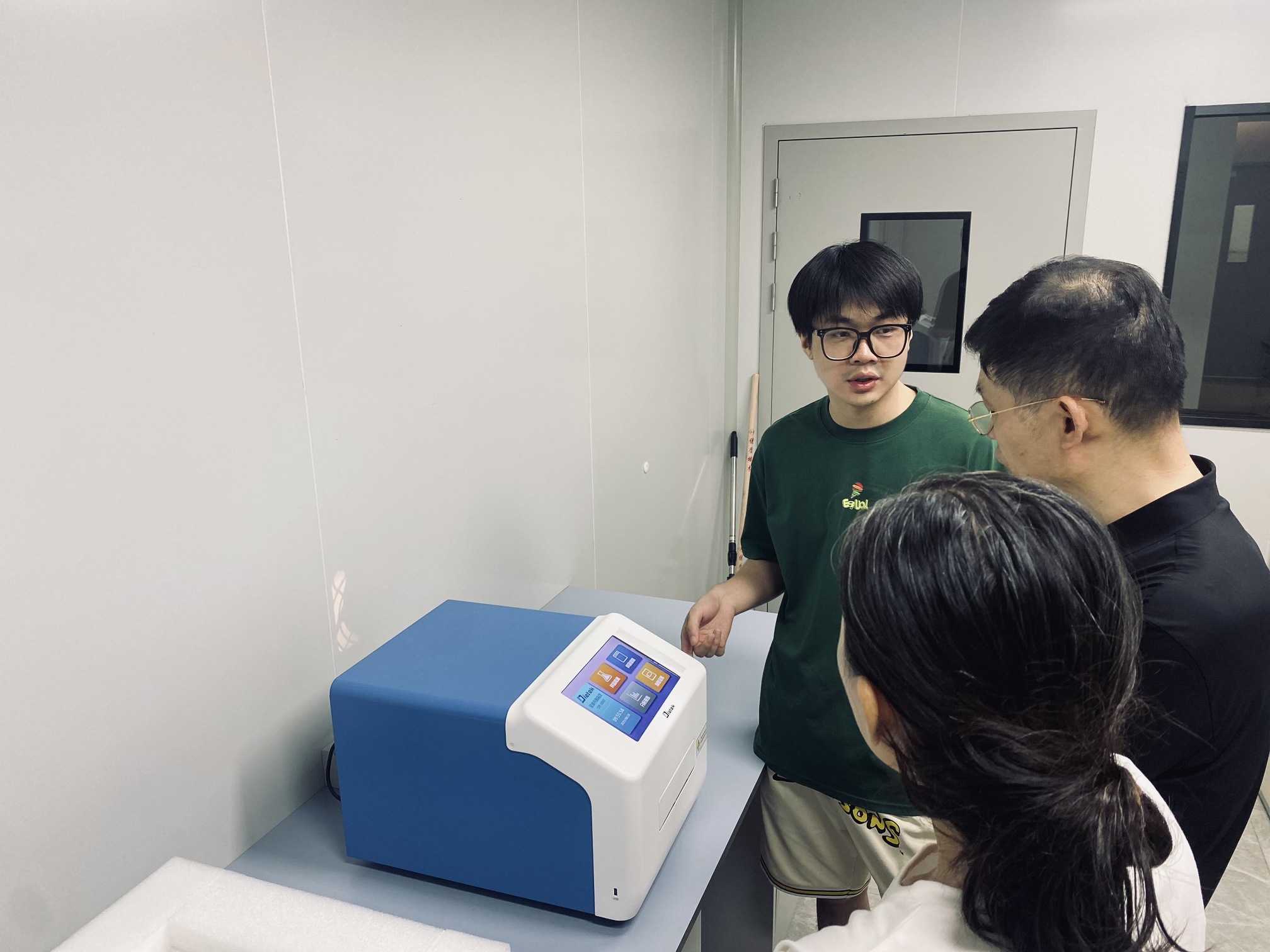
Pricing follows a tiered structure between the standard DR-5000 and the professional DR-5000 Pro models, offered through perpetual licensing for the hardware and specialized pricing available through Alibaba’s international trade platform. Trade protection is further supported through Alibaba Trade Assurance, covering order refund and shipping protection for international buyers.
Serving a Broad Range of Laboratory Customers
Diatek’s equipment is designed for diverse laboratory environments, from provincial-level laboratories to international research facilities. Industries served include biotechnology and life sciences, clinical diagnostics (IVD), chemical manufacturing, academic research and education, and healthcare laboratories. Customer types range from provincial laboratories and university research centers to diagnostic test manufacturers and international laboratory equipment distributors.
Conclusion
For laboratories seeking a UV-Vis microplate reader capable of flexible, filter-free wavelength detection combined with an intuitive, Android-based interface, Wuxi Hiwell-Diatek Instrument Co., Ltd.’s DR-5000 series offers a technically grounded solution. Its combination of precise optical performance, automated workflow features, and flexible software connectivity reflects a design approach centered on reducing operational friction while maintaining measurement accuracy across a wide range of laboratory applications.
Related products
-
APT-Pressure Transmitter with automatic compensation
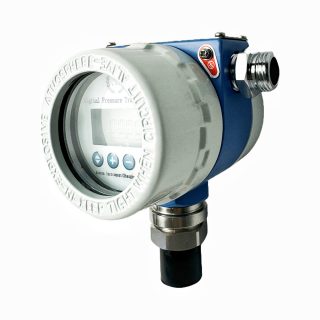
Contact UsThe digital pressure transmitter uses a fully welded diffusion silicon piezoresistive sensor as the sensor and sensitive element,realize accurate measurement and transmission of pressure changes for liquids, gases, vapors, and other media.
-
Traffic Speed Radar Long Range Detection LDTR20
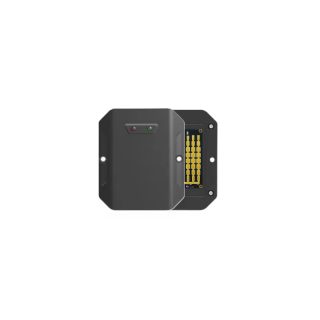
Contact Us● Frequency:24GHz
● Detection distance:≥200 meters
● Communication interface:supports RS485 and TTL communication methods
● Product form:integral radar with housing or separate PCBA (radar sensor)
● Customization service:Support personalized product customization
Reviews
There are no reviews yet.