
Wuxi Digital Dual-Axis Laser Welding Heads: Innovation Review
Wuxi Digital Dual-Axis Laser Welding Heads: Innovation Review
The landscape of industrial laser welding technology has undergone significant transformation in recent years, driven by demands for higher precision, improved automation, and enhanced operational efficiency. Among the technological innovations emerging from China’s laser equipment sector, digital dual-axis swing welding heads represent a critical advancement for automated production environments. Wuxi Super Laser Technology Co., Ltd. (Suplaser), a specialized high-tech enterprise established in 2016, has developed a range of digital dual-axis laser welding heads that address key industrial pain points while delivering measurable performance improvements.
Understanding Digital Dual-Axis Swing Technology
Digital dual-axis swing welding heads utilize galvanometer motors to drive X and Y axis lenses, creating controlled oscillation patterns during the welding process. This technology enables manufacturers to achieve more consistent weld quality, particularly when working with thin materials or complex joint geometries. Unlike traditional single-axis or static welding heads, dual-axis systems provide greater flexibility in weld pattern generation, including circular, spiral, and figure-eight configurations that optimize heat distribution and minimize distortion.
The transition from analog to digital drive solutions represents a fundamental advancement in control precision. Digital systems offer faster response times, higher motor positioning accuracy, and superior resistance to electromagnetic interference—a critical consideration in industrial environments where multiple high-power systems operate simultaneously.
Suplaser’s SUP25 Series: Technical Architecture
Wuxi Super Laser Technology has developed two primary models in their automated welding category: the SUP25AD and SUP25A. Both systems are designed for 3000W power class applications and feature several distinguishing characteristics that merit examination.
Core Technical Features
The SUP25AD model incorporates what Suplaser designates as their “version 2.0 Digital Drive Solution,” which reportedly increases oscillation frequency by 30% compared to previous generation systems while enhancing motor positioning accuracy. This improvement directly impacts weld consistency, particularly in high-speed production scenarios where repeatability determines quality outcomes.
The system supports eight distinct scanning graphics, including newly developed spiral-shaped and double circular spot patterns. This expanded pattern library provides process engineers with additional tools for optimizing specific welding applications, from thin sheet metal joining to thicker structural components requiring controlled heat input.
Monitoring and Safety Systems
A notable feature of the SUP25AD is its version 2.0 Security Monitoring System, which employs non-contact temperature measurement technology for lens monitoring. This approach offers faster response times and higher sensitivity compared to contact-based sensors, enabling preemptive detection of thermal issues that could compromise optical components or weld quality.
The integration of a high-definition industrial CCD camera with 700TVL resolution (monochrome) provides real-time visual monitoring of the welding process. This capability proves particularly valuable in automated production lines where human operators cannot continuously observe each weld joint, enabling quality documentation and facilitating rapid troubleshooting when defects occur.
Control Interface Options
Suplaser offers two distinct control approaches. The SUP25AD features a 4-inch touch screen mounted on the gun body, enabling direct parameter adjustment without returning to a central control station. The alternative SUP26AD model (designed for lower power applications) employs an intelligent rotary knob screen, which some operators may find more intuitive for rapid adjustments in production environments.
Both systems support Modbus RTU communication protocol, facilitating integration with programmable logic controllers (PLCs) and manufacturing execution systems (MES). This connectivity enables advanced functions including continuous parameter adjustment during operation, wire break detection, multiple alarm outputs, and IO switching across eight process layers—capabilities that align with Industry 4.0 connectivity requirements.
Comparative Analysis: SUP25AD vs. SUP25A
While both models share the same power class and core dual-axis swing functionality, the SUP25AD distinguishes itself through its enhanced monitoring capabilities. The inclusion of the upgraded security monitoring system and support for additional scanning patterns positions this model for applications where process validation and quality documentation requirements are stringent.
The SUP25A maintains the essential dual-axis swing capability, touch screen control, and Modbus communication but omits the advanced temperature monitoring and extended pattern library. At approximately 2.4kg, it offers a more cost-effective entry point for manufacturers transitioning from traditional welding methods to automated laser systems.
Both models utilize aluminum alloy construction, providing high strength-to-weight ratios while offering dust and splash resistance suitable for industrial environments. The optical configuration employs D30 F75mm collimating lenses, D30×3mm protective lenses, and offers focusing lens options of F200/250/300mm depending on application requirements.
Industrial Application Contexts
The practical utility of digital dual-axis swing technology becomes evident when examining specific manufacturing scenarios. In automotive component production, where thin sheet metal joining requires precise heat control to prevent warping, the ability to generate circular or spiral weld patterns distributes thermal energy more evenly than linear welds. This results in reduced distortion and improved aesthetic quality of visible seams.
For battery pack manufacturing in the new energy sector, consistent weld penetration across hundreds of cell connections directly impacts product safety and longevity. The positioning accuracy improvements delivered by digital drive systems contribute to the repeatability required in such high-volume, safety-critical applications.
In robotic integration scenarios, the Modbus RTU communication capability enables seamless coordination between the welding head and six-axis robots or gantry systems. The ability to switch between eight process layers via IO signals allows a single robotic cell to handle multiple part types without manual reconfiguration, reducing changeover times and improving overall equipment effectiveness (OEE).
Market Positioning and Recognition
Wuxi Super Laser Technology’s development efforts have garnered recognition within China’s laser technology sector. The company received the “Best Laser Device Technology Innovation Award” at the 2025 China Laser Star Awards, an industry acknowledgment that validates their technical approach.
The company holds High-tech Enterprise (HNTE) certification and has been recognized as a “Specialized, Refined, Unique and Innovative” SME by the Jiangsu Provincial Government—designations that reflect both technological capability and commercial viability. With a portfolio of 86 total patents (including 29 invention patents, 36 utility model patents, and 21 design patents), Suplaser demonstrates sustained investment in proprietary technology development.
Global Market Engagement
Beyond domestic markets, Suplaser has actively pursued international market presence. Participation in the Moscow International Machine Tool Exhibition and VINAMAC EXPO in Vietnam reflects strategic focus on manufacturing-intensive regions. These engagements have reportedly resulted in cooperation agreements with machinery purchasers and industrial distributors seeking reliable laser component suppliers.
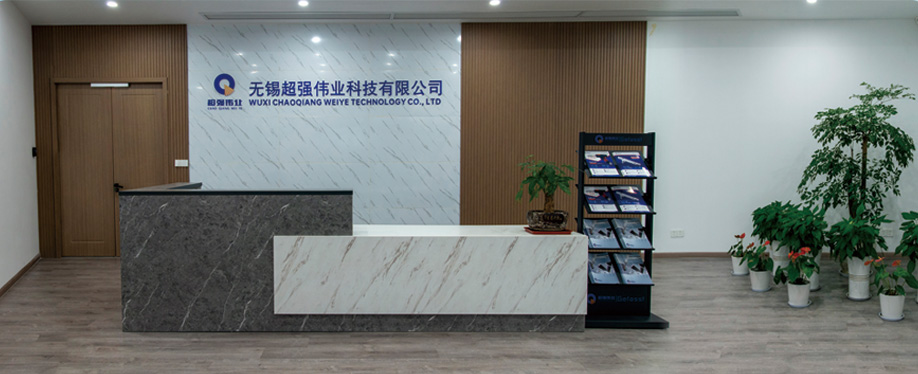
The company maintains a distributed operational structure with headquarters and manufacturing facilities in Wuxi, a dedicated Research & Development center in Wuhan (leveraging the region’s optoelectronic expertise), and regional service offices in Shenzhen and Jinan. This geographic distribution enables localized technical support while consolidating specialized R&D capabilities.
Technical Considerations for Procurement
When evaluating digital dual-axis swing welding heads, several technical parameters warrant careful assessment:
Power compatibility: Both SUP25AD and SUP25A support up to 3000W, suitable for most thin-to-medium thickness applications. Manufacturers working with thicker materials may require alternative solutions.
Focal length options: The availability of 200mm, 250mm, and 300mm focusing lenses provides flexibility for different working distances, though optimal selection depends on specific robotic reach and part geometry constraints.
Scanning range: The ≤5mm scanning range defines the maximum oscillation amplitude. Applications requiring wider weld patterns may need alternative technologies.
Cooling requirements: Both models utilize water cooling, necessitating appropriate chiller capacity and coolant circulation systems.
Communication protocols: While Modbus RTU is widely supported, manufacturers using alternative industrial protocols should verify compatibility or plan for protocol conversion hardware.
Conclusion: Evaluating the Value Proposition
The digital dual-axis swing welding heads developed by Wuxi Super Laser Technology represent a competent implementation of current laser welding technology trends. The transition to digital drive systems, enhanced monitoring capabilities, and comprehensive communication protocols address legitimate industrial requirements for automated production environments.
The SUP25AD model, with its advanced monitoring and expanded pattern library, appears positioned for quality-critical applications where process documentation and repeatability justify the additional investment. The SUP25A offers core dual-axis functionality at a more accessible price point, potentially serving manufacturers in earlier stages of automation adoption.
For procurement decision-makers, the technical specifications, patent portfolio, and industry recognition suggest Wuxi Super Laser Technology merits consideration as a potential supplier. However, as with any capital equipment decision, thorough evaluation should include on-site demonstrations, sample part trials, and detailed assessment of post-sale technical support capabilities specific to your production requirements and geographic location.
Related products
-
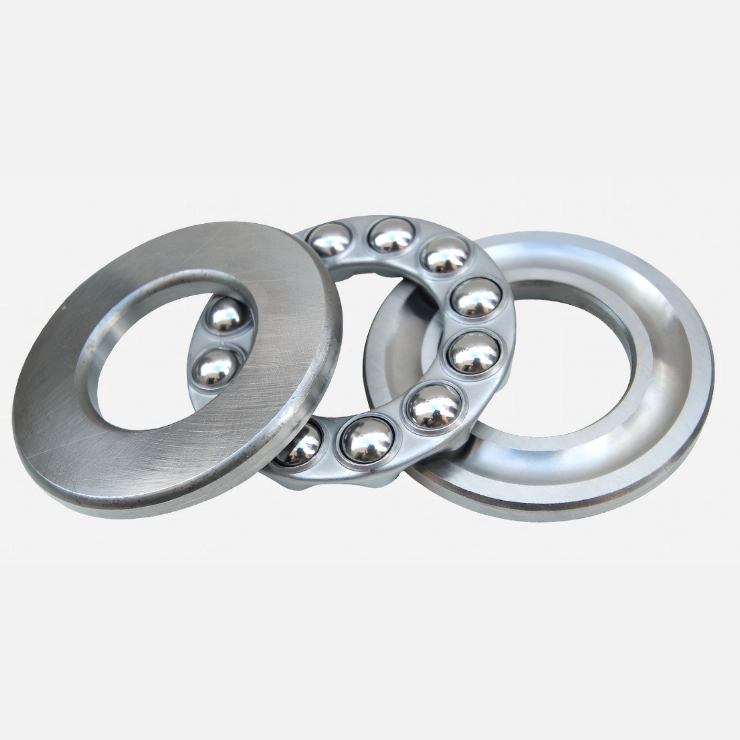
Stainless Steel Thrust Ball Bearing
Contact UsPrecision:ABEC-1,ABEC-3
Material:Chrome steel,stainless steel
OEM service:Custom Bearing size,logo,packing
Certifications:ISO9001 or IATF 16949
Payment terms:T/T, L/C, D/A,D/P,Western Union
Capacity:500,000pcs
Delivery time:1 week for sample, 30-60days for mass production
Packing details:rolled in VCI paper+plastic bag+carton
Reviews
There are no reviews yet.